


Chinese Nationalist Party (KMT) legislators on a legislative committee yesterday refused to review the National Police Agency’s budget, saying they are displeased by the heavy police presence near the Legislative Yuan in Taipei over the past four weeks.
After heated debates failed to reach an agreement to proceed, the meeting of the Internal Administration Committee was adjourned in favor of convening another at a later date.
Since Nov. 3, the number of police officers posted outside the Legislative Yuan has reached 4,000, with 2,000 posted inside the building, KMT Legislator Huang Chao-shun (黃昭順) said.
“What is going on with this country?” Huang asked.
KMT Legislator Yang Cheng-wu (楊鎮浯) asked Minister of the Interior Yeh Jiunn-rong (葉俊榮): “Are you not supposed to be a liberal academic?”
In an apparent attempt to cool tempers, KMT Legislator Chen Chao-ming (陳超明) called a 10-minute break and during the interlude National Police Agency Director-General Chen Kuo-en (陳國恩) approached Huang for a private discussion.
However, the committee continued to struggle to reach a consensus and as a result Chen Chao-ming adjourned the budget review.
At a news conference following the meeting, Chen Kuo-en said the agency had reinforced its presence at the legislature in reaction to repeated breaches of the compound by protesters.
“[Today] there are multiple protests at the [Legislative] Yuan, the Presidential Office Building and other government offices, such as the Executive Yuan and the Department of Labor. Extemporized attempts by various groups to storm government offices or the Presidential Office Building cannot be ruled out; the presence of law enforcement is necessary under these circumstances,” Chen Kuo-en said.
“The allocation of law enforcement resources must be appropriate, necessary and proportionate; we will review [our operations] accordingly,” he added.
Chen Kuo-en said the placement of crowd-control barriers around the legislature is a strategy to de-escalate any conflict through distance, adding that the barriers are used by many police forces for conflict prevention because they are harder for protesters to push down when compared with traditional barbed-wire barriers.
With amendments to the Assembly and Parade Act (集會遊行法) being passed by the Internal Administration Committee that would expand freedom of assembly by abolishing the government’s authority to withhold approval for street protests, the agency expects to have to police more demonstrations, he said.
A greater reliance on physical barriers rather than riot police officers helps to prevent violent clashes and injuries to civilians and officers, he added.

The military has spotted two Chinese warships operating in waters near Penghu County in the Taiwan Strait and sent its own naval and air forces to monitor the vessels, the Ministry of National Defense (MND) said. Beijing sends warships and warplanes into the waters and skies around Taiwan on an almost daily basis, drawing condemnation from Taipei. While the ministry offers daily updates on the locations of Chinese military aircraft, it only rarely gives details of where Chinese warships are operating, generally only when it detects aircraft carriers, as happened last week. A Chinese destroyer and a frigate entered waters to the southwest
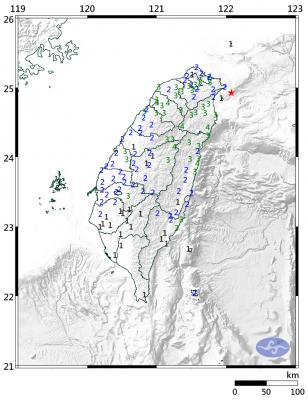
A magnitude 6.1 earthquake struck off the coast of Yilan County at 8:39pm tonight, the Central Weather Administration (CWA) said, with no immediate reports of damage or injuries. The epicenter was 38.7km east-northeast of Yilan County Hall at a focal depth of 98.3km, the CWA’s Seismological Center said. The quake’s maximum intensity, which gauges the actual physical effect of a seismic event, was a level 4 on Taiwan’s 7-tier intensity scale, the center said. That intensity level was recorded in Yilan County’s Nanao Township (南澳), Hsinchu County’s Guansi Township (關西), Nantou County’s Hehuanshan (合歡山) and Hualien County’s Yanliao (鹽寮). An intensity of 3 was
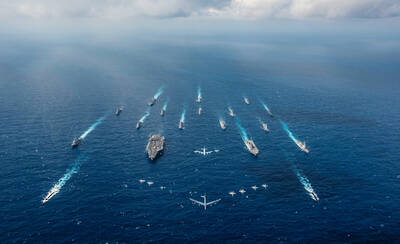
Japanese Prime Minister Sanae Takaichi’s comment last year on Tokyo’s potential reaction to a Taiwan-China conflict has forced Beijing to rewrite its invasion plans, a retired Japanese general said. Takaichi told the Diet on Nov. 7 last year that a Chinese naval blockade or military attack on Taiwan could constitute a “survival-threatening situation” for Japan, potentially allowing Tokyo to exercise its right to collective self-defense. Former Japan Ground Self-Defense Force general Kiyofumi Ogawa said in a recent speech that the remark has been interpreted as meaning Japan could intervene in the early stages of a Taiwan Strait conflict, undermining China’s previous assumptions
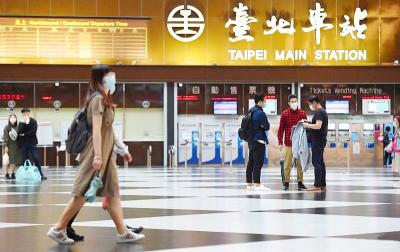
Taiwan Railways Corp (TRC) today announced that Shin Kong Mitsukoshi has been selected as the preferred bidder to operate the Taipei Railway Station shopping mall, replacing the current operator, Breeze Development Co Ltd. Among eight qualified firms that delivered presentations and were evaluated by a review committee, Shin Kong Mitsukoshi was ranked first, while Breeze was named the runner-up, the rail company said in a statement. Contract negotiations are to proceed in accordance with regulations, it said, adding that if negotiations with the top bidder fail, it could invite the second-ranked applicant to enter talks. Breeze in a statement today expressed doubts over


 RSS
RSS