


The Chinese Nationalist Party (KMT) might only be able to pay part of its workers’ salaries this month due to lackluster fundraising, according to high-ranking party officials.
The KMT has been dogged by a salary conundrum after its bank accounts were frozen as part of an ongoing investigation into the source of its assets by the Executive Yuan’s Ill-gotten Party Assets Settlement Committee, despite managing to pay off its staff’s overdue wages for September and last month using loans taken out by KMT Chairwoman Hung Hsiu-chu (洪秀柱), with party officials acknowledging that they might only be able to pay half of this month’s salaries in a worst-case scenario.
Hung late last month borrowed NT$90 million (US$2.8 million at the current exchange rate) to pay workers’ salaries amid a threat by the KMT’s union to stage a protest should the party fail to address the issue.
The loans came from Hon Hai Precision Industry Co and Foxconn chairman Terry Gou (郭台銘) and another businessman, who asked to remain anonymous.
The KMT last month launched two fundraising programs in an attempt to assuage its financial straits, but a source familiar with the matter, who spoke on condition of anonymity, said that the amount has raised so far has fallen far short of expectations.
One fundraising drive encourages KMT members to pay a “special party fee” of at least NT$2,000, while the other asks members of the public to donate NT$1,000.
The two programs have generated only NT$10 million and NT$20 million respectively, the source said.
Asked about the possibility of the KMT taking out more loans, one KMT member, who also requested anonymity, said borrowing money has always been a contentious issue in the party, particularly as it has yet to pay off the loans taken out by Hung.
KMT Administration and Management Committee director Chiu Da-chan (邱大展) on Saturday said that the funds raised from the “special party fee” program are insufficient to pay about NT$45 million in party workers’ salaries for this month.
However, the party recently laid out a plan to reduce its workforce, which it sent to the committee with a request for access to a portion of the KMT’s frozen funds to be able to pay the reduced personnel, Chiu said.
The KMT recently also submitted to the Taipei Department of Labor an outline of its plans for employee dismissals, with negotiations with employees scheduled to begin on Wednesday, he added.
According to the plan, 433 staff, or about 58 percent, could face dismissal prior to the Lunar New Year, Chiu said, but added that the party would be unable to execute the plan unless it manages to come up with between NT$150 million and NT$180 million to cover severance payments and retirement packages.

Taiwan has received more than US$70 million in royalties as of the end of last year from developing the F-16V jet as countries worldwide purchase or upgrade to this popular model, government and military officials said on Saturday. Taiwan funded the development of the F-16V jet and ended up the sole investor as other countries withdrew from the program. Now the F-16V is increasingly popular and countries must pay Taiwan a percentage in royalties when they purchase new F-16V aircraft or upgrade older F-16 models. The next five years are expected to be the peak for these royalties, with Taiwan potentially earning
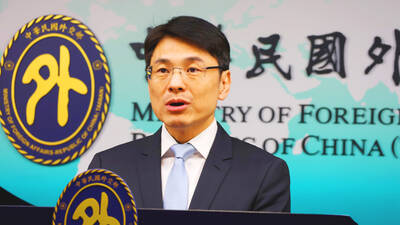
STAY IN YOUR LANE: As the US and Israel attack Iran, the ministry has warned China not to overstep by including Taiwanese citizens in its evacuation orders The Ministry of Foreign Affairs (MOFA) yesterday rebuked a statement by China’s embassy in Israel that it would evacuate Taiwanese holders of Chinese travel documents from Israel amid the latter’s escalating conflict with Iran. Tensions have risen across the Middle East in the wake of US and Israeli airstrikes on Iran beginning Saturday. China subsequently issued an evacuation notice for its citizens. In a news release, the Chinese embassy in Israel said holders of “Taiwan compatriot permits (台胞證)” issued to Taiwanese nationals by Chinese authorities for travel to China — could register for evacuation to Egypt. In Taipei, the ministry yesterday said Taiwan
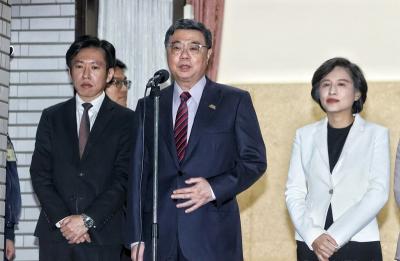
Taiwan is awaiting official notification from the US regarding the status of the Agreement on Reciprocal Trade (ART) after the US Supreme Court ruled US President Donald Trump's global tariffs unconstitutional. Speaking to reporters before a legislative hearing today, Premier Cho Jung-tai (卓榮泰) said that Taiwan's negotiation team remains focused on ensuring that the bilateral trade deal remains intact despite the legal challenge to Trump's tariff policy. "The US has pledged to notify its trade partners once the subsequent administrative and legal processes are finalized, and that certainly includes Taiwan," Cho said when asked about opposition parties’ doubts that the ART was
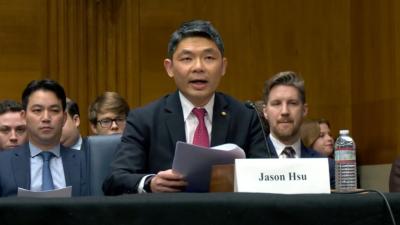
If China chose to invade Taiwan tomorrow, it would only have to sever three undersea fiber-optic cable clusters to cause a data blackout, Jason Hsu (許毓仁), a senior fellow at the Hudson Institute and former Chinese Nationalist Party (KMT) legislator, told a US security panel yesterday. In a Taiwan contingency, cable disruption would be one of the earliest preinvasion actions and the signal that escalation had begun, he said, adding that Taiwan’s current cable repair capabilities are insufficient. The US-China Economic and Security Review Commission (USCC) yesterday held a hearing on US-China Competition Under the Sea, with Hsu speaking on


 RSS
RSS