


The Taiwan High Court yesterday upheld an earlier ruling that found Democratic Progressive Party (DPP) Legislator Kao Jyh-peng (高志鵬) and his office assistant, Yao Liang-tian (姚糧鈿), guilty of corruption in the second retrial of a 2006 case stemming from a Taichung land deal.
The court’s Taichung branch sentenced Kao to four years and six months in prison and a NT$500,000 (US$15,690) fine for influence peddling and receiving an illegal political donation of NT$500,000 in contravention of the Anti-Corruption Act (貪污治罪條例), while Yao was sentenced to a 16-month term.
Both can still appeal.

Photo: Liao Chen-huei, Taipei Times
In the first trial, the lawmaker was found guilty. He appealed his conviction and the decision was overturned and the case sent back for a second trial.
However, in that retrial he was found guilty and sentenced to seven years and six months in prison. Kao then appealed that verdict.
The case was linked to an effort by a Taichung company to lease a plot of land belonging to the Ministry of Finance’s National Property Administration in 2006.
The company contacted Yao after it encountered problems when negotiating a deal with government officials. After finally reaching a deal to rent the land for daytime market use, the company paid a NT$2 million “commission” to Yao, as had been promised.
According to yesterday’s court statement, Yao used NT$1 million to pay off personal debts, put NT$500,000 into his bank accounts and gave NT$500,000 to Kao as a “political donation” for his campaign fund.
As a lawmaker, Kao had “substantial influence” in talks with National Property Administration officials to clinch the deal in favor of the company, prosecutors said.
During the retrial’s hearings, Kao denied the corruption and influence peddling charges, and said the deal was Yao’s personal business.
DPP spokesperson David Huang (黃適卓) said the party respects the court’s decision, as well as Kao’s right to appeal the ruling.

LOUD AND PROUD Taiwan might have taken a drubbing against Australia and Japan, but you might not know it from the enthusiasm and numbers of the fans Taiwan might not be expected to win the World Baseball Classic (WBC) but their fans are making their presence felt in Tokyo, with tens of thousands decked out in the team’s blue, blowing horns and singing songs. Taiwanese fans have packed out the Tokyo Dome for all three of their games so far and even threatened to drown out home team supporters when their team played Japan on Friday. They blew trumpets, chanted for their favorite players and had their own cheerleading squad who dance on a stage during the game. The team struggled to match that exuberance on the field, with
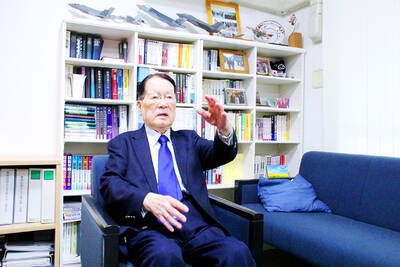
Whether Japan would help defend Taiwan in case of a cross-strait conflict would depend on the US and the extent to which Japan would be allowed to act under the US-Japan Security Treaty, former Japanese minister of defense Satoshi Morimoto said. As China has not given up on the idea of invading Taiwan by force, to what extent Japan could support US military action would hinge on Washington’s intention and its negotiation with Tokyo, Morimoto said in an interview with the Liberty Times (sister paper of the Taipei Times) yesterday. There has to be sufficient mutual recognition of how Japan could provide
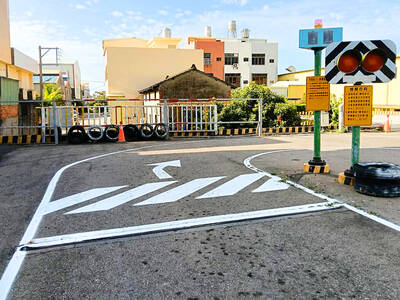
UPDATED TEST: The new rules aim to assess drivers’ awareness of risky behaviors and how they respond under certain circumstances, the Highway Bureau said Driver’s license applicants who fail to yield to pedestrians at intersections or to check blind spots, or omit pointing-and-calling procedures would fail the driving test, the Highway Bureau said yesterday. The change is set to be implemented at the end of the month, and is part of the bureau’s reform of the driving portion of the test, which has been criticized for failing to assess whether drivers can operate vehicles safely. Sedan drivers would be tested regarding yielding to pedestrians and turning their heads to check blind spots, while drivers of large vehicles would be tested on their familiarity with pointing-and-calling

A Taiwanese man apologized on Friday after saying in a social media post that he worked with Australia to provide scouting reports on Taiwan’s team, enabling Australia’s victory in this year’s World Baseball Classic (WBC), saying it was a joke and that he did not hold any position with foreign teams or Taiwan’s sports training center. Chen Po-hao (陳柏豪) drew the rage of many Taiwan baseball fans when he posted online on Thursday night, claiming credit for Australia’s 3-0 win over Taiwan in the opening game for Pool C, saying he worked as a physical therapist with the national team and


 RSS
RSS