


Chinese Nationalist Party (KMT) Chairwoman Hung Hsiu-chu (洪秀柱) yesterday expressed the hope that Taiwan-US ties could further deepen following US president-elect Donald Trump’s victory, as other political parties also responded to the widely watched election.
At about 3:30pm in Taiwan yesterday, when US polls showed Trump leading his Democratic rival, Hillary Rodham Clinton, by 247 to 215 electoral votes, the KMT issued a press release extending Hung’s congratulations to Trump.
“US elections have been the best exemplification of democracy. We also look to strengthen Taiwan-US bilateral ties,” Hung said in the news release.
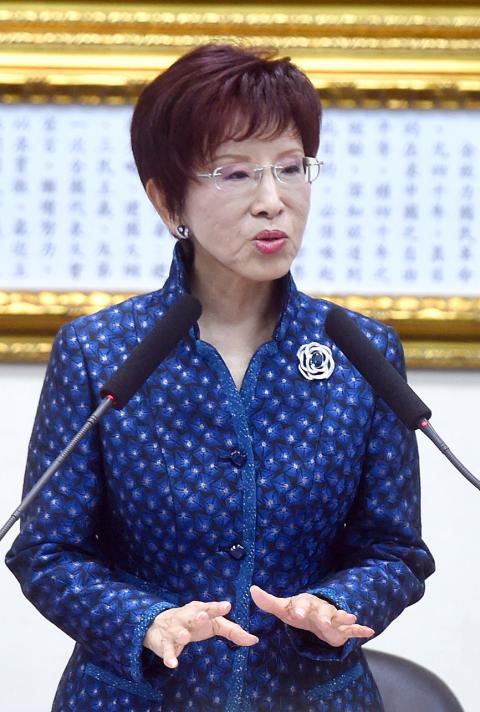
Photo: Chien Jung-fong, Taipei Times
Hung said that when former president Ma Ying-jeou (馬英九) was in office, Taiwan was admitted to the US’ Visa Waiver Program and Taipei’s relationship with Washington improved, with numerous mutual exchanges and bilateral programs being conducted between the two sides over the past eight years.
“The KMT wishes to build up on this foundation, to continue our mutual efforts and to deepen our cooperation in various sectors, in the hopes of ... building closer Taiwan-US ties,” Hung said.
Meanwhile, Democratic Progressive Party (DPP) Legislator Lo Chih-cheng (羅致政) said that Washington’s policies on Taiwan and the Asia-Pacific region would still be based on US interests.
“The national interests of the US come first. If Clinton was elected, things would be more predictable, whereas a Trump victory would mean changes and new factors, and things would be more difficult to project,” Lo said.
Aside from the president, the composition of his national security team is equally important, Lo said.
“One thing that bears watching in the coming days is who will make up Trump’s national security team, and what is this team’s views and policies on the Asia-Pacific region,” he said.
The DPP will also closely follow the US-China relationship and see if it becomes more tense, Lo said, adding that the main challenge for national security agencies is to watch for any potential changes in Washington’s ties with Beijing that could give Taipei more room to maneuver.
New Power Party Executive Chairman Huang Kuo-chang (黃國昌) said his party respected the US election results, voicing his support while calling for a reconsideration of Washington’s “one China” policy.
However, Huang also called on the government to invest more in indigenous defense capabilities.
“We should not keep using the bulk of our defense budget on foreign weapons, because that is not going to solve the problem of strengthening our ability to defend ourselves in the long run,” he said.
However, he added that there is still room for cooperation with foreign suppliers, including the US.
Huang declined to comment on whether Taiwan should continue to lobby for accession to the Trans-Pacific Partnership, but called for boosting economic and financial ties with the US.
Additional reporting by Abraham Gerber
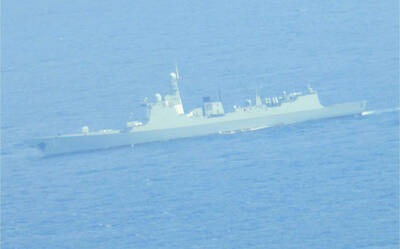
The military has spotted two Chinese warships operating in waters near Penghu County in the Taiwan Strait and sent its own naval and air forces to monitor the vessels, the Ministry of National Defense (MND) said. Beijing sends warships and warplanes into the waters and skies around Taiwan on an almost daily basis, drawing condemnation from Taipei. While the ministry offers daily updates on the locations of Chinese military aircraft, it only rarely gives details of where Chinese warships are operating, generally only when it detects aircraft carriers, as happened last week. A Chinese destroyer and a frigate entered waters to the southwest
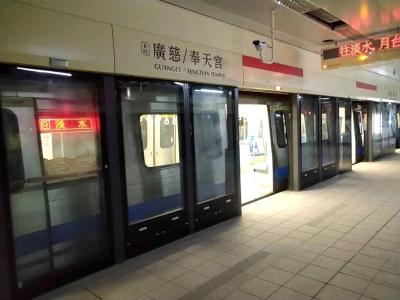
The eastern extension of the Taipei MRT Red Line could begin operations as early as late June, the Taipei Department of Rapid Transit Systems said yesterday. Taipei Rapid Transit Corp said it is considering offering one month of free rides on the new section to mark its opening. Construction progress on the 1.4km extension, which is to run from the current terminal Xiangshan Station to a new eastern terminal, Guangci/Fengtian Temple Station, was 90.6 percent complete by the end of last month, the department said in a report to the Taipei City Council's Transportation Committee. While construction began in October 2016 with an
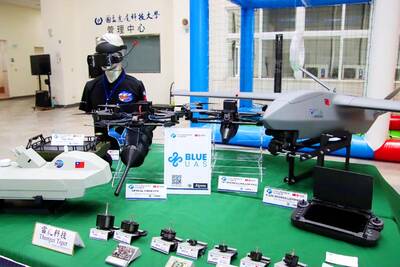
NON-RED SUPPLY: Boosting the nation’s drone industry is becoming increasingly urgent as China’s UAV dominance could become an issue in a crisis, an analyst said Taiwan’s drone exports to Europe grew 41.7-fold from 2024 to last year, with demand from Ukraine’s fight against Russian aggression the most likely driver of growth, a study showed. The Institute for Democracy, Society and Emerging Technology (DSET) in a statement on Wednesday said it found that many of Taiwan’s uncrewed aerial vehicle (UAV) sales were from Poland and the Czech Republic. These countries likely transferred the drones to Ukraine to aid it in its fight against the Russian invasion that started in 2022, it said. Despite the gains, Taiwan is not the dominant drone exporter to these markets, ranking second and fourth
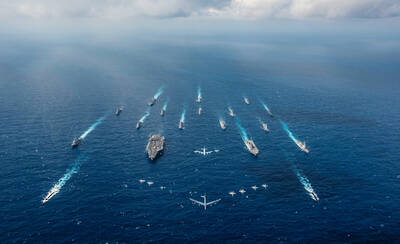
Japanese Prime Minister Sanae Takaichi’s comment last year on Tokyo’s potential reaction to a Taiwan-China conflict has forced Beijing to rewrite its invasion plans, a retired Japanese general said. Takaichi told the Diet on Nov. 7 last year that a Chinese naval blockade or military attack on Taiwan could constitute a “survival-threatening situation” for Japan, potentially allowing Tokyo to exercise its right to collective self-defense. Former Japan Ground Self-Defense Force general Kiyofumi Ogawa said in a recent speech that the remark has been interpreted as meaning Japan could intervene in the early stages of a Taiwan Strait conflict, undermining China’s previous assumptions


 RSS
RSS