


Exiled Tibetans who arrived between 2009 and June 29 are to be granted legal status entitling them to work and live in Taiwan, following the Legislative Yuan’s passage yesterday of an amendment to the Immigration Act (入出國及移民法).
The existing law stipulates that “stateless people from India or Nepal who entered Taiwan between May 21, 1999, and Dec. 31, 2008, and who cannot be repatriated may be allowed to reside in Taiwan by the National Immigration Agency if their status has been verified by the Mongolian and Tibetan Affairs Commission.”
The amendment to Article 16 of the Immigration Act stretches the timeframe to June 29 this year.
Those covered by the amendment can apply for a permanent resident card or a national identification card after meeting residency terms.
A group of Tibetans who staged a protest outside the Executive Yuan on Oct. 21 to highlight their plight since coming to Taiwan after 2008 will be granted by the same rights as those who arrived earlier.
The group in September 2014 began seeking the help of legislators and the Mongolian and Tibetan Affairs Commission, saying they were unable to renew the passports they used to travel to Taiwan from Nepal.
The government had made similar one-off resolutions on the legal status of exiled Tibetans in 2000 and 2008.
Democratic Progressive Party Legislator Kolas Yotaka, who proposed the amendment, said insofar as Taiwan has ratified the International Covenant on Civil and Political Rights and the International Covenant on Economic, Social and Cultural Rights in 2009, “it is an obligation and responsibility for Taiwan to protect stateless people’s rights to residency and work.”
She said that the exiled Tibetans had escaped from China, where persecution of Tibetans is grave and more than 100 Tibetans have set themselves on fire in protest against Chinese rule and more than 6,800 have been arrested since 2009.
“The legislature has the obligation to establish an institution to safeguard democracy and human rights through legislation,” she said.
Taiwan Association for Human Rights secretary-general Chiu E-ling (邱伊翎) said that Tibetans married to Taiwanese face even higher hurdles than those set for Chinese and other foreign spouses, and called for further revisions to existing regulations.
Separately, the legislature passed the Act Governing Post-Conviction DNA Testing (刑事案件確定後去氧核醣核酸鑑定條例), which states that the purpose of the act is to “maintain the correctness of criminal verdicts, avoid wrongful convictions and protect human rights.”
Taiwan has been using DNA testing for criminal cases since 1992 and the act is to institutionalize the testing in the process of criminal trials, the legislation said.
Additional Reporting by Hsiao Ting-fang

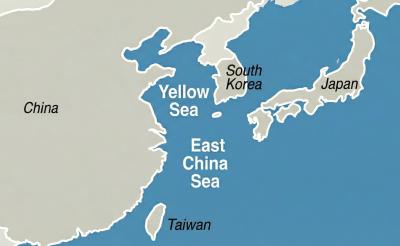
China has reserved offshore airspace in the Yellow Sea and East China Sea from March 27 to May 6, issuing alerts usually used to warn of military exercises, although no such exercises have been announced, the Wall Street Journal (WSJ) reported yesterday. Reserving such a large area for 40 days without explanation is an “unusual step,” as military exercises normally only last a few days, the paper said. These alerts, known as Notice to Air Missions (Notams), “are intended to inform pilots and aviation authorities of temporary airspace hazards or restrictions,” the article said. The airspace reserved in the alert is

NAMING SPAT: The foreign ministry called on Denmark to propose an acceptable solution to the erroneous nationality used for Taiwanese on residence permits Taiwan has revoked some privileges for Danish diplomatic staff over a Danish permit that lists “Taiwan” as “China,” Eric Huang (黃鈞耀), head of the Ministry of Foreign Affairs’ Department of European Affairs, told a news conference in Taipei yesterday. Reporters asked Huang whether the Danish government had responded to the ministry’s request that it correct the nationality on Danish residence permits of Taiwanese, which has been listed as “China” since 2024. Taiwan’s representative office in Denmark continues to communicate with the Danish government, and the ministry has revoked some privileges previously granted to Danish representatives in Taiwan and would continue to review

More than 6,000 Taiwanese students have participated in exchange programs in China over the past two years, despite the Mainland Affairs Council’s (MAC) “orange light” travel advisory, government records showed. The MAC’s publicly available registry showed that Taiwanese college and university students who went on exchange programs across the Strait numbered 3,592 and 2,966 people respectively. The National Immigration Agency data revealed that 2,296 and 2,551 Chinese students visited Taiwan for study in the same two years. A review of the Web sites of publicly-run universities and colleges showed that Taiwanese higher education institutions continued to recruit students for Chinese educational programs without

The first bluefin tuna of the season, brought to shore in Pingtung County and weighing 190kg, was yesterday auctioned for NT$10,600 (US$333.5) per kilogram, setting a record high for the local market. The auction was held at the fish market in Donggang Fishing Harbor, where the Siaoliouciou Island-registered fishing vessel Fu Yu Ching No. 2 delivered the “Pingtung First Tuna” it had caught for bidding. Bidding was intense, and the tuna was ultimately jointly purchased by a local restaurant and a local company for NT$10,600 per kilogram — NT$300 ,more than last year — for a total of NT$2.014 million. The 67-year-old skipper


 RSS
RSS