

The Ministry of Foreign Affairs yesterday downplayed reports that a ban on imports of food from areas affected by the Fukushima Dai-ichi nuclear power plant disaster in Japan would be discussed at the Taiwan-Japan Maritime Affairs Cooperation Dialogue Mechanism in Tokyo on Monday.
At a meeting of the legislature’s Foreign Affairs and National Defense Committee Chinese Nationalist Party (KMT) Legislator Johnny Chiang (江啟臣) asked Minister of Foreign Affairs David Lee (李大維) whether the government has decided to reopen the door to Japanese food products that have been prohibited.
“There is a high level of public consensus on the issue, as it could jeopardize food safety,” Chiang said at the question-and-answer session. “If the issue is discussed at the bilateral meeting, or if it is not brought up, but the government has already made a secret promise to Tokyo to lift the ban, we will denounce such an action.”
Lee said the government agencies responsible for the issue are the Ministry of Health and Welfare and the Council of Agriculture and neither is to send representative to the maritime meeting.
Chiang later asked Association of East Asian Relations Secretary-General Peter Tsai (蔡明耀) the same question.
“I am not able to answer the question because my association is not in charge of the issue, nor have I ever heard of such a decision,” said Tsai, who is to lead the Taiwanese delegation to the meeting.
There have been rumors that the government plans to lift the import ban, which was imposed on all food imports from five prefectures — Fukushima, Ibaraki, Tochigi, Gunma and Chiba — after the nuclear catastrophe in March 2011.
Earlier yesterday, the ministry announced the date for the first round of the bilateral meetings.
“During the meeting, our side is to put forward issues including fisheries cooperation, emergency relief at sea and marine scientific research. Government agencies have been fully briefed on these issues,” the ministry said.
The ministry also said it would negotiate with Tokyo on the issue of Okinotori Atoll because of the government’s determination to safeguard the rights of Taiwanese fishermen.
The bilateral meeting was originally scheduled for July 28, but was postponed indefinitely two days beforehand to allow both sides more time to prepare for the wide variety of issues to be discussed.
The dialogue mechanism was established in May after relations between the two nations were strained by the Japan Coast Guard on April 25 seized a Taiwanese fishing boat operating about 150 nautical miles (277.8km) east-southeast of Okinotori Atoll.
The mechanism was created under the framework of the Taipei-based Association of East Asian Relations and its Japanese counterpart, the Interchange Association, Japan.
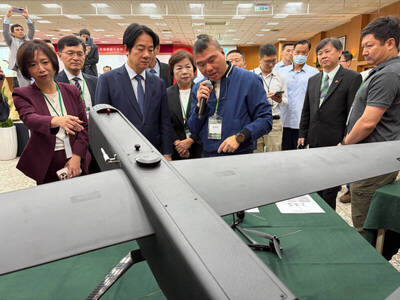
Two executives of drone supplier Jiin Ming Industry Co (錦明實業) have been detained and held incommunicado over the company's alleged use of prohibited China-made chips and camera lenses in drones supplied under recent military contracts, the Taoyuan District Prosecutors' Office said today. In a statement, prosecutors said they raided the offices of Jiin Ming — headquartered in Taoyuan — as well as those of its subsidiaries and its suppliers on Thursday last week. The raids followed a report that the company had breached its procurement contracts by putting the prohibited components into drones delivered to the military. During the raids, prosecutors summoned
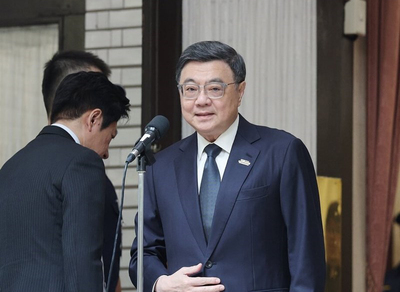
The government would continue monitoring online rumors that a pneumonic plague outbreak has spread from Russia into China and could enhance existing quarantine measures, Premier Cho Jung-tai (卓榮泰) said today. During a legislative meeting, Democratic Progressive Party Legislator Wang Ting-yu (王定宇) said rumors were circulating that the disease had spread across several Chinese provinces. He asked Cho whether the government was prepared to prevent the disease from spreading to Taiwan, given the frequent exchanges between Taiwan and China, and how concerned the government was about the alleged outbreak. The Ministry of Health and Welfare implemented border quarantine measures after briefing the Executive Yuan

South Korean boy band BigBang drew 120,000 fans to three concerts at Taipei Dome from Friday through yesterday, as the band thanked them for their support over their 20-year career. The Taipei Dome concerts were part of BigBang's "2026-2027 World Tour XX: Cosmos." Friday's concert was BigBang's first performance in Taiwan in 11 years. During the encore, group leader G-Dragon (GD) shouted "I love you" in Chinese and said he was especially happy to perform in Taiwan with bandmates Taeyang and Daesung. "Taipei, I'm very grateful to you all," GD said in Chinese, asking fans to wait for the band's return. Daesung thanked
A Chinese People's Liberation Army (PLA) Navy aircraft carrier group was being monitored after entering the western Pacific, the Ministry of National Defense said today, after Beijing yesterday criticized Taiwan for using a water cannon against a Chinese fishing boat near the Pratas Islands (Dongsha Islands, 東沙群島). A Chinese naval task group led by the aircraft carrier Liaoning (遼寧) yesterday sailed to the western Pacific for training, Chinese state-run Xinhua news agency quoted the PLA Navy as saying. “The drill is part of the annual routine training plan aimed at testing and improving the troops’ combat readiness and enhancing their ability to


 RSS
RSS