


Doctors yesterday said the pathogenic factors leading to type 2 diabetes for Taiwanese might differ slightly from those that affect Westerners, in that East Asian people tend to have weaker insulin secretion and a higher body fat ratio.
Diabetes Association of the Republic of China secretary-general Lin Shih-yi (林時逸), who is also the director of endocrinology and metabolism at Taichung Veterans General Hospital, said type 2 diabetes has often been linked with obesity.
However, a Japanese retrospective study last year showed that while about 80 percent of Westerners with type 2 diabetes were obese, only abut 30 to 40 percent of Taiwanese were obese and the average age of onset was younger, he said.
East Asian people in general have weaker insulin secretion than Western people, causing the body to be unable to control blood sugar effectively, which means they develop diabetes more easily, Lin said.
Studies have shown that the weaker insulin secretion might be determined by particular genes, intestinal secretions, diet and other factors.
Diabetes Association of the Republic of China director-general Wayne Sheu (許惠恒), a superintendent at Taichung Veterans General Hospital, said among patients diagnosed with diabetes, only about 20 to 30 percent of East Asian patients have normal insulin secretion, lower than the approximately 50 percent of Western patients.
In addition, he said East Asian diabetes patients might not look obese, but many have a relatively high percentage of body fat, which can increase insulin resistance.
Sheu said there are more than 1.88 million people with diabetes in Taiwan and the prevalence of diabetes in adults is about 10 percent — higher than the global prevalence of 8.8 percent and 9.3 percent in the Asia-Pacific region.
The Taiwanese Association of Diabetes Educators on Friday last week published a low-glycemic cookbook, which nutritionists say could help people with diabetes control their blood sugar levels and help people without diabetes maintain a healthy weight.
Taiwanese Association of Diabetes Educators president Tu Shih-te (杜思德) said he treated a 19-year-old boy who had a body mass index of 24 and who did not look obese, but he was diagnosed with type 2 diabetes.
The boy drank a cup of bubble milk tea nearly every day, did not exercise and his family has a history of diabetes, Tu said, adding he has seen several similar cases of young people without obesity diagnosed with diabetes.
He suggested people not only control their body weight, but also eat food low in sugars and fats, exercise regularly and get their blood sugar levels tested before and after a meal at least once a year, especially those whose family has a history of the disease.

Kenting National Park service technician Yang Jien-fon (楊政峰) won a silver award in World Grand Prix Photography Awards Spring Season for his photograph of two male rat snakes intertwined in combat. Yang’s colleagues at Kenting National Park said he is a master of nature photography who has been held back by his job in civil service. The awards accept entries in all four seasons across six categories: architectural and urban photography, black-and-white and fine art photography, commercial and fashion photography, documentary and people photography, nature and experimental photography, and mobile photography. Awards are ranked according to scores and divided into platinum, gold and

SPACE VETERAN: Kjell N. Lindgren, who helps lead NASA’s human spaceflight missions, has been on two expeditions on the ISS and has spent 311 days in space Taiwan-born US astronaut Kjell N. Lindgren is to visit Taiwan to promote technological partnerships through one of the programs organized by the US for its 250th national anniversary. Lindgren would be in Taiwan from Tuesday to Saturday next week as part of the US Bureau of Educational and Cultural Affairs’ US Speaker Program, organized to celebrate the 250th anniversary of the signing of the Declaration of Independence, the American Institute in Taiwan (AIT) said in a statement yesterday. Lindgren plans to engage with key leaders across the nation “to advance cutting-edge technological partnerships and inspire the next generation of scientists and engineers,”

The Chinese Nationalist Party (KMT) caucus yesterday said it opposes the introduction of migrant workers from India until a mechanism is in place to prevent workers from absconding. Minister of Labor Hung Sun-han (洪申翰) on Thursday told the Legislative Yuan that the first group of migrant workers from India could be introduced as early as this year, as part of a government program. The caucus’ opposition to the policy is based on the assessment that “the risk is too high,” KMT caucus secretary-general Lin Pei-hsiang (林沛祥) said. Taiwan has a serious and long-standing problem of migrant workers absconding from their contracts, indicating that
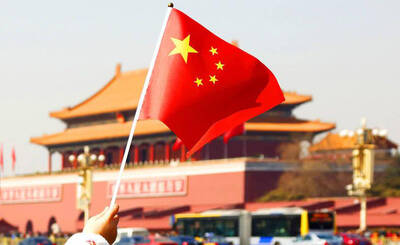
TRADE-OFF: Beijing seeks to trade a bowl of tempura for a Chinese delicacy, an official said, while another said its promises were attempts to interfere in the polls The government must carefully consider the national security implications of building a bridge connecting Kinmen County and Xiamen, China, the Public Construction Commission (PCC) said yesterday. PCC Commissioner Derek Chen (陳金德), who is also a minister without portfolio, made the remarks in a meeting of the legislature’s Transportation Committee, after Democratic Progressive Party Legislator Hsu Fu-kuei (徐富癸) asked about China’s proposal of new infrastructure projects to further connect Kinmen and Lienchiang (Matsu) counties with Xiamen. China unveiled the bridge plan, along with nine other policies for Taiwan, on Sunday, the last day of Chinese Nationalist Party (KMT) Chairwoman Cheng Li-wun’s (鄭麗文) visit


 RSS
RSS