


Chinese Nationalist Party (KMT) Chairwoman Hung Hsiu-chu (洪秀柱) yesterday denied that party chairs typically report to the party caucus before meeting with their Chinese counterparts.
Hung was asked by reporters about the KMT caucus’ complaint — expressed by caucus convener Sufin Siluko (廖國棟) — that they were not notified before the party’s headquarters announced that Hung would meet with Chinese President Xi Jinping (習近平) on Nov. 1.
The chairwoman said she welcomed KMT lawmakers to “come and have a chat” with her at the party’s headquarters, but added that it is “not right” for them to complain about a lack of prior notice.
“The meetings between then-chairman Lien Chan (連戰) and former Chinese president Hu Jintao (胡錦濤), between then-president and then-chairman Ma Ying-jeou (馬英九) and Chinese President Xi Jinping and again between then-chairman Eric Chu (朱立倫) and Xi all took place without reporting to the KMT caucus in advance,” Hung said.
“There are a lot of details to coordinate between [the KMT and the Chinese Communist Party concerning the forum], and it is not possible to explain to everybody about every detail. Even the timing of the announcement had to be synchronized,” she added.
Asked about the caucus’ demand that Hung clearly state the “one China, different interpretations” aspect of the so-called “1992 consensus” when she meets Xi, Hung said the consensus incorporates “one China, different interpretations” and asked the caucus to obtain a deeper understanding of the formation and the content of the “1992 consensus.”
The “1992 consensus” — a term former Mainland Affairs Council chairman Su Chi (蘇起) admitted making up in 2000 — refers to a tacit understanding between the KMT and the Chinese government that both sides acknowledge there is “one China,” with each side having its own interpretation of what “China” means.
Hung yesterday denied that she was going to bring up “one China, same interpretation,” but protested the public’s fear of the term.
“Now people fret whenever they hear the phrase, ‘one China, same interpretation,’ without first asking what it is about. They think those who uphold it are for immediate unification or are for being unified with China. However, these are mistaken viewpoints, and I believe more communication is needed,” she said.
In response to Hung’s remarks, Sufin said the meetings Hung cited all took place when the KMT was still the ruling party in either the executive branch or in the legislature.
However, it is a different scenario now, he said.
“With the predicament we are in now, you have to be very responsive to public opinion in order to have a future, and many KMT lawmakers have expressed their deep worries about their electoral prospects when it comes to [Hung’s] ‘one China, same interpretation.’”
Additional Reporting by CNA
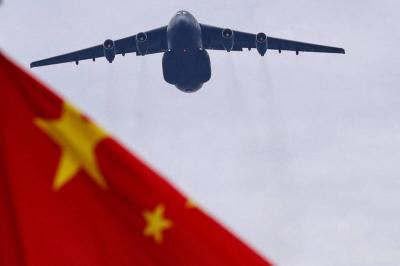
Beijing could eventually see a full amphibious invasion of Taiwan as the only "prudent" way to bring about unification, the US Department of Defense said in a newly released annual report to Congress. The Pentagon's "Annual Report to Congress: Military and Security Developments Involving the People's Republic of China 2025," was in many ways similar to last year’s report but reorganized the analysis of the options China has to take over Taiwan. Generally, according to the report, Chinese leaders view the People's Liberation Army's (PLA) capabilities for a Taiwan campaign as improving, but they remain uncertain about its readiness to successfully seize
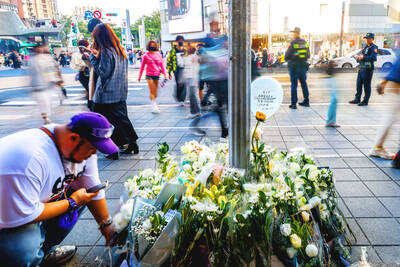
HORROR STORIES: One victim recounted not realizing they had been stabbed and seeing people bleeding, while another recalled breaking down in tears after fleeing A man on Friday died after he tried to fight the knife-wielding suspect who went on a stabbing spree near two of Taipei’s busiest metro stations, Taipei Mayor Chiang Wan-an (蔣萬安) said. The 57-year-old man, identified by his family name, Yu (余), encountered the suspect at Exit M7 of Taipei Main Station and immediately tried to stop him, but was fatally wounded and later died, Chiang said, calling the incident “heartbreaking.” Yu’s family would receive at least NT$5 million (US$158,584) in compensation through the Taipei Rapid Transit Corp’s (TRTC) insurance coverage, he said after convening an emergency security response meeting yesterday morning. National

Taiwan is getting a day off on Christmas for the first time in 25 years. The change comes after opposition parties passed a law earlier this year to add or restore five public holidays, including Constitution Day, which falls on today, Dec. 25. The day marks the 1947 adoption of the constitution of the Republic of China, as the government in Taipei is formally known. Back then the Chinese Nationalist Party (KMT) governed China from Nanjing. When the KMT, now an opposition party in Taiwan, passed the legislation on holidays, it said that they would help “commemorate the history of national development.” That

Taiwan has overtaken South Korea this year in per capita income for the first time in 23 years, IMF data showed. Per capita income is a nation’s GDP divided by the total population, used to compare average wealth levels across countries. Taiwan also beat Japan this year on per capita income, after surpassing it for the first time last year, US magazine Newsweek reported yesterday. Across Asia, Taiwan ranked fourth for per capita income at US$37,827 this year due to sustained economic growth, the report said. In the top three spots were Singapore, Macau and Hong Kong, it said. South


 RSS
RSS