


The Ministry of Foreign Affairs yesterday said that diplomatic relations between Taiwan and Saint Vincent and the Grenadines remain strong and stable, shrugging off plans by the Caribbean nation’s major opposition party to establish ties with China if it gains power.
At a routine news conference in Taipei yesterday, Department of Latin American and Caribbean Affairs Director-General Miguel Tsao (曹立傑) said relations between the two nations have been solid and steady, as evidenced by Saint Vincent and the Grenadines Prime Minister Ralph Gonsalves’ attendance at the government’s Double Ten National Day ceremony in front of the Presidential Office Building on Monday.
“During his visit to Taiwan this time, Gonsalves said that in an effort to demonstrate our friendship, he published a 40,000-word article in a local newspaper detailing the two nations’ close ties,” Tsao said.
In the article, Gonsalves told Arnhim Eustace, leader of Saint Vincent’s main opposition New Democratic Party (NDP), that the idea of establishing diplomatic ties with Beijing is “naive” Tsao said.
Gonsalves also reiterated confidence in the two nations’ strong relations during his meeting with President Tsai Ing-wen (蔡英文) at the Presidential Office on Tuesday and pledged to prove his words through actions, Tsao said.
Tsao made the remarks in response to reporters’ questions regarding Eustace’s announcement in August that in light of Saint Vincent’s need to promote trade and investment, his party would switch the nation’s diplomatic recognition to Beijing if elected to office.
Saint Vincent is among Taiwan’s 22 diplomatic allies, some of which have allegedly been interested in switching sides to Beijing, including the Vatican and Sao Tome and Principe.
In March, Taipei’s former diplomatic ally Gambia established ties with China after severing the two nations’ 18-year relationship in November 2013.
Tsao said it was the 10th visit to Taiwan by Gonsalves, who was re-elected for a fourth term in December last year and is set to become the longest-ruling national leader in Latin America and the Caribbean after his current term expires in 2020.
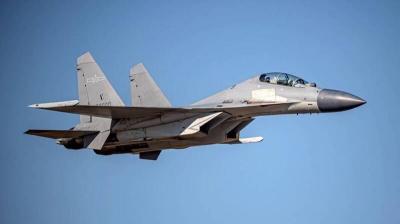
Eight Chinese naval vessels and 24 military aircraft were detected crossing the median line of the Taiwan Strait between 6am yesterday and 6am today, the Ministry of National Defense said this morning. The aircraft entered Taiwan’s northern, central, southwestern and eastern air defense identification zones, the ministry said. The armed forces responded with mission aircraft, naval vessels and shore-based missile systems to closely monitor the situation, it added. Eight naval vessels, one official ship and 36 aircraft sorties were spotted in total, the ministry said.
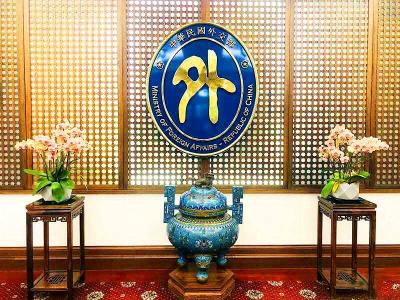
The Ministry of Foreign Affairs (MOFA) today said that if South Korea does not reply appropriately to its request to correct Taiwan’s name on its e-Arrival card system before March 31, it would take corresponding measures to alter how South Korea is labeled on the online Taiwan Arrival Card system. South Korea’s e-Arrival card system lists Taiwan as “China (Taiwan)” in the “point of departure” and “next destination” fields. The ministry said that it changed the nationality for South Koreans on Taiwan’s Alien Resident Certificates from “Korea” to “South Korea” on March 1, in a gesture of goodwill and based on the

Taiwanese officials were shown the first of 66 F-16V fighter jets purchased by Taiwan from the United States, the Ministry of National Defense said yesterday, adding the aircraft has completed an initial flight test and is expected to be delivered later this year. A delegation led by Deputy Minister of National Defense Hsu Szu-chien (徐斯儉) visited Lockheed Martin’s F-16 C/D Block 70 (also known as F-16V) assembly line in South Carolina on March 16 to view the aircraft. The jet will undergo a final acceptance flight in the US before being delivered to Taiwan, the
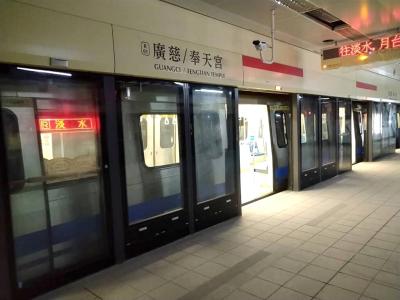
The New Taipei Metro's Sanyin Line and the eastern extension of the Taipei Metro's Tamsui-Xinyi Line (Red Line) are scheduled to begin operations in June, the National Development Council said today. The Red Line, which terminates at Xiangshan Station, would be connected by the 1.4km extension to a new eastern terminal, Guangci/Fengtian Temple Station, while the Sanyin Line would link New Taipei City's Tucheng and Yingge stations via Sanxia District (三峽). The council gave the updates at a council meeting reviewing progress on public construction projects for this year. Taiwan's annual public infrastructure budget would remain at NT$800 billion (US$25.08 billion), with NT$97.3


 RSS
RSS