


Life expectancy reached a record high of 80.2 years last year, up from 79.84 years in 2014, according to statistics released yesterday by the Ministry of the Interior.
Last year, the life expectancy of Taiwanese males averaged 77.01, while that of females reached 83.62, both of which were record highs, the statistics showed.
The ministry predicted that 81 percent of males and 92 percent of females would live past the age of 65.
Half of the males will live longer than 80 years, while half of the females will live longer than 85 years, the statistics showed.
Upon reaching the age of 65, Taiwanese men and women tend to live for a further 18.15 and 21.7 years respectively, they showed.
Compared with data from the US and European nations, ministry data show that the life expectancy for Taiwanese men is closest to their American and German counterparts, but lower than other advanced European nations, Department of Statistics Director Peng Hsien-ming (彭賢明) said.
The average lifespan for Taiwanese women is three years higher than that of American women, and close to that their Canadian, British, German and French counterparts, Peng said.
Compared with neighboring Asian nations, the life expectancy in Taiwan is lower than in Japan, South Korea and Singapore, but higher than in China, Malaysia and the Philippines.
The lifespan of Taipei residents reached an average 83.43 years last year, the highest among all the nation’s cities and counties, the statistics showed.
On average, people in northern and western Taiwan live longer than people in the south and east of the nation, due to factors such as lifestyle and access to medical care.
Over the past 10 years, the life expectancy of male infants increased by 0.25 years per year, while that of female infants increased by 0.28 years per year, Peng said, adding that the life expectancy of Taiwanese is expected to continue to rise.

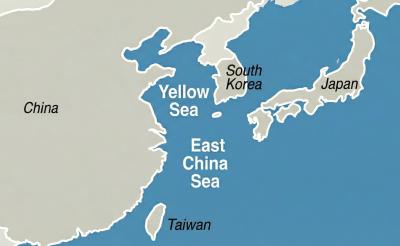
China has reserved offshore airspace in the Yellow Sea and East China Sea from March 27 to May 6, issuing alerts usually used to warn of military exercises, although no such exercises have been announced, the Wall Street Journal (WSJ) reported yesterday. Reserving such a large area for 40 days without explanation is an “unusual step,” as military exercises normally only last a few days, the paper said. These alerts, known as Notice to Air Missions (Notams), “are intended to inform pilots and aviation authorities of temporary airspace hazards or restrictions,” the article said. The airspace reserved in the alert is

NAMING SPAT: The foreign ministry called on Denmark to propose an acceptable solution to the erroneous nationality used for Taiwanese on residence permits Taiwan has revoked some privileges for Danish diplomatic staff over a Danish permit that lists “Taiwan” as “China,” Eric Huang (黃鈞耀), head of the Ministry of Foreign Affairs’ Department of European Affairs, told a news conference in Taipei yesterday. Reporters asked Huang whether the Danish government had responded to the ministry’s request that it correct the nationality on Danish residence permits of Taiwanese, which has been listed as “China” since 2024. Taiwan’s representative office in Denmark continues to communicate with the Danish government, and the ministry has revoked some privileges previously granted to Danish representatives in Taiwan and would continue to review

More than 6,000 Taiwanese students have participated in exchange programs in China over the past two years, despite the Mainland Affairs Council’s (MAC) “orange light” travel advisory, government records showed. The MAC’s publicly available registry showed that Taiwanese college and university students who went on exchange programs across the Strait numbered 3,592 and 2,966 people respectively. The National Immigration Agency data revealed that 2,296 and 2,551 Chinese students visited Taiwan for study in the same two years. A review of the Web sites of publicly-run universities and colleges showed that Taiwanese higher education institutions continued to recruit students for Chinese educational programs without

China has reserved offshore airspace over the Yellow Sea and East China Sea from March 27 to May 6, issuing alerts that are usually used to warn of military exercises, although no such exercises have been announced, the Wall Street Journal (WSJ) reported on Sunday. Reserving such a large area for 40 days without explanation is an “unusual step,” as military exercises normally only last a few days, the paper said. The alerts, known as notice to air missions (NOTAMs), “are intended to inform pilots and aviation authorities of temporary airspace hazards or restrictions,” the article said. The airspace reserved in the alert


 RSS
RSS