


Changes to evaluation standards for hospitals would harm quality by dropping mandatory “patient-to-caregiver” ratios, representatives of medical professional associations said.
Officials from 10 professional and academic medical associations gathered at the offices of the Taiwan Healthcare Reform Foundation yesterday to protest proposed changes to hospital performance assessments, accusing the Ministry of Health and Welfare of “foul play” for proposing “assessment simplifications” leading to “personnel cuts.”
While performance assessments should be simplified, the nation’s low patient-to-caregiver ratio should protect that requirement, foundation chairwoman Joanne Liu (劉淑瓊) said, criticizing the ministry’s plan to switch to “passive monitoring,” which would require hospitals to publish their “patient-to-caregiver” ratios, while removing the data from consideration during performance assessments.
“The ministry is basically saying that hospitals can do what they want on the matter and it will not regulate them as long as they put the data online,” Liu said, calling for better standards to prevent hospitals from “cooking the books” on personnel hours.
“Even if people went to the trouble of looking up the data, they would not be able to understand it,” she said.
The ministry performs routine performance assessments of hospitals to determine their pay tiers according to the National Health Insurance system, with institutions competing to be designated as a “medical center,” the tier which receives the highest payouts.
Relatively high patient-to-caregiver ratios were added to the assessments in 2008 following protests from labor groups and they serve as a “must pass” criteria for higher pay tier designation, regardless of the scores in other areas, Liu said.
Removing the ratio requirement would likely lead to hospitals cutting the number of pathologists, despite months-long waiting periods patients face for some treatments, Taiwan Speech Language Pathologist Union president Joyce Su (蘇心怡) said.
“This has to do with National Health Insurance pay formulas — because the formula for our type of service is relatively low, hospitals do not view it as profitable,” Su said.
Hospitals’ unwillingness to hire personnel means that young hearing therapists are unable to find work, Taiwan Speech-Language-Hearing Association vice chairman Yeh Wen-ying (葉文英) said.

The military has spotted two Chinese warships operating in waters near Penghu County in the Taiwan Strait and sent its own naval and air forces to monitor the vessels, the Ministry of National Defense (MND) said. Beijing sends warships and warplanes into the waters and skies around Taiwan on an almost daily basis, drawing condemnation from Taipei. While the ministry offers daily updates on the locations of Chinese military aircraft, it only rarely gives details of where Chinese warships are operating, generally only when it detects aircraft carriers, as happened last week. A Chinese destroyer and a frigate entered waters to the southwest
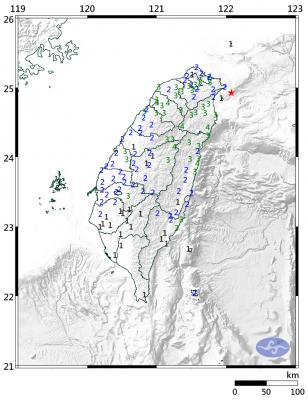
A magnitude 6.1 earthquake struck off the coast of Yilan County at 8:39pm tonight, the Central Weather Administration (CWA) said, with no immediate reports of damage or injuries. The epicenter was 38.7km east-northeast of Yilan County Hall at a focal depth of 98.3km, the CWA’s Seismological Center said. The quake’s maximum intensity, which gauges the actual physical effect of a seismic event, was a level 4 on Taiwan’s 7-tier intensity scale, the center said. That intensity level was recorded in Yilan County’s Nanao Township (南澳), Hsinchu County’s Guansi Township (關西), Nantou County’s Hehuanshan (合歡山) and Hualien County’s Yanliao (鹽寮). An intensity of 3 was

Japanese Prime Minister Sanae Takaichi’s comment last year on Tokyo’s potential reaction to a Taiwan-China conflict has forced Beijing to rewrite its invasion plans, a retired Japanese general said. Takaichi told the Diet on Nov. 7 last year that a Chinese naval blockade or military attack on Taiwan could constitute a “survival-threatening situation” for Japan, potentially allowing Tokyo to exercise its right to collective self-defense. Former Japan Ground Self-Defense Force general Kiyofumi Ogawa said in a recent speech that the remark has been interpreted as meaning Japan could intervene in the early stages of a Taiwan Strait conflict, undermining China’s previous assumptions
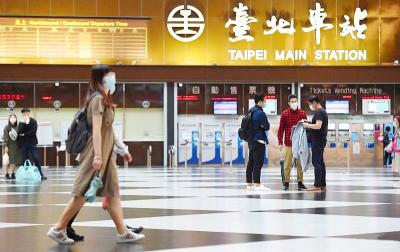
Taiwan Railways Corp (TRC) today announced that Shin Kong Mitsukoshi has been selected as the preferred bidder to operate the Taipei Railway Station shopping mall, replacing the current operator, Breeze Development Co Ltd. Among eight qualified firms that delivered presentations and were evaluated by a review committee, Shin Kong Mitsukoshi was ranked first, while Breeze was named the runner-up, the rail company said in a statement. Contract negotiations are to proceed in accordance with regulations, it said, adding that if negotiations with the top bidder fail, it could invite the second-ranked applicant to enter talks. Breeze in a statement today expressed doubts over


 RSS
RSS