


Ten years ago you gave a speech referring to Taiwan as a “maturing democracy.” What is your assessment of Taiwan’s democratic consolidation today?
Carl Gershman: Transition has continued steadily, despite all the difficulties that Taiwan has had over the years. This transition has been affirmed by the recent transition from one party to another, and the fact that it has full legitimacy in this society.
What the president [Tsai Ing-wen 蔡英文] said in her inaugural address about reaching out to and apologizing to the indigenous community here and raising the issue of integrating this marginalized community into the mainstream of society is a perfect example of what I mean by the continuing progress of democracy.
As democracies progress, the majority culture has to be much more sensitive to the rights and needs of minorities.
Are you familiar with the recent national political debate over transitional justice?
Gershman: This is an example of a society having to deal with new issues, which come up as the consciousness deepens about democracy and rights — there will be elements in society that will raise these types of perfectly legitimate issues. And then the question is how to find a proper balance that deals with these issues in a way that is accountable, transparent and fair — but also allows the society to move forward.
So you would view the fact that the Chinese Nationalist Party’s (KMT) assets have become a matter of political debate as a sign of the stabilization of Taiwan’s democracy?
Gershman: Yes. Dealing with the transition from an authoritarian, one-party system to a more open and competitive party system is the fundamental first step in the transition process, but as you go forward, there will be other issues which will be raised, and I imagine that you’ll continue to see that.
One major change in Taiwan’s democracy has been the rise of social movements. Does a high prevalence of social movements reflect a dysfunction in Taiwan’s political system insomuch as these voices are not being reflected through standard political channels?
Gershman: No, the challenge for a democratic society is how to absorb these social protests and still maintain a fundamental unity. While it’s possible that some of these protests can be divisive, that’s part of democracy, and you’ve got to try to balance it out and find a kind of balance between the need for unity and consensus and the need for diversity and to hear from minority groups. Democracy is a learning process. I don’t think people can really grow and develop as citizens without the ability to address their own problems. They’re not just waiting for the government to act — they have to be actors themselves.
Given Taiwan’s diplomatic isolation, what role can Taiwan play in promoting democracy in Asia?
Gershman: A phrase in the president’s inaugural address that interested me the most was when she spoke of Taiwan becoming a model citizen in global civil society. That was interesting to me, because it suggests a way of circumventing the issue of diplomatic isolation and state-to-state relations, instead seeking direct relations between societies — people-to-people relations, relations among groups in civil society — and there I think Taiwan has a great strength because of its strong civil society organizations.
China has this year arrested more than 300 lawyers and legal activists, forcing some of them to appear in televised confessions where they admitted to crimes such as endangering China’s national security. Do you feel the actions of Chinese President Xi Jinping (習近平) make it more difficult to promote democracy for your organization or the Taiwan Foundation for Democracy?
Gershman: China certainly will try to do everything they can to frustrate what we do, but this doesn’t stop the work.
The really fundamental question here is what is happening in China? Why is the Xi Jinping administration repressing lawyers and repressing independent media and repressing NGOs? And that really gets to the heart of what’s happening in China today — as China’s economic growth has slowed, China is reaching a crisis moment. A lot of the pillars of Chinese autocracy are being threatened by the current economic crisis and the crisis of economic reform.
China is reaching a point today where it can either turn toward a more rule-of-law, democratic solution to the problems that it faces or it can tighten up, try to circle the wagons, increase repression and increase appeal to nationalism which would also then strain its relations with other countries — and it is behaving in a much more assertive and in a way, nationalistic way and in a more repressive way.
And so I think it’s important for people to recognize that it’s a dangerous moment, precisely because the regime feels insecure.
Now what does that mean for a country like Taiwan? I think it means you have to hold the course — you just have to continue to do the right thing.
Taiwan has to continue to strengthen its democracy. Taiwan has to continue to reach out. Taiwan has to continue to offer an alternative model for Confucian society that is democratic, which I think has great appeal in China and it shows that there is an alternative to this concentration of state power in the hands of a centralized bureaucracy. And hopefully through the actions of the US and other democratic countries, we can maintain a balance of power and stable international order that will allow these forces to play out.
In a speech 10 years ago, you quoted a friend in China who said that a clear message of “no democracy, no unification” would be a great encouragement and inspiration to pro-democrats within China. Do you feel it is important for Taiwan to leave open the possibility of a peaceful unification with a democratic China to encourage the democratization process or avoid becoming a target of Chinese nationalist aggression in what you have termed “this dangerous moment”?
Gershman: I think what’s important is to begin to think about what relations would look like in the future if there were a democratic opening in China.
You have the possibility of some kind of confederal relationship, which fully respects Taiwan’s autonomy and in a way is independence. There can be different parts of this larger entity, which some people call greater China, different ways the parts would relate to the center and to each other.
That might not be a discussion that will take place here in Taiwan, because it’s a very sensitive issue, but we’ve started looking at that question because we think it’s important for policy specialists and academics to begin to discuss this and encourage that kind of a discussion in China itself, so that there is an alternative to the narrative of the regime that the only option is to have complete power in the center.
I understand this could be a very sensitive question here, because it could be misunderstood that you’re not talking about reunification in the old sense. You’re talking about some kind of a relationship, but it would have to be a relationship with a different kind of China — it can’t be a relationship with a China ruled by a kind of autocratic, centralized communist party structure.

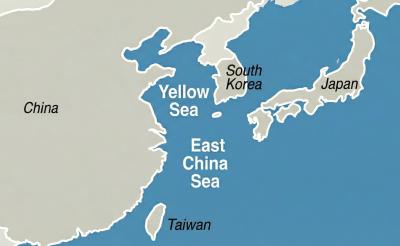
China has reserved offshore airspace in the Yellow Sea and East China Sea from March 27 to May 6, issuing alerts usually used to warn of military exercises, although no such exercises have been announced, the Wall Street Journal (WSJ) reported yesterday. Reserving such a large area for 40 days without explanation is an “unusual step,” as military exercises normally only last a few days, the paper said. These alerts, known as Notice to Air Missions (Notams), “are intended to inform pilots and aviation authorities of temporary airspace hazards or restrictions,” the article said. The airspace reserved in the alert is
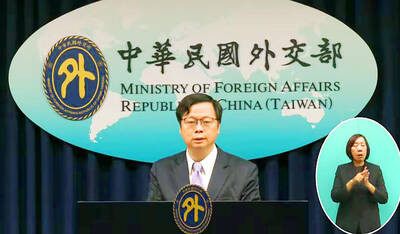
NAMING SPAT: The foreign ministry called on Denmark to propose an acceptable solution to the erroneous nationality used for Taiwanese on residence permits Taiwan has revoked some privileges for Danish diplomatic staff over a Danish permit that lists “Taiwan” as “China,” Eric Huang (黃鈞耀), head of the Ministry of Foreign Affairs’ Department of European Affairs, told a news conference in Taipei yesterday. Reporters asked Huang whether the Danish government had responded to the ministry’s request that it correct the nationality on Danish residence permits of Taiwanese, which has been listed as “China” since 2024. Taiwan’s representative office in Denmark continues to communicate with the Danish government, and the ministry has revoked some privileges previously granted to Danish representatives in Taiwan and would continue to review

More than 6,000 Taiwanese students have participated in exchange programs in China over the past two years, despite the Mainland Affairs Council’s (MAC) “orange light” travel advisory, government records showed. The MAC’s publicly available registry showed that Taiwanese college and university students who went on exchange programs across the Strait numbered 3,592 and 2,966 people respectively. The National Immigration Agency data revealed that 2,296 and 2,551 Chinese students visited Taiwan for study in the same two years. A review of the Web sites of publicly-run universities and colleges showed that Taiwanese higher education institutions continued to recruit students for Chinese educational programs without
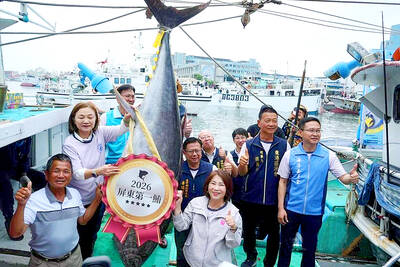
The first bluefin tuna of the season, brought to shore in Pingtung County and weighing 190kg, was yesterday auctioned for NT$10,600 (US$333.5) per kilogram, setting a record high for the local market. The auction was held at the fish market in Donggang Fishing Harbor, where the Siaoliouciou Island-registered fishing vessel Fu Yu Ching No. 2 delivered the “Pingtung First Tuna” it had caught for bidding. Bidding was intense, and the tuna was ultimately jointly purchased by a local restaurant and a local company for NT$10,600 per kilogram — NT$300 ,more than last year — for a total of NT$2.014 million. The 67-year-old skipper


 RSS
RSS