

Veteran pro-localization advocate and former Democratic Progressive Party (DPP) legislator Wang Tuoh (王拓), who had been hospitalized since July 30 after a heart attack, died yesterday. He was 72.
President Tsai Ing-wen (蔡英文), who is also DPP chairperson, said Wang’s death saddened the party.
“His continued efforts to improve Taiwan will forever be something that party members aspire to,” she said.

Photo: CNA, courtesy of Tsai Shih-ying’s legislative office
Wang, a Formosa Incident victim, served as legislator for three consecutive terms and chairman of the then-Council of Cultural Affairs in former president Chen Shui-bian’s (陳水扁) administration.
He also served as DPP secretary-general when Tsai first assumed leadership of the party in 2008, following the party’s massive defeat in the legislative and presidential elections that year.
The DPP said that Wang volunteered to take on the position of secretary-general for free in 2008, sacrificing time with his family.
Wang’s devotion to the party during a time of difficulty was impressive, the DPP said, adding that during his tenure, he eased the party’s financial burden by paying off NT$150 million (US$4.8 million) of the party’s debts.
“Wang’s courage in the face of hardship and his selfless sacrifice set an example for the party,” the DPP said.
DPP Secretary-General Hung Yao-fu (洪耀福) visited Wang’s family and offered the party’s assistance.
DPP Legislator Tsai Shih-ying (蔡適應), the head of Wang’s office for eight years, said Wang was like a father to him and he was greatly saddened by his passing.
Aside from being a political figure, Wang was also a renowned writer.
His novel Wang Jun Zhao Gui (望君早歸), describing life in Keelung’s Badouzih Township (八斗子), has been cited as a model literary representation of life in Taiwanese fishing villages. His other works, such as Jin Shui Shen (金水嬸), are representative of “nativist literature” (鄉土文學).
Wang was not a prolific writer, but his works were solid and his diction clean, writer Chu Yu-hsun (朱宥勳) said.
There are few writings on life in Taiwanese fishing villages, which is one reason Wang became the representative figure of this subject, Chu said.


A Straits Exchange Foundation official today warned that yielding to political pressure in exchange for access to China’s entertainment industry rarely ends well, amid rumors that China is seeking to lure Taiwanese K-pop star Chou Tzu-yu (周子瑜). Chou, more commonly known as Tzuyu, is the only Taiwanese member of the girl group Twice. Her contract with JYP Entertainment is set to expire at the end of this year, and there have been widespread reports that she would not renew it. She is reportedly planning to pursue solo activities under her parents’ agency, Yu Hai Entertainment (瑜海娛樂), although China has also reportedly offered
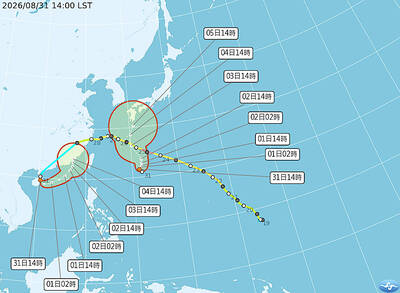
A tropical depression near Hainan that was once Typhoon Saudel may once again strengthen into a tropical storm, the Central Weather Administration (CWA) said yesterday, but a sea warning for waters around Taiwan is unlikely. CWA forecaster Huang En-hung (黃恩鴻) said that Saudel would return to being a weak tropical storm by late yesterday or early this morning. However, as the storm is to gradually weaken again and would head toward China’s Guangdong Province away from Taiwan, the chances that it would affect Taiwan enough for the CWA to issue a sea warning are relatively low,

Yielding to political pressure in exchange for access to China’s entertainment industry rarely ends well, a Straits Exchange Foundation official said yesterday amid rumors that China is seeking to lure Taiwanese K-pop star Chou Tzu-yu (周子瑜). Chou, who goes by Tzuyu, is the only Taiwanese member of the girl group Twice. Her contract with JYP Entertainment is set to expire at the end of this year, and there have been widespread rumors that she would not renew it. She is reportedly planning to pursue a solo career under her parents’ agency, Yu Hai Entertainment, although China has also reportedly offered to help Tzuyu
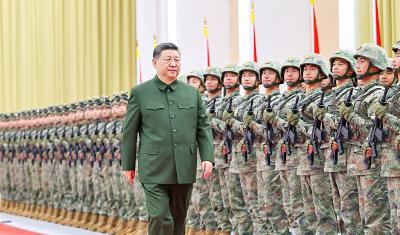
China has revised its National Defense Mobilization Law to prepare for a rapid transition to wartime, with an official today saying the measures are aimed at helping Chinese President Xi Jinping (習近平) fulfill his “historic mission of national unification.” The revised version of the mobilization law is to take effect on Oct. 1, marking the first major revision since the law was enacted in 2010. The amendments define national defense mobilization as measures taken in response to threats to national sovereignty, unification, territorial integrity, security and development interests, including efforts to ensure rapid transition between peacetime and wartime and convert economic and


 RSS
RSS