


A Taichung woman appeared in court on Friday last week after allegedly booking a ticket with a “randomly” entered ID card number, unaware that the number was from a legitimate ID card owned by someone else.
The woman, surnamed Lu (呂), while attempting to purchase a train ticket to return to her home in Taichung, said she was worried about her personal information being stolen online and so she entered the ID number A123456789 instead of her own.
The transaction was successful, but she canceled the ticket purchase out of fear that the transaction would get her in trouble, she said.
Railway authorities, upon learning of the transaction, deemed it to be a violation of forgery laws and pressed charges against Lu, but the New Taipei District Prosecutors’ Office concluded that her actions did not constitute intent to commit a crime and decided not to indict her.
The owner of the ID number that Lu used, a man surnamed Hsieh (謝), was summoned to attend the court session where he expressed his frustration over the frequent, illegitimate use of his ID number by others.
Hsieh said that this misuse has resulted in him being investigated on many occasions by officials from the Bureau of National Health Insurance and other government divisions, as well as drawing the attention of the media.
Hsieh said that he had no desire to sue Lu, adding: “Could everyone please be careful not to cause me trouble like this again? Every time I am required to appear in court, I have to spend two to three hours traveling — it is quite tiring.”
Hsieh said he receives up to three or four summonses per month for various cases of fraud involving his ID number, and has even seen the number being used as a sample in a government promotional film for the new-format health insurance IC cards.
He said he has even come to be referred to jokingly as “straight brother,” in reference to the poker hand, adding that the convenience of an easily remembered ID number is not worth such hassle.
Lu said she had no intention of causing anyone grief, adding that she did not expect the transaction would succeed or that such a number actually belonged to anyone.
“I was just randomly entering numbers,” she said. “I did not mean to use another person’s ID number.”

Eight Chinese naval vessels and 24 military aircraft were detected crossing the median line of the Taiwan Strait between 6am yesterday and 6am today, the Ministry of National Defense said this morning. The aircraft entered Taiwan’s northern, central, southwestern and eastern air defense identification zones, the ministry said. The armed forces responded with mission aircraft, naval vessels and shore-based missile systems to closely monitor the situation, it added. Eight naval vessels, one official ship and 36 aircraft sorties were spotted in total, the ministry said.
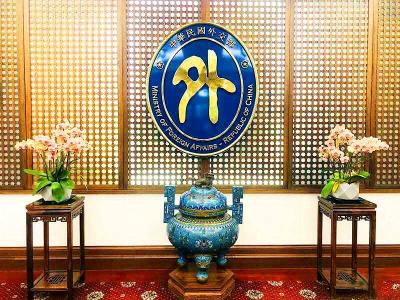
The Ministry of Foreign Affairs (MOFA) today said that if South Korea does not reply appropriately to its request to correct Taiwan’s name on its e-Arrival card system before March 31, it would take corresponding measures to alter how South Korea is labeled on the online Taiwan Arrival Card system. South Korea’s e-Arrival card system lists Taiwan as “China (Taiwan)” in the “point of departure” and “next destination” fields. The ministry said that it changed the nationality for South Koreans on Taiwan’s Alien Resident Certificates from “Korea” to “South Korea” on March 1, in a gesture of goodwill and based on the

Taiwanese officials were shown the first of 66 F-16V fighter jets purchased by Taiwan from the United States, the Ministry of National Defense said yesterday, adding the aircraft has completed an initial flight test and is expected to be delivered later this year. A delegation led by Deputy Minister of National Defense Hsu Szu-chien (徐斯儉) visited Lockheed Martin’s F-16 C/D Block 70 (also known as F-16V) assembly line in South Carolina on March 16 to view the aircraft. The jet will undergo a final acceptance flight in the US before being delivered to Taiwan, the
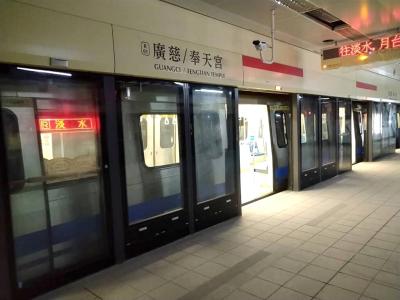
The New Taipei Metro's Sanyin Line and the eastern extension of the Taipei Metro's Tamsui-Xinyi Line (Red Line) are scheduled to begin operations in June, the National Development Council said today. The Red Line, which terminates at Xiangshan Station, would be connected by the 1.4km extension to a new eastern terminal, Guangci/Fengtian Temple Station, while the Sanyin Line would link New Taipei City's Tucheng and Yingge stations via Sanxia District (三峽). The council gave the updates at a council meeting reviewing progress on public construction projects for this year. Taiwan's annual public infrastructure budget would remain at NT$800 billion (US$25.08 billion), with NT$97.3


 RSS
RSS