


The security partnership between Taiwan and the US would be increasingly tested by the continuing modernization of China’s armed forces, the Brookings Institution said in a working paper.
“What Taiwan does to ensure its security is also a critical variable,” said the paper, which was written by former American Institute in Taiwan chairman Richard Bush, who is director of the think tank’s Center for East Asia Policy Studies.
It is part of a series on Washington’s commitments in the Asia-Pacific region released as the US “election season heats up and campaign rhetoric questioning the value of US alliances overseas has kicked off a furor of debate in foreign policy circles.”
The US Republican Party held its national convention last week, while the Democratic Party held its convention this week.
“The ability of the People’s Liberation Army [PLA] to project power across the Taiwan Strait and in the East China Sea will only grow,” Bush wrote in the paper. “Despite the ambiguity of public American rhetoric, the capabilities that the PRC [People’s Republic of China] has acquired to complicate any US intervention suggest that it assumes the US will in fact act to defend Taiwan.”
Even if the US did come to Taiwan’s aid in the case of a Chinese attack, the “tyranny of distance” across the Pacific Ocean would require Taiwan to survive on its own for an estimated several weeks, he wrote.
“That raises the question of whether Taiwan’s defense strategy would buy it enough time,” he wrote.
China’s array of ballistic and cruise missiles has created the possibility that the PLA could immobilize Taiwan’s air force by repeated missile strikes on airfields, Bush said.
“The Chinese military cannot yet conduct a successful amphibious campaign against Taiwan or execute a tight naval blockade of the island’s ports, but its capabilities are improving systematically and in the process are negating the ROC’s [Republic of China] long-standing defense strategy,” Bush said.
“Washington policymakers should probably pull out the dual-deterrence playbook and consider the appropriate mix of warnings and reassurances to Beijing and Taipei in the knowledge that China’s military power will only grow in the years ahead,” he wrote.
The paper came as another US expert warned President Tsai Ing-wen (蔡英文) that she might need to restrict her supporters who want to promote an “ideological agenda.”
Former US Department of State policy planning official Alan Romberg said in an analysis that the most hopeful interpretation of the present situation between Taiwan and China is that a process has begun that could eventually lead to a stable relationship.
“For that process to succeed, Tsai will need to rein in enthusiasts in both the executive and legislative branches who may be inclined to see the January election results as giving Tsai and the DPP [Democratic Progressive Party] a mandate to press an ideological agenda,” Romberg said.
“And Beijing will have to pull back from its most rigid requirements, allowing interpretation of Tsai’s words and actions to fill the gap,” he said.
The analysis, published by California-based think tank the Hoover Institution, said that a general consensus seems to exist both in Taiwan and China that any process to stabilize relations — or decide that is not possible — would take about six months.
“While the view in Taipei seems to be hopeful that all will be well by the end of that period, one senses a rather more downbeat expectation on the Mainland [China],” said Romberg, who is now director of the East Asia Program at Hoover’s Stimson Center.
“Some people believe that if Tsai does not openly embrace some form of ‘one China’ not just in actions, but also in words, cross-strait relations will take a decided turn for the worse,” he said. “One hopes the more optimistic view prevails, but we will have to wait and see.”

A New York-based NGO has launched a global initiative to rename the nation’s overseas missions, most of which operate under the name "Taipei," to "Taiwan Representative Office (TRO)," according to a news release. Ming Chiang (江明信), CEO of Hello Taiwan, announced the campaign at a news conference in Berlin on Monday, coinciding with the World Forum held from Monday through Wednesday, the institution stated in the release. Speaking at the event, Democratic Progressive Party Legislator Huang Jie (黃捷) said she believed this renaming campaign would enable the international community to see Taiwan

DEFENSE: The US should cancel the US visas or green cards of relatives of KMT and TPP lawmakers who have been blocking the budget, Grant Newsham said A retired US Marine Corps officer has suggested canceling the US green cards and visas of relatives of opposition Taiwanese lawmakers who have been stalling the review of a proposed NT$1.25 trillion (US$39.7 billion) special defense budget. The Executive Yuan has proposed the budget for major weapons purchases over eight years, from this year to 2033. However, opposition lawmakers have refused to review the proposal, demanding that President William Lai (賴清德) first appear before the Legislative Yuan to answer questions about the proposed budget. On Thursday last week, 37 bipartisan US lawmakers sent a letter to Legislative Speaker Han Kuo-yu (韓國瑜), the heads
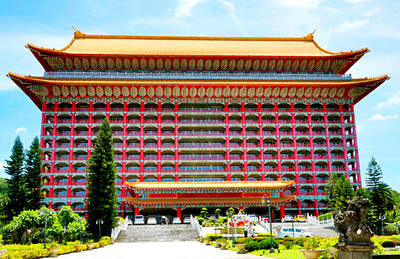
The Grand Hotel Taipei on Saturday confirmed that its information system had been illegally accessed and expressed its deepest apologies for the concern it has caused its customers, adding that the issue is being investigated by the Ministry of Justice Investigation Bureau. The hotel said that on Tuesday last week, it had discovered an external illegal intrusion into its information system. An initial digital forensic investigation confirmed that parts of the system had been accessed, it said, adding that the possibility that some customer data were stolen and leaked could not be ruled out. The actual scope and content of the affected data
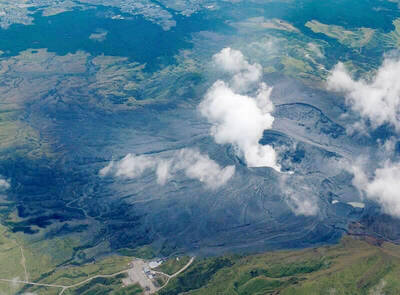
TOO DANGEROUS: The families agreed to suspend crewed recovery efforts that could put rescuers in danger from volcanic gases and unstable terrain The bodies of two Taiwanese tourists and a Japanese pilot have been located inside a volcanic crater, Japanese authorities said yesterday, nearly a month after a sightseeing helicopter crashed during a flight over southwestern Japan. Drone footage taken at the site showed three bodies near the wreckage of the aircraft inside a crater on Mount Aso in Kumamoto Prefecture, police and fire officials said. The helicopter went missing on Jan. 20 and was later found on a steep slope inside the Nakadake No. 1 Crater, about 50m below the rim. Authorities said that conditions at the site made survival highly unlikely, and ruled


 RSS
RSS