


In a bid to keep up with rapidly changing technology, the National Communications Commission (NCC) is working to update rules governing businesses and services.
The commission said the Administrative Rules on Type II Telecommunications Business (第二類電信事業管理規則) are outdated and cannot meet the challenges posed by new services such as Juiker or Vehicle-to-X communication (V2X).
The decision was made at a recent commission meeting, where the commissioners agreed to hold another public hearing on the voice-over-the-Internet service offered by mobile application Juiker.
The app was jointly developed by the government-sponsored Industrial Technology Research Institute (ITRI) and LofTech Corp as part of the government’s efforts to prevent leaks of confidential information via popular apps such as Line or WeChat.
Its functions include texting, making calls over the Internet and calling cellphone or landline telephone numbers at cheaper rates.
However, Juiker’s developers have been accused of offering a Type II service without a license because users can make calls to mobile phones or landlines like with Microsoft’s Skype, which was required to apply for a Type II telecom business license.
Type II businesses are telecoms that offer services via networks constructed by Type I businesses such as Chunghwa Telecom, Taiwan Mobile and Far EasTone Telecommunications.
The commission last week ruled that V2X communication service provider Kingway Technology should secure a Type II license if it offers such services via a 4G service network.
Commission spokesperson Yu Hsiao-cheng (虞孝成) said that the rules were introduced in 1999 and have been amended three times since 2003.
The nation has seen a rapid development of the mobile communication service during this period of time, so the commission needs to consider several things in making new revisions, he said.
“Many people have expressed hope that the government would not restrict the development [of value-added mobile apps] by imposing stricter laws. On the other hand, governments around the world are also aware that these innovative services affect the revenue of the existing telecom companies,” he said.
“If these operators cannot survive the competition from emerging communication services, this would affect their interest in making further investments in network infrastructure,” he said.
The V2X service proposed by Kingway would allow users to access its self-developed software through telecoms’ SIM cards, meaning users would have to buy the company’s software and SIM cards if they want to download the latest traffic report from the Internet.
According to the commission’s rulings, that makes Kingway a mobile virtual network operator, so it needs to have a Type II license, he said.
The administrative rules also need to be rewritten to redefine the types of services listed, since they currently reflect what was on offer when voice communication was the predominant service.
“The current rules require that mobile virtual network operators offer voice services, but the company only plans to provide data transmission service, with no plans to branch out into voice communication. The rules are clearly outdated and do not reflect the ‘status quo,’” he said.
The commission also ruled that it would not strictly regulate telecom services as long as the services offered do not involve the redistribution of the frequencies or assignment of telephone numbers.
Yu said the commission has proposed five new acts to tackle issues brought by new technologies as the Telecommunication Act (電信法) and other regulations governing telecoms are inadequate.

Actor Darren Wang (王大陸) was sentenced to six months in prison, commutable to a fine, by the New Taipei District Court today for contravening the Personal Data Protection Act (個人資料保護法) in a case linked to an alleged draft-dodging scheme. Wang allegedly paid NT$3.6 million (US$114,380) to an illegal group to help him evade mandatory military service through falsified medical documents, prosecutors said. He transferred the funds to Chen Chih-ming (陳志明), the alleged mastermind of a draft-evasion ring, although he lost contact with him as he was already in detention on fraud charges, they said. Chen is accused of helping a

SECURITY: Starlink owner Elon Musk has taken pro-Beijing positions, and allowing pro-China companies to control Taiwan’s critical infrastructure is risky, a legislator said Starlink was reluctant to offer services in Taiwan because of the nation’s extremely high penetration rates in 4G and 5G services, the Ministry of Digital Affairs said yesterday. The ministry made the comments at a meeting of the legislature’s Transportation Committee, which reviewed amendments to Article 36 of the Telecommunications Management Act (電信管理法). Article 36 bans foreigners from holding more than 49 percent of shares in public telecommunications networks, while shares foreigners directly and indirectly hold are also capped at 60 percent of the total, unless specified otherwise by law. The amendments, sponsored by Chinese Nationalist Party (KMT) Legislator Ko
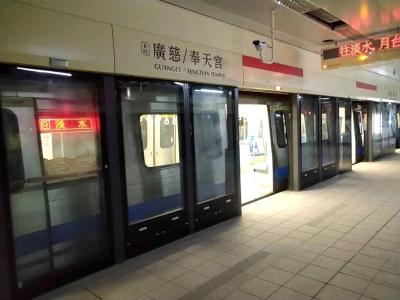
The eastern extension of the Taipei MRT Red Line could begin operations as early as late June, the Taipei Department of Rapid Transit Systems said yesterday. Taipei Rapid Transit Corp said it is considering offering one month of free rides on the new section to mark its opening. Construction progress on the 1.4km extension, which is to run from the current terminal Xiangshan Station to a new eastern terminal, Guangci/Fengtian Temple Station, was 90.6 percent complete by the end of last month, the department said in a report to the Taipei City Council's Transportation Committee. While construction began in October 2016 with an
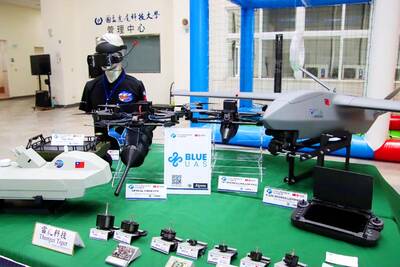
NON-RED SUPPLY: Boosting the nation’s drone industry is becoming increasingly urgent as China’s UAV dominance could become an issue in a crisis, an analyst said Taiwan’s drone exports to Europe grew 41.7-fold from 2024 to last year, with demand from Ukraine’s fight against Russian aggression the most likely driver of growth, a study showed. The Institute for Democracy, Society and Emerging Technology (DSET) in a statement on Wednesday said it found that many of Taiwan’s uncrewed aerial vehicle (UAV) sales were from Poland and the Czech Republic. These countries likely transferred the drones to Ukraine to aid it in its fight against the Russian invasion that started in 2022, it said. Despite the gains, Taiwan is not the dominant drone exporter to these markets, ranking second and fourth


 RSS
RSS