


It is time for the US to break a Chinese-imposed “embargo” and help Taiwan develop its own submarines, a policy adviser to Republican presidential nominee Donald Trump said.
“The construction of such a submarine industry would help defend Taiwan,” Peter Navarro, an economics professor at the University of California, Irvine, wrote in an article published by National Interest magazine this week.
“It would also create new, high-skilled jobs at robust wage levels — the most critical need of a Taiwan that, like America, has off-shored far too much of its industrial base to China,” he said.
Navarro said that he had just returned from a visit to Taiwan where he conducted lengthy discussions with experts about what it would mean if Beijing controlled the nation.
He said that Beijing would build a submarine base on the east coast and other bases that would significantly extend the effective range of China’s air force.
China has been very successful in bullying other nations into not selling modern diesel-electric submarines to Taiwan and pressuring them not to share blueprints or help Taiwan develop its own submarine industry, he said.
“It is now time for the US to help break this embargo,” he said.
The Republican National Convention in Cleveland, Ohio, this week adopted a party platform that for the first time includes the “six assurances” given to Taiwan in 1982 by then-US president Ronald Reagan and is sharply critical of China.
“Taiwan urgently needs to upgrade its defensive capabilities and Taiwan’s leaders clearly understand that such capabilities must be focused on developing a similar set of anti-access, area denial capabilities that China is now using to deter US sea and air power in Asia,” Navarro said.
“One key to any such strategy is the development of a fleet of conventional diesel-electric submarines with state-of-the-art air-independent propulsion systems,” he said.
Navarro cited former Pentagon official Seth Cropsey as saying that a modern, deployable fleet of submarines is critical to the sustained defense of Taiwan.
Now a senior fellow at the Hudson Institute, Cropsey wrote in a recent article that the US could provide design engineers, work with Japanese shipbuilders and relax export controls on items needed to build submarines for Taiwan.
He said that another option would be to use blueprints of an existing model and customize it to fit Taiwan’s requirements.
“Japan is both capable and possibly willing — with the right encouragement — to assist Taiwan in constructing diesel-electric submarines,” Cropsey wrote.

The military has spotted two Chinese warships operating in waters near Penghu County in the Taiwan Strait and sent its own naval and air forces to monitor the vessels, the Ministry of National Defense (MND) said. Beijing sends warships and warplanes into the waters and skies around Taiwan on an almost daily basis, drawing condemnation from Taipei. While the ministry offers daily updates on the locations of Chinese military aircraft, it only rarely gives details of where Chinese warships are operating, generally only when it detects aircraft carriers, as happened last week. A Chinese destroyer and a frigate entered waters to the southwest

A magnitude 6.1 earthquake struck off the coast of Yilan County at 8:39pm tonight, the Central Weather Administration (CWA) said, with no immediate reports of damage or injuries. The epicenter was 38.7km east-northeast of Yilan County Hall at a focal depth of 98.3km, the CWA’s Seismological Center said. The quake’s maximum intensity, which gauges the actual physical effect of a seismic event, was a level 4 on Taiwan’s 7-tier intensity scale, the center said. That intensity level was recorded in Yilan County’s Nanao Township (南澳), Hsinchu County’s Guansi Township (關西), Nantou County’s Hehuanshan (合歡山) and Hualien County’s Yanliao (鹽寮). An intensity of 3 was

Japanese Prime Minister Sanae Takaichi’s comment last year on Tokyo’s potential reaction to a Taiwan-China conflict has forced Beijing to rewrite its invasion plans, a retired Japanese general said. Takaichi told the Diet on Nov. 7 last year that a Chinese naval blockade or military attack on Taiwan could constitute a “survival-threatening situation” for Japan, potentially allowing Tokyo to exercise its right to collective self-defense. Former Japan Ground Self-Defense Force general Kiyofumi Ogawa said in a recent speech that the remark has been interpreted as meaning Japan could intervene in the early stages of a Taiwan Strait conflict, undermining China’s previous assumptions
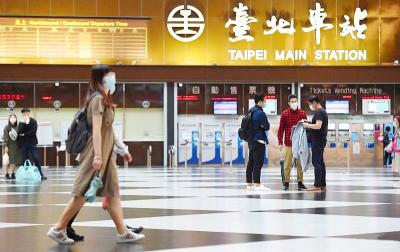
Taiwan Railways Corp (TRC) today announced that Shin Kong Mitsukoshi has been selected as the preferred bidder to operate the Taipei Railway Station shopping mall, replacing the current operator, Breeze Development Co Ltd. Among eight qualified firms that delivered presentations and were evaluated by a review committee, Shin Kong Mitsukoshi was ranked first, while Breeze was named the runner-up, the rail company said in a statement. Contract negotiations are to proceed in accordance with regulations, it said, adding that if negotiations with the top bidder fail, it could invite the second-ranked applicant to enter talks. Breeze in a statement today expressed doubts over


 RSS
RSS