


Taiwan would seek to use Japan’s satellite services until its newest satellite, the FORMOSAT-5, can be launched later this year, Minister of Science and Technology Yang Hung-duen (楊弘敦) said on Wednesday.
Yang told a meeting of the legislature’s Education and Culture Committee that the launch of FORMOSAT-5 had been delayed because of a failed rocket test in June last year by the US company commissioned to launch the satellite.
FORMOSAT-5 will not be launched until about October, Yang said, although the National Applied Research Laboratories (NARL) had said the launch would take place last month.
Until FORMOSAT-5 is put into service, Taiwan would rely on Japan for satellite services, Yang said.
FORMOSAT-5 was scheduled to be launched from Vandenberg Air Force Base in California in the first quarter, to replace FORMOSAT-2, which has been conducting remote sensing imaging since May 2004.
However, the rocket test failure by SpaceX — the US company commissioned to launch FORMOSAT-5 — delayed its services to all its customers, including NARL.
NARL said the postponement would not have been a problem had another of the four reaction wheels on FORMOSAT-2 not failed on Tuesday last week.
With two of its reaction wheels malfunctioning, FORMOSAT-2 has not been able to perform its imaging tasks and its movements cannot be accurately controlled, said NARL, which is in charge of Taiwan’s space program.
The reaction wheels are used primarily for attitude control and are particularly useful when a spacecraft must make very small adjustments that are required, for example, to keep a telescope pointed at a star.
FORMOSAT-5, which is to carry a payload including an optical remote sensing instrument designed and developed in Taiwan, was designed to take over the remote sensing imaging mission of FORMOSAT-2.
Since Taiwan began its space program in 1991, it has sent three satellites into space.
FORMOSAT-1 was decommissioned in 2004, while FORMOSAT-2 and the weather satellite FORMOSAT-3 remain in orbit.
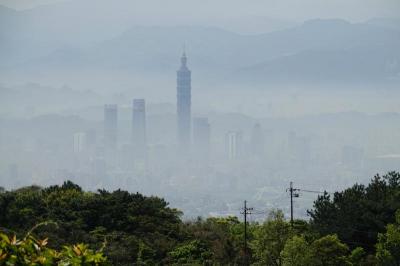
A strong continental cold air mass is to bring pollutants to Taiwan from tomorrow, the Ministry of Environment said today, as it issued an “orange” air quality alert for most of the country. All of Taiwan except for Hualien and Taitung counties is to be under an “orange” air quality alert tomorrow, indicating air quality that is unhealthy for sensitive groups. In China, areas from Shandong to Shanghai have been enveloped in haze since Saturday, the ministry said in a news release. Yesterday, hourly concentrations of PM2.5 in these areas ranged from 65 to 160 micrograms per cubic meter (mg/m³), and pollutants were
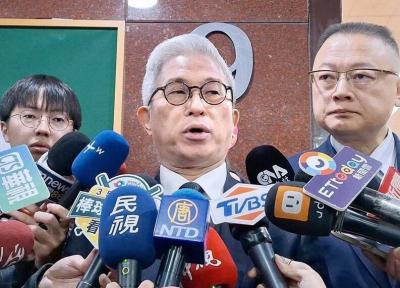
Taiwan’s armed forces have established response protocols for a wide range of sudden contingencies, including the “Wan Chun Plan” to protect the head of state, the Ministry of Defense (MND) said today. After US President Donald Trump on Saturday launched a series of airstrikes in Venezuela and kidnapped Venezuelan President Nicolas Maduro, concerns have been raised as to whether China would launch a similar “decapitation strike” on Taiwan. The armed forces regularly coordinate with relevant agencies and practice drills to ensure preparedness for a wide range of scenarios, Vice Minister of National Defense Hsu Szu-chien (徐斯儉) told reporters before a
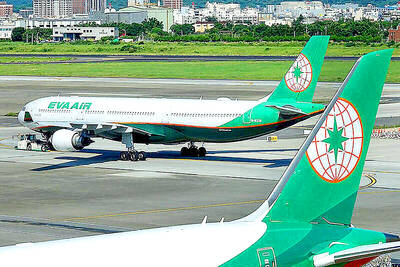
EVA Airways on Saturday said that it had suspended a pilot and opened an investigation after he allegedly lost his temper and punched the first officer several times as their plane was taxiing before takeoff at Los Angeles International Airport. According to a report published on Thursday by The Reporter, the incident occurred after the flight’s Malaysian first officer tried to warn the Taiwanese pilot, surnamed Wen (文), that he was taxiing faster than the speed limit of 30 knots (55.6kph). After alerting the pilot several times without response, the first officer manually applied the brakes in accordance with standard operating
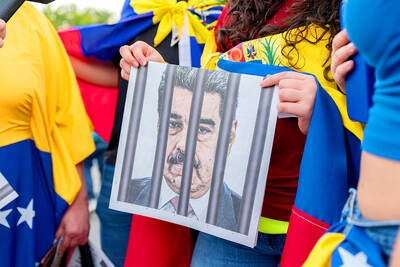
NOT AN OPENING: Trump’s violation of international law does not affect China’s consideration in attacking Taiwan; Beijing lacks capability, not precedent, an official said Taiwanese officials see the US’ capture of the president of Venezuela as a powerful deterrent to Beijing’s aggression and a timely reminder of the US’ ability to defeat militaries equipped with Chinese-made weapons. The strikes that toppled Venezuelan President Nicolas Maduro signaled to authoritarian leaders, including Chinese President Xi Jinping (習近平), US President Donald Trump’s willingness to use military might for international affairs core to US interests, one senior official in Taipei’s security circle said. That reassured Taiwan, the person said. Taipei has also dismissed the idea that Trump’s apparent violation of international law could embolden Beijing, said the official, who was not


 RSS
RSS