


The Ministry of Health and Welfare yesterday warned that melatonin, which is used to treat sleeping disorders, has never been approved in the nation, so purchasing it abroad and selling it in Taiwan is against the law.
According to a survey by the Taiwan Society of Sleep Medicine, about one in five, or 20.2 percent, of Taiwanese suffer from chronic sleep disorder.
Statistics released by the Food and Drug Administration (FDA) in February also showed that a total of 339 million sleeping pills were consumed in Taiwan in 2014.
While many people are worried about the side effects of taking sleeping pills regularly, such as dizziness or lightheadedness, prolonged drowsiness, headaches, gastrointestinal problems, severe allergic reactions or daytime memory and performance problems, some turn to melatonin to help them deal with insomnia.
In some countries like the US, melatonin is considered a dietary supplement and can be purchased over the counter. Some use it to adjust the body’s internal clock, such as when suffering from jet lag or shift-work disorder.
However, Chi Jo-feng (祁若鳳), a senior technical specialist at the Food and Drug Administration, said melatonin has been listed as a controlled substance in Taiwan since 1996.
No local pharmaceutical company has ever applied for a drug manufacturing license, so production or selling of melatonin is illegal in the nation, Chi said.
According to the Pharmaceutical Affairs Act (藥事法), people who import or sell illegal drugs, such as melatonin, can face up to 10 years in prison or a fine of up to NT$50 million (US$1.55 million), the ministry said.
People can purchase melatonin for personal use, but are allowed to bring in only 12 bottles, it said, adding that selling them is strictly against the law.
“Taking melatonin regularly for an extended period can change the natural production and release of melatonin in the body,” Lin Chia-mo (林嘉謨), chief director of the Sleep Research Center at Shin Kong Memorial Hospital, said yesterday, adding that the dosage and ingredients of these products are not universal and could be confusing to users.
Moreover, overseas studies have shown that a high dosage of melatonin can cause possible side effects, including nausea, vomiting, daytime sleepiness or even affect fertility.

LOUD AND PROUD Taiwan might have taken a drubbing against Australia and Japan, but you might not know it from the enthusiasm and numbers of the fans Taiwan might not be expected to win the World Baseball Classic (WBC) but their fans are making their presence felt in Tokyo, with tens of thousands decked out in the team’s blue, blowing horns and singing songs. Taiwanese fans have packed out the Tokyo Dome for all three of their games so far and even threatened to drown out home team supporters when their team played Japan on Friday. They blew trumpets, chanted for their favorite players and had their own cheerleading squad who dance on a stage during the game. The team struggled to match that exuberance on the field, with
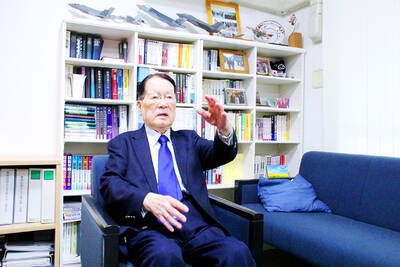
Whether Japan would help defend Taiwan in case of a cross-strait conflict would depend on the US and the extent to which Japan would be allowed to act under the US-Japan Security Treaty, former Japanese minister of defense Satoshi Morimoto said. As China has not given up on the idea of invading Taiwan by force, to what extent Japan could support US military action would hinge on Washington’s intention and its negotiation with Tokyo, Morimoto said in an interview with the Liberty Times (sister paper of the Taipei Times) yesterday. There has to be sufficient mutual recognition of how Japan could provide
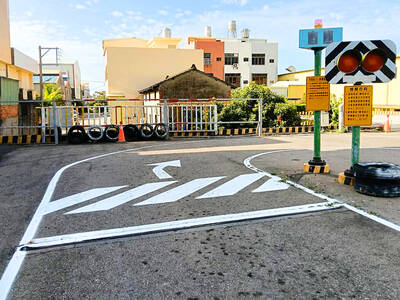
UPDATED TEST: The new rules aim to assess drivers’ awareness of risky behaviors and how they respond under certain circumstances, the Highway Bureau said Driver’s license applicants who fail to yield to pedestrians at intersections or to check blind spots, or omit pointing-and-calling procedures would fail the driving test, the Highway Bureau said yesterday. The change is set to be implemented at the end of the month, and is part of the bureau’s reform of the driving portion of the test, which has been criticized for failing to assess whether drivers can operate vehicles safely. Sedan drivers would be tested regarding yielding to pedestrians and turning their heads to check blind spots, while drivers of large vehicles would be tested on their familiarity with pointing-and-calling

A Taiwanese man apologized on Friday after saying in a social media post that he worked with Australia to provide scouting reports on Taiwan’s team, enabling Australia’s victory in this year’s World Baseball Classic (WBC), saying it was a joke and that he did not hold any position with foreign teams or Taiwan’s sports training center. Chen Po-hao (陳柏豪) drew the rage of many Taiwan baseball fans when he posted online on Thursday night, claiming credit for Australia’s 3-0 win over Taiwan in the opening game for Pool C, saying he worked as a physical therapist with the national team and


 RSS
RSS