


Premier Simon Chang (張善政) yesterday dismissed speculation that the number of Chinese visitors would drop by 30 percent from March 20, saying that tourist numbers have actually increased.
Speaking at a question-and-
answer session in the legislature, Chinese Nationalist Party (KMT) Legislator Lai Shyh-bao (賴士葆) said that during a recent visit to Sun Moon Lake (日月潭), he noticed that about one-third of the shops were empty and he was concerned that a sharp drop in Chinese tourist numbers would have a serious impact on the tourism industry.
Mainland Affairs Council (MAC) Minister Andrew Hsia (夏立言) said he had not heard anything about a Chinese government plan to limit the number of tourists from his Chinese counterpart.
The number of Chinese tourists “depends on market demand and progress in cross-strait relations,” Hsia said, adding that the Tourism Bureau is working on a raft of measures should a drop occur, such as a project to attract more visitors from Southeast Asia.
Statistics showed that the number of Chinese visiting as members of tour groups fell slightly in January and last month, but the number of Chinese traveling independently surged, so the total number actually grew by more than 10 percent over the period, Chang said.
The premier said he agreed with Lai that political and economic interactions between China and Taiwan were different spheres and should be kept separate.
In Beijing, when asked whether China plans to cut the number of tourists allowed to visit Taiwan, China’s Taiwan Affairs Office Director Zhang Zhijun (張志軍) said that he was not aware of any developments about that “situation now.”
However, “Chinese are concerned about the development of cross-strait relations, especially after May 20,” he said.
Additional reporting by CNA
See BUREAU on page 4

The military has spotted two Chinese warships operating in waters near Penghu County in the Taiwan Strait and sent its own naval and air forces to monitor the vessels, the Ministry of National Defense (MND) said. Beijing sends warships and warplanes into the waters and skies around Taiwan on an almost daily basis, drawing condemnation from Taipei. While the ministry offers daily updates on the locations of Chinese military aircraft, it only rarely gives details of where Chinese warships are operating, generally only when it detects aircraft carriers, as happened last week. A Chinese destroyer and a frigate entered waters to the southwest
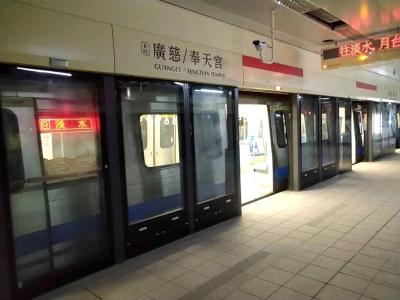
The eastern extension of the Taipei MRT Red Line could begin operations as early as late June, the Taipei Department of Rapid Transit Systems said yesterday. Taipei Rapid Transit Corp said it is considering offering one month of free rides on the new section to mark its opening. Construction progress on the 1.4km extension, which is to run from the current terminal Xiangshan Station to a new eastern terminal, Guangci/Fengtian Temple Station, was 90.6 percent complete by the end of last month, the department said in a report to the Taipei City Council's Transportation Committee. While construction began in October 2016 with an
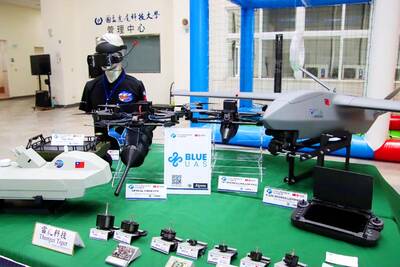
NON-RED SUPPLY: Boosting the nation’s drone industry is becoming increasingly urgent as China’s UAV dominance could become an issue in a crisis, an analyst said Taiwan’s drone exports to Europe grew 41.7-fold from 2024 to last year, with demand from Ukraine’s fight against Russian aggression the most likely driver of growth, a study showed. The Institute for Democracy, Society and Emerging Technology (DSET) in a statement on Wednesday said it found that many of Taiwan’s uncrewed aerial vehicle (UAV) sales were from Poland and the Czech Republic. These countries likely transferred the drones to Ukraine to aid it in its fight against the Russian invasion that started in 2022, it said. Despite the gains, Taiwan is not the dominant drone exporter to these markets, ranking second and fourth
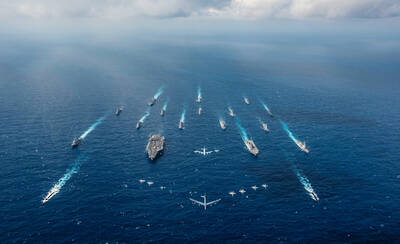
Japanese Prime Minister Sanae Takaichi’s comment last year on Tokyo’s potential reaction to a Taiwan-China conflict has forced Beijing to rewrite its invasion plans, a retired Japanese general said. Takaichi told the Diet on Nov. 7 last year that a Chinese naval blockade or military attack on Taiwan could constitute a “survival-threatening situation” for Japan, potentially allowing Tokyo to exercise its right to collective self-defense. Former Japan Ground Self-Defense Force general Kiyofumi Ogawa said in a recent speech that the remark has been interpreted as meaning Japan could intervene in the early stages of a Taiwan Strait conflict, undermining China’s previous assumptions


 RSS
RSS