

Nuclear experts yesterday said that the nation’s presidential candidates are misinformed if they believe that nuclear-free development is the best path for Taiwan’s energy sector, with Atomic Energy Council Minister Tsai Chuen-horng (蔡春鴻) saying that most anti-nuclear narratives are anti-science.
At an annual convention of the Chung Hwa Nuclear Society, Tsai said that nuclear energy has long been misunderstood and public sentiment has forced the government to implement anti-nuclear measures, such as sealing up the Fourth Nuclear Power Plant in New Taipei City, leaving the plant’s activation or termination to a referendum and postponing the designation of a nuclear waste repository.
“We are engaging in a debate between science and anti-science, which is also a fight between science and populism. We should keep on fighting for the next generations and Taiwan’s future,” Tsai said.
Association chairman Pan Chin (潘欽) urged the presidential candidates to include nuclear development in their national energy policies, because giving up nuclear power risks the stability of the nation’s power supply.
About 98 percent of Taiwan’s energy is sourced from abroad, making energy self-sufficiency a critical issue, Pan said, adding that nuclear power could strengthen the nation’s energy security as the supply and price of nuclear fuel are stable.
“Power shortage is a major uncertainty that would prevent businesses from investing in Taiwan, and presidential candidates should ease investors’ fear by proposing a viable energy policy,” he said.
Taiwan Power Co vice president Chai Fu-feng (蔡富豐) said the nation should face the issue of nuclear waste management, and while there is no technical difficulty in building a safe nuclear waste repository, delaying the construction of a facility would only incur generational injustice by leaving the problem to later generations.
Citizen of the Earth office director Tsai Chung-yueh (蔡中岳) said the council’s preference for nuclear energy would jeopardize an unbiased management of nuclear facilities and the possibility of a balanced scientific discussion.
Anti-nuclear groups have based their narratives on scientific research, while Tsai Chuen-horng’s snub to those narratives was a true example of anti-science, he said.
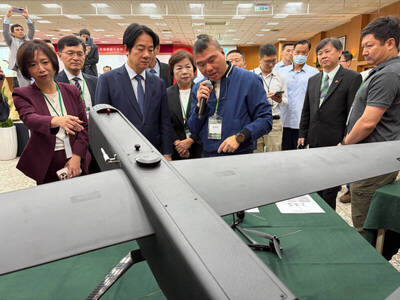
Two executives of drone supplier Jiin Ming Industry Co (錦明實業) have been detained and held incommunicado over the company's alleged use of prohibited China-made chips and camera lenses in drones supplied under recent military contracts, the Taoyuan District Prosecutors' Office said today. In a statement, prosecutors said they raided the offices of Jiin Ming — headquartered in Taoyuan — as well as those of its subsidiaries and its suppliers on Thursday last week. The raids followed a report that the company had breached its procurement contracts by putting the prohibited components into drones delivered to the military. During the raids, prosecutors summoned
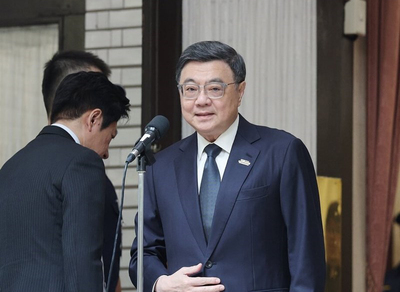
The government would continue monitoring online rumors that a pneumonic plague outbreak has spread from Russia into China and could enhance existing quarantine measures, Premier Cho Jung-tai (卓榮泰) said today. During a legislative meeting, Democratic Progressive Party Legislator Wang Ting-yu (王定宇) said rumors were circulating that the disease had spread across several Chinese provinces. He asked Cho whether the government was prepared to prevent the disease from spreading to Taiwan, given the frequent exchanges between Taiwan and China, and how concerned the government was about the alleged outbreak. The Ministry of Health and Welfare implemented border quarantine measures after briefing the Executive Yuan

South Korean boy band BigBang drew 120,000 fans to three concerts at Taipei Dome from Friday through yesterday, as the band thanked them for their support over their 20-year career. The Taipei Dome concerts were part of BigBang's "2026-2027 World Tour XX: Cosmos." Friday's concert was BigBang's first performance in Taiwan in 11 years. During the encore, group leader G-Dragon (GD) shouted "I love you" in Chinese and said he was especially happy to perform in Taiwan with bandmates Taeyang and Daesung. "Taipei, I'm very grateful to you all," GD said in Chinese, asking fans to wait for the band's return. Daesung thanked

MAYORAL RACE: Su Chiao-hui made gains by persuading undecided voters and winning over voters in KMT-leaning districts, a pollster said Legislator Su Chiao-hui (蘇巧慧), the Democratic Progressive Party’s (DPP) candidate for New Taipei City mayor, has a 13.1 percentage point lead over her Chinese Nationalist Party (KMT) rival Lee Shu-chuan (李四川), a poll released yesterday showed. The poll, commissioned by the Taipei Trust in Democracy Association, showed that 43.1 percent of respondents said they would vote for Su, up 7.9 percentage points from a poll conducted in late August, while support for Lee was at 30 percent, down 4.7 percentage points. It showed that 48.6 percent of respondents thought Su would make a suitable mayor, compared with 35.9 percent for Lee. Independent candidate


 RSS
RSS