


Chinese Nationalist Party (KMT) presidential candidate Eric Chu (朱立倫) yesterday urged the Democratic Progressive Party (DPP) to refrain from opposing anything relating to China, saying a planned meeting between President Ma Ying-jeou (馬英九) and Chinese President Xi Jinping (習近平) would help ameliorate cross-strait hostility.
Chu made the remarks during a visit to KMT legislative candidate Chen Shu-huey’s (陳淑慧) campaign headquarters in Tainan.
The Presidential Office on Tuesday evening confirmed an exclusive report in the Liberty Times, (the Taipei Times’ sister paper) that said Ma and Xi have agreed to an unprecedented meeting on Saturday in Singapore.

Photo: CNA
The meeting would be the first official meeting between the leaders of the two sides across the Taiwan Strait since the then-ROC government’s retreated to Taiwan in 1949 after they were defeated by Chinese Communist Party forces in the Chinese Civil War.
“Endeavors have been made to set up a meeting between Ma and Xi for two years. President Ma has informed me that such a meeting has been agreed to. This is a significant milestone in the development of a mechanism to promote cross-strait peace and mutual trust,” Chu said.
Chu, who replaced Ma as KMT chairman after the party’s landslide defeat in the nine-in-one elections last year, said the meeting would not only bring relations based on the “1992 consensus” to the next level, but also help reduce animosity between the sides.
“It also bodes well for cross-strait negotiations on the proposed trade in goods agreement and the government’s much-anticipated proposal to allow Chinese traveling by plane to transit in Taiwan en route to other nations,” he said.
The “1992 consensus” refers to a tacit understanding between the KMT and the Chinese government that both sides of the Strait acknowledge there is “one China,” with each side having its own interpretation of what “China” means.
Despite former Mainland Affairs Council chairman Su Chi’s (蘇起) subsequent admission in 2006 that the consensus was a term he made up in 2000, it has been the KMT’s cornerstone for engaging with China.
Describing the Democratic Progressive Party’s (DPP) characterization of the Ma-Xi summit as “sneaky and secretive,” Chu said the Presidential Office is to hold an international press conference today to brief the public on the president’s schedule.
“The pan-green camp is urged not to take issue with anything regarding China. This concerns the development and stability of cross-strait ties and there must not be any political manipulation involved,” Chu said.
Asked whether the closely-watched meeting would have any impact on his upcoming seven-day visit to the US, Chu said the landmark summit between the two leaders is a scheduled event, while he is set to depart for the US on Tuesday next week.
Chu said he is to visit four cities, including Los Angeles, Washington, New York and San Francisco, where he is set to meet with US government officials and Taiwanese expatriates.

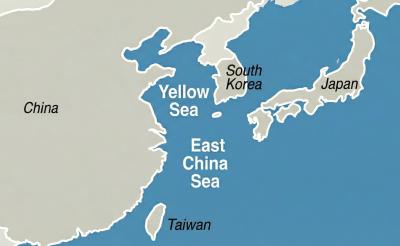
China has reserved offshore airspace in the Yellow Sea and East China Sea from March 27 to May 6, issuing alerts usually used to warn of military exercises, although no such exercises have been announced, the Wall Street Journal (WSJ) reported yesterday. Reserving such a large area for 40 days without explanation is an “unusual step,” as military exercises normally only last a few days, the paper said. These alerts, known as Notice to Air Missions (Notams), “are intended to inform pilots and aviation authorities of temporary airspace hazards or restrictions,” the article said. The airspace reserved in the alert is
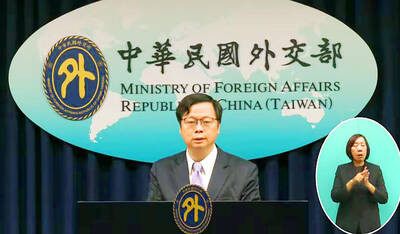
NAMING SPAT: The foreign ministry called on Denmark to propose an acceptable solution to the erroneous nationality used for Taiwanese on residence permits Taiwan has revoked some privileges for Danish diplomatic staff over a Danish permit that lists “Taiwan” as “China,” Eric Huang (黃鈞耀), head of the Ministry of Foreign Affairs’ Department of European Affairs, told a news conference in Taipei yesterday. Reporters asked Huang whether the Danish government had responded to the ministry’s request that it correct the nationality on Danish residence permits of Taiwanese, which has been listed as “China” since 2024. Taiwan’s representative office in Denmark continues to communicate with the Danish government, and the ministry has revoked some privileges previously granted to Danish representatives in Taiwan and would continue to review

More than 6,000 Taiwanese students have participated in exchange programs in China over the past two years, despite the Mainland Affairs Council’s (MAC) “orange light” travel advisory, government records showed. The MAC’s publicly available registry showed that Taiwanese college and university students who went on exchange programs across the Strait numbered 3,592 and 2,966 people respectively. The National Immigration Agency data revealed that 2,296 and 2,551 Chinese students visited Taiwan for study in the same two years. A review of the Web sites of publicly-run universities and colleges showed that Taiwanese higher education institutions continued to recruit students for Chinese educational programs without
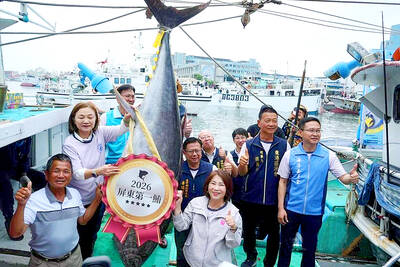
The first bluefin tuna of the season, brought to shore in Pingtung County and weighing 190kg, was yesterday auctioned for NT$10,600 (US$333.5) per kilogram, setting a record high for the local market. The auction was held at the fish market in Donggang Fishing Harbor, where the Siaoliouciou Island-registered fishing vessel Fu Yu Ching No. 2 delivered the “Pingtung First Tuna” it had caught for bidding. Bidding was intense, and the tuna was ultimately jointly purchased by a local restaurant and a local company for NT$10,600 per kilogram — NT$300 ,more than last year — for a total of NT$2.014 million. The 67-year-old skipper


 RSS
RSS