


Democratic Progressive Party (DPP) presidential candidate Tsai Ing-wen (蔡英文) yesterday said remarks made by Chinese Nationalist Party (KMT) presidential candidate Eric Chu (朱立倫) — who said an election win for Tsai would harm agricultural exports — were “disappointing,” urging him to do more than just scare people.
“The KMT presidential candidate is unable to show his party’s achievements from good governance [in the past seven years], or to present complete and constructive planning for the economy and industries. Instead [Chu] only continuously plays the ‘threat’ card,” Tsai told reporters during a campaign outing in Changhua County.
“The people of Taiwan would be disappointed,” she said.
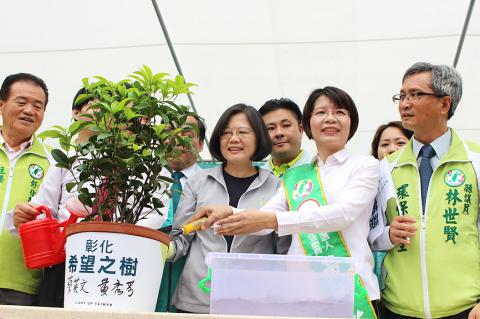
Photo: Chang Tsung-chiu, Taipei Times
Instead of making threats, Chu should brainstorm what he could do to improve the competitiveness of the agricultural sector in the international market, Tsai added.
The DPP, unlike the KMT, has a complete set of planning that covers exploring new markets, as well as enhanced management and planting for the agricultural sector, which could help it find more opportunities, Tsai said.
On Saturday, Chu said that during the DPP administration of former president Chen Shui-bian (陳水扁), the government was “unfriendly” toward local farmers’ and fishermen’s associations by taking over the credit departments of 36 such organizations, making it difficult for the associations to expand their businesses.
Tsai said the credit departments were taken over by the government at the time because they were suffering from bad debts and excess loans, pushing them to the edge of collapse.
Tsai defended DPP Legislator Tuan Yi-kang (段宜康) in the face of accusations by New Taipei City prosecutor Huang Meng-shan (黃孟珊) that Tuan had tried to interfere in a case by pressuring the Food and Drug Administration (FDA) to add dehydrated gypsum to a list of permitted food additives after a food manufacturer was indicted for using the substance in its products.
Tuan denied the allegation, saying that he merely helped the food manufacturer to petition the FDA, as dehydrated gypsum is a legal food additive in many other countries.
“Tuan has explained the incident clearly, what he has done is what a lawmaker should do, and he is now preparing to file a lawsuit over the allegations,” Tsai said.
“He is handling the situation in a responsible way,” she said.
Tsai denied a report by the Chinese-language China Times that the DPP has lowered its expected number of legislative seats in constituencies in northern Taiwan after Chu joined the presidential race.
“The rumor is inaccurate,” Tsai said. “The election campaign as a whole has been stable for us and we are campaigning according to our original plans.”
“Our rival is making up stories,” she added.

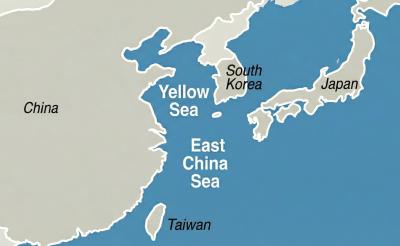
China has reserved offshore airspace in the Yellow Sea and East China Sea from March 27 to May 6, issuing alerts usually used to warn of military exercises, although no such exercises have been announced, the Wall Street Journal (WSJ) reported yesterday. Reserving such a large area for 40 days without explanation is an “unusual step,” as military exercises normally only last a few days, the paper said. These alerts, known as Notice to Air Missions (Notams), “are intended to inform pilots and aviation authorities of temporary airspace hazards or restrictions,” the article said. The airspace reserved in the alert is
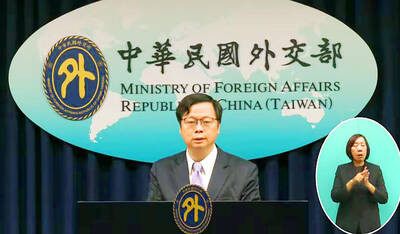
NAMING SPAT: The foreign ministry called on Denmark to propose an acceptable solution to the erroneous nationality used for Taiwanese on residence permits Taiwan has revoked some privileges for Danish diplomatic staff over a Danish permit that lists “Taiwan” as “China,” Eric Huang (黃鈞耀), head of the Ministry of Foreign Affairs’ Department of European Affairs, told a news conference in Taipei yesterday. Reporters asked Huang whether the Danish government had responded to the ministry’s request that it correct the nationality on Danish residence permits of Taiwanese, which has been listed as “China” since 2024. Taiwan’s representative office in Denmark continues to communicate with the Danish government, and the ministry has revoked some privileges previously granted to Danish representatives in Taiwan and would continue to review

More than 6,000 Taiwanese students have participated in exchange programs in China over the past two years, despite the Mainland Affairs Council’s (MAC) “orange light” travel advisory, government records showed. The MAC’s publicly available registry showed that Taiwanese college and university students who went on exchange programs across the Strait numbered 3,592 and 2,966 people respectively. The National Immigration Agency data revealed that 2,296 and 2,551 Chinese students visited Taiwan for study in the same two years. A review of the Web sites of publicly-run universities and colleges showed that Taiwanese higher education institutions continued to recruit students for Chinese educational programs without
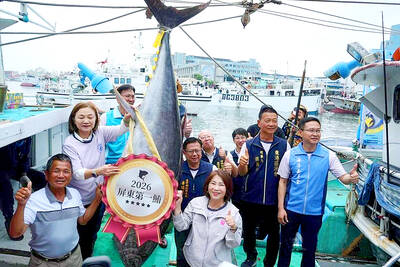
The first bluefin tuna of the season, brought to shore in Pingtung County and weighing 190kg, was yesterday auctioned for NT$10,600 (US$333.5) per kilogram, setting a record high for the local market. The auction was held at the fish market in Donggang Fishing Harbor, where the Siaoliouciou Island-registered fishing vessel Fu Yu Ching No. 2 delivered the “Pingtung First Tuna” it had caught for bidding. Bidding was intense, and the tuna was ultimately jointly purchased by a local restaurant and a local company for NT$10,600 per kilogram — NT$300 ,more than last year — for a total of NT$2.014 million. The 67-year-old skipper


 RSS
RSS