


A coal-fired power station and Dragon Steel Corp, which are the biggest sources of air pollution in Taichung, should create emissions reduction plans and implement measures to cut air pollution, Democratic Progressive Party (DPP) Legislator Tsai Chi-chang (蔡其昌) said on Friday.
The two facilities should collect straw from farming households, a practice Taiwan Semiconductor Manufacturing Co (TSMC) implemented, so that farmers do not have to burn straw, which exacerbates air pollution, he said.
TSMC pledged to purchase 1,000 tonnes of straw from farmers every year at an environmental impact assessment meeting to review its expansion plan for an 18-inch wafer foundry, which was passed in March.
Citing data published by the WTO, Tsai said burning 1 hectare of straw produces 42.6kg of large particulates, 9 tonnes of carbon dioxide and 34.8kg of particulates measuring less than 2.5 micrometers (PM2.5).
He said that there are about 6,000 hectares of straw along Taichung’s coast and burning them creates a grave threat to residents’ health.
In addition, the resulting fumes often reduce visibility and pose a danger to drivers, he said.
If the two firms do not respond to his requests in a responsible manner, Tsai said he would lobby to boycott budget requests submitted by the two firms in the upcoming legislative session.
Tsai said that over the years, the firms have caused serious pollution in Taichung’s coastal regions and sparked countless protests and have responded with an “arrogant” attitude by not proposing any emissions reduction plans.
Apart from buying straw from farmers, the facilities should replace outdated emissions-intensive equipment at their sites, he said.
Since the Taichung City Government started fining individuals for burning straw, farmers have resorted to cutting straw into small pieces and letting it rot naturally, he said, resulting in clogged drainage systems during heavy rain.
The best solution would be for the two facilities to purchase straw from local farming communities, Tsai said.
DPP Taichung City Councilor Chen Shih-kai (陳世凱) criticized the facilities, saying that not only have they not helped to improve the livelihoods of Taichung’s residents, but they have driven up the city’s carbon dioxide emissions.
The problem is especially rampant in the Longjing District (龍井), which has prompted many to move away from their neighborhoods, he said.
In response, the Taichung power station said that it requires the consent of Taiwan Power Co, its parent company, before it can work out any deal with farmers to purchase straw.
TSMC also launched a pilot project subsidizing farmers for purchasing organic bacterial manure to degrade straw rather than buying them, the firm said.
TSMC is still evaluating the viability of purchasing straw, as the Taichung City Government has not yet proposed any accompanying measures to assist with the matter, it said.

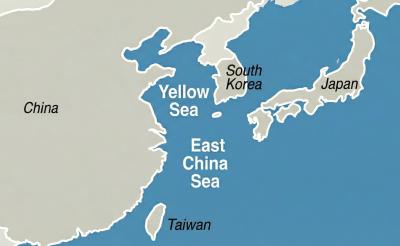
China has reserved offshore airspace in the Yellow Sea and East China Sea from March 27 to May 6, issuing alerts usually used to warn of military exercises, although no such exercises have been announced, the Wall Street Journal (WSJ) reported yesterday. Reserving such a large area for 40 days without explanation is an “unusual step,” as military exercises normally only last a few days, the paper said. These alerts, known as Notice to Air Missions (Notams), “are intended to inform pilots and aviation authorities of temporary airspace hazards or restrictions,” the article said. The airspace reserved in the alert is

South Korea is planning to revise its controversial electronic arrival card, a step Taiwanese officials said prompted them to hold off on planned retaliatory measures, a South Korean media report said yesterday. A Yonhap News Agency report said that the South Korean Ministry of Foreign Affairs is planning to remove the “previous departure place” and “next destination” fields from its e-arrival card system. The plan, reached after interagency consultations, is under review and aims to simplify entry procedures and align the electronic form with the paper version, a South Korean ministry official said. The fields — which appeared only on the electronic form

A bipartisan group of US senators has introduced a bill to enhance cooperation with Taiwan on drone development and to reduce reliance on supply chains linked to China. The proposed Blue Skies for Taiwan Act of 2026 was introduced by Republican US senators Ted Cruz and John Curtis, and Democratic US senators Jeff Merkley and Andy Kim. The legislation seeks to ease constraints on Taiwan-US cooperation in uncrewed aerial systems (UAS), including dependence on China-sourced components, limited access to capital and regulatory barriers under US export controls, a news release issued by Cruz on Wednesday said. The bill would establish a "Blue UAS
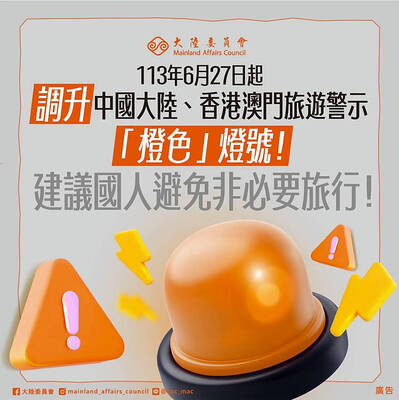
More than 6,000 Taiwanese students have participated in exchange programs in China over the past two years, despite the Mainland Affairs Council’s (MAC) “orange light” travel advisory, government records showed. The MAC’s publicly available registry showed that Taiwanese college and university students who went on exchange programs across the Strait numbered 3,592 and 2,966 people respectively. The National Immigration Agency data revealed that 2,296 and 2,551 Chinese students visited Taiwan for study in the same two years. A review of the Web sites of publicly-run universities and colleges showed that Taiwanese higher education institutions continued to recruit students for Chinese educational programs without


 RSS
RSS