


New Party Chairman Yok Mu-ming (郁慕明) yesterday filed public prosecution charges against former president Lee Teng-hui (李登輝), accusing him of treason over remarks he made last week in Japan that the disputed Diaoyutai Islands (釣魚台) belong to Japan and not Taiwan.
Yok filed the charge with the Taiwan High Prosecutors’ Office, with pro-unification supporters shouting slogans such as “Lee Teng-hui, go back to Japan.”
That Lee met with Japanese lawmakers and reportedly with Japanese Prime Shinzo Abe before publicly stating that the Diaoyutais rightfully belong to Japan means Lee violated Article 104 of the Criminal Code, Yok said.
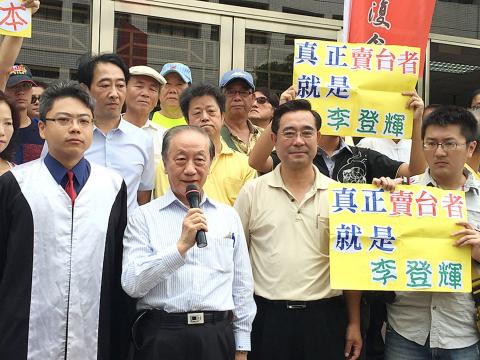
Photo: CNA
The article stipulates that people be sentenced to death or life imprisonment if they collude with a foreign state or its agents with the intent to subject the territory of the Republic of China (ROC) to that state or other states or incur a sentence of no less than three years and no more than 10 years if they prepare or conspire to commit the offense.
Yok said that Lee has “sold his soul and the ROC,” adding Lee should be denied any preferential treatment accorded to him as a former president.
“Any citizen is duty-bound to safeguard our territory. That’s why we were here to file the charge so Lee will be interrogated about his meeting with Abe,” Yok said.
Yok said that Lee said in October 1996 when he was president that the Diaoyutais belong to the ROC and the first time he said they are Japanese territory was in September 2002, when he was out of office during an interview with Japanese media.
“Have you not highlighted repeatedly the importance [of Japan bringing] the Bushido spirit back? One of the essences of Bushido spirit is integrity. You have been inconsistent on the issue. Are you lying? What is your position exactly?” Yok said.
Lee returned to Taiwan on Sunday night after a six-day visit that began on Tuesday last week, during which he reportedly had a 90-minute talk with Abe over breakfast on Thursday at the hotel at which he was staying, although both sides denied the news when it was first broken by TV Tokyo Corp.
Separately, the Chinese Nationalist Party (KMT) legislative caucus whip Lai Shyh-bao (賴士葆) yesterday called a conference to state that the caucus planned to amend the Act Governing Preferential Treatment for Retired Presidents and Vice Presidents (卸任總統副總統禮遇條例) to rescind the preferential treatments Lee has been entitled to.
Lai said he “despised” Lee for making the remarks about the Diaoyutis that “surrendered sovereign rights and brought humiliation to the nation” and “romanticizing the Japanese rule of Taiwan” while enjoying the preferential treatments worth about NT$10 million (US$316,857) of taxpayers’ money a year.
“Lee said in Japan that Taiwanese feel nostalgia for Japanese rule, but in fact, people were harshly bullied, abused, humiliated and oppressed during the colonial period. As a former president, how dare he made the remarks to flatter Japan,” Lai said.
Lai said that the KMT caucus would also file a complaint with the Control Yuan and do whatever it can to end the preferential treatment Lee receives.
In response, Lee said through his office director Wang Yen-chun (王燕軍) yesterday afternoon that the actions taken by the KMT and the New Party “are obviously propaganda tricks for their election campaigns.”
“Whether proposing to amend the law or threatening to take legal action, everyone knows these are politically motivated, and there is no need to play along,” Lee was quoted as saying.
Lee said he has repeated in public several times, whether in Taiwan or overseas, that he believes the Diaoyutais belong to Japan, so it is ridiculous for the New Party to accuse him of making secret deals with Japan.
“You only need to repeat the same thing over and over when you want something that doesn’t belong to you. It’s sleep inducing,” Lee said.
Additional reporting by Loa Iok-sin
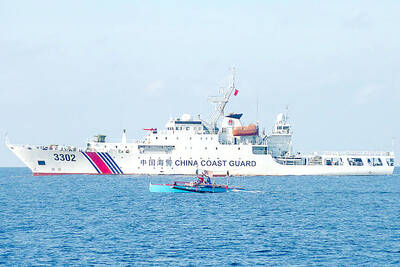
EXPANSIONIST: China deploys an average of 40 to 50 warships and coast guard vessels daily in the South China Sea, despite pledges not to militarize the region, an official said China is attempting to expand its influence across the First Island Chain and increase pressure on Japan by sending coast guard vessels into waters off of Taiwan under the pretext of maritime negotiations with Japan and the Philippines, a national security official said yesterday. China’s recent actions in the waters east of Taiwan and Japan and the Philippines’ exclusive economic zones (EEZ) are attempts to establish dominance in First Island Chain waters, said the official who declined to be named, adding that this is “expansion disguised as law enforcement.” Framing China’s actions solely as a cross-strait issue is a serious misjudgment that
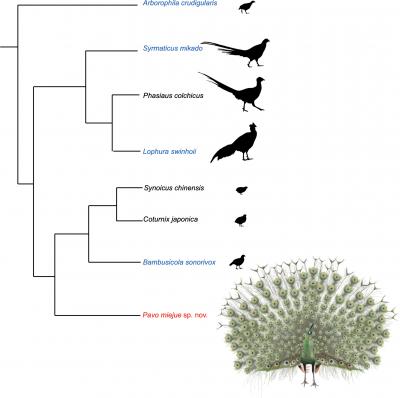
Through analyzing fossil evidence, a research team at National Taiwan University (NTU) discovered the largest endemic bird to have lived in Taiwan, naming it Pavo miejue, or extinct peafowl (滅絕孔雀). The Mikado pheasant, which is printed on the back of the NT$1,000 bank note, was previously believed to be the biggest endemic bird to Taiwan. The research team’s findings suggest that Pavo miejue lived during the Pleistocene epoch tens of thousands of years ago. It is the first endemic extinct bird species discovered and formally named in Taiwan. The study was coauthored by NTU Institute of Ecology and Evolutionary Biology professor Tsai Cheng-hsiu (蔡政修),
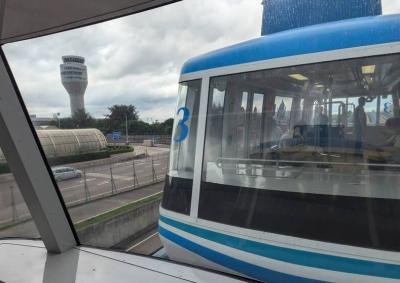
Taiwan Taoyuan International Airport is to suspend its automated Skytrain service connecting Terminal 1 and Terminal 2 starting on July 1 to facilitate connection works for the upcoming Terminal 3, the airport operator said today. Passengers and staff who need to travel between the two terminals after the suspension can instead use the Taoyuan MRT or the airport's 24-hour shuttle bus service, Taoyuan International Airport Corp said. The Taoyuan MRT Airport Line directly links the two terminals, while the shuttle buses are to operate around the clock, the company added. The Skytrain provides free transportation between the airport’s two terminals for travelers and
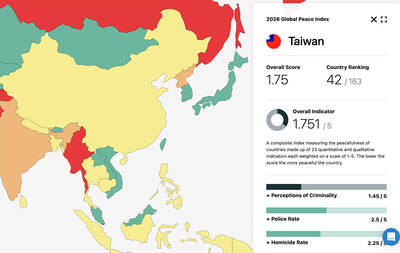
Taiwan ranked 42nd in terms of peacefulness among 163 countries, down five places from last year, according to this year’s Global Peace Index. With an overall score of 1.751, Taiwan dropped from 37th last year, the report published by the global Institute for Economics and Peace showed. The overall score measures a country’s level of peacefulness using 23 quantitative and qualitative indicators across three domains — ongoing domestic and international conflict, societal safety and security, and militarization. While Taiwan ranked 42nd worldwide, it was listed in ninth place among the 19 Asian-Pacific countries in the report, after New Zealand, Singapore, Japan, Malaysia,


 RSS
RSS