

The Executive Yuan on Saturday rejected an accusation by I-Mei Foods Co general manager Kao Chih-ming (高志明) that the Food and Drug Administration (FDA) had hurt the company’s sales in China by telling Chinese authorities about irregularities in I-Mei products.
Executive Yuan spokesman Sun Lih-chyun (孫立群) said Premier Mao Chi-kuo (毛治國) had received a petition from Kao earlier in the week complaining that the FDA’s action had made it harder for I-Mei exports to clear Chinese customs.
The FDA denied the accusation, saying it did not give its Chinese counterpart any information on recent food inspection at I-Mei factories, during which nine-year-old pre-packaged Lunar New Year meals were discovered.
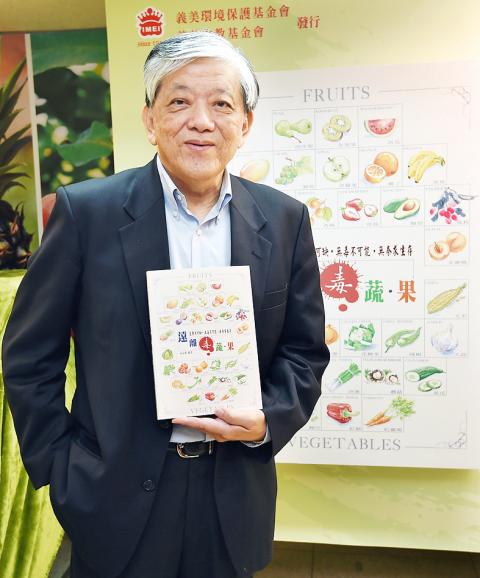
Photo: Liao Chen-huei, Taipei Times
Those past-expiration date items were not for export and were definitely not being sold to China, a FDA spokesman said on Friday. The Straits Exchange Foundation and China’s Association for Relations Across the Taiwan Straits signed an agreement in 2008 to notify each other of information concerning food safety related to cross-strait trade.
Kao presumed that Chinese customs had received reports from the FDA on the July 2 and July 3 inspections, because I-Mei received a letter from Chinese authorities on July 5 that said I-Mei products were not allowed to clear customs because of quality problems.
Sun said that after checking with the FDA, the government was sure that it had nothing to do with I-Mei’s problems with Chinese customs.
The Cabinet also regretted that Kao blamed the government, Sun said.
The FDA said its inspectors accidentally found the outdated Lunar New Year dishes while conducting a regular check on non-alcoholic beverages at I-Mei factories.
Kao’s suggestion that the FDA might have had a political motive in releasing its inspection reports to the media immediately after the incident was unacceptable, Sun said.
I-Mei’s image suffered another blow last week when a woman in Beigang, Yunlin County, found dead worms and eggs in a pack of I-Mei chocolate-coated raisins she bought.
An I-Mei spokesman said the company reclaimed the package and sent it to food inspection authorities to determine the source of contamination.
Kao has been a vocal critic of the government’s handling of several food safety scandals that have erupted in recent years.
He said in December last year that changes to food laws in response to the scandals had increased the penalties, but failed to educate the public or small businesses about food safety, and he urged the premier to help restore Taiwan’s reputation as a food kingdom.

A Hualien pomelo farmer refused to sell to China after the country announced it would permit more Taiwanese pomelo imports, prompting widespread support from Taiwanese consumers, who rallied to buy his fruit. China’s Taiwan Affairs Office last month said that China’s General Administration of Customs registered an additional 79 Taiwanese pomelo orchards and packing facilities in Hualien County, allowing more Taiwanese producers to export pomelos to China. “I am a Hualien fruit farmer and I refuse to sell to China,” Liu Tzu-hao (劉子豪) from Ruisui Township (瑞穗) said in an online post. Liu is a well-known farmer in the community and has served
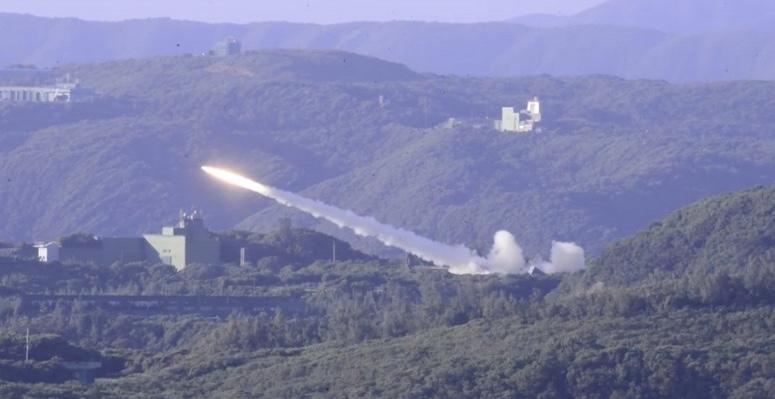
A Chinese military drone was spotted conducting reconnaissance off Taitung County as President William Lai (賴清德) visited Pingtung County this morning to inspect a drill of the armed forces’ precision-strike capabilities, prompting the military to closely monitor its actions. Today was the final day of a three-day military exercise at Jioupeng Base (九鵬基地) to test the joint combat capabilities of the armed forces and coast guard. The exercise began on Wednesday simulating air defense interception and yesterday tested long-range strike capabilities and new air defense weapons. This morning, the military conducted a final exercise involving air defense, anti-ship and drone operations. Military sources said

OCT. 31: The antiviral drugs Tamiflu and Eraflu have been distributed to about 4,000 medical facilities nationwide for people in seven groups who develop flu-like symptoms As the domestic influenza epidemic enters its peak season and continues to escalate, the Centers for Disease Control (CDC) yesterday announced that publicly funded influenza antiviral drugs for seven eligible groups have been extended to Oct. 31, allowing those who develop flu-like symptoms to receive the medication without undergoing a rapid influenza test. The CDC has extended the expanded use of flu antiviral drugs to seven groups: healthcare and influenza-prevention personnel; residents and staff at nursing homes, long-term care facilities and similar institutions; kindergarten and daycare workers and home-based caregivers; students from kindergarten through high school, vocational high school and the
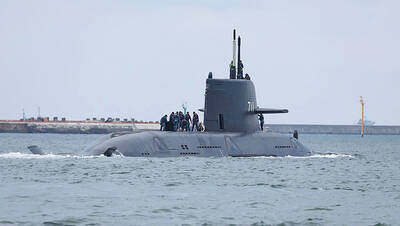
UPDATE: The submarine would need to undergo combined systems testing and crew training for navy personnel before it is ready for mission, an expert said Taiwan’s first domestically built submarine, the Hai Kun (Narwhal, 海鯤), could be delivered to the navy as early as next month, military expert and Taiwan Association for Security and Development chairman Chi Tung-yun (紀東昀) said yesterday. The submarine was yesterday morning observed departing for its 21st sea trial and its 15th submerged test. The vessel missed the initial delivery deadline of November last year due to “testing delays,” its primary contractor, shipbuilder CSBC Corp, Taiwan, said in June. The contractor also cited “political pressure from China” in procuring critical equipment. All testing operations are in the final stages, with the


 RSS
RSS