


Although the Taiwan Solidarity Union (TSU) won more than 1.1 million votes nationwide and three at-large seats in the 2012 legislative elections, TSU Secretary-General Lin Chi-chia (林志嘉) said it would be difficult for it to do better in January’s elections, despite the rise of a third political force in the country.
The TSU has not given up on the idea of winning district representation, and it is preparing to nominate five candidates, as it seeks to cooperate with the Democratic Progressive Party, Lin said.
In Taipei, the party is eyeing TSU Taipei City Councilor Chen Chien-ming’s (陳建銘) daughter, Chen Si-yu, (陳思宇) to run in the Beitou (北投) and Shilin (士林) districts and Hsiao Ya-tan (蕭亞譚) for the Nangang (南港) and Neihu (內湖) districts.
The TSU is interested in running Chou Ni-an (周倪安) for the Yonghe District (永和) in New Taipei City, and in Taichung, Liu Kuo-lung (劉國隆) for the Beitun District (北屯) and Kao Chi-tsan (高基讚) in the Fengyuan District (豐原).
In the previous legislative elections in 2012, TSU Chairman Huang Kun-huei (黃昆輝) and National Cheng Kung University law professor Hsu Chung-hsin (許忠信) — who had gained nationwide fame for his campaign against the cross-strait Economic Cooperation Framework Agreement — toured the nation giving speeches, promising voters that each of the party’s at-large seats would be served by two rotating lawmakers.
Thanks to support from former president Lee Teng-hui (李登輝), the TSU won enough votes to have three at-large seats, which meant it could form a legislative caucus.
The TSU plans to keep its rotating seat system for January’s elections, Lin said.
While the party would not have candidates in most of the nation’s electoral districts, Huang could still campaign for the party when he attends events to promote a referendum on the Chinese Nationalist Party’s (KMT) illegitimate party assets, Lin added.
The rise of third parties, including the pro-independence Free Taiwan Party, is putting pressure on the TSU, but it would continue to defend Taiwan’s identity, Lin said.
If Democratic Progressive Party (DPP) Chairperson Tsai Ing-wen (蔡英文), her party’s presidential candidate, wins the January election, the pan-green camp could get more than half of the party ballots.
The DPP and the TSU together received nearly 5.4 million party ballots in the 2012 elections, which accounted for 43 percent of all party votes, Lin said.
That means that there is room for 8 percent growth, and so the TSU is cautiously optimistic about next year’s elections, Lin said.
Asked if there would be any prominent candidates on its legislators-at-large list, Lin said that is the party’s top secret right now.
However, the TSU has been in touch with Hsu, hoping to put him on the at-large list again, he said.

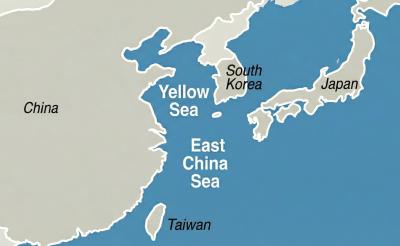
China has reserved offshore airspace in the Yellow Sea and East China Sea from March 27 to May 6, issuing alerts usually used to warn of military exercises, although no such exercises have been announced, the Wall Street Journal (WSJ) reported yesterday. Reserving such a large area for 40 days without explanation is an “unusual step,” as military exercises normally only last a few days, the paper said. These alerts, known as Notice to Air Missions (Notams), “are intended to inform pilots and aviation authorities of temporary airspace hazards or restrictions,” the article said. The airspace reserved in the alert is
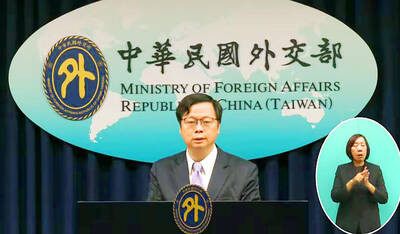
NAMING SPAT: The foreign ministry called on Denmark to propose an acceptable solution to the erroneous nationality used for Taiwanese on residence permits Taiwan has revoked some privileges for Danish diplomatic staff over a Danish permit that lists “Taiwan” as “China,” Eric Huang (黃鈞耀), head of the Ministry of Foreign Affairs’ Department of European Affairs, told a news conference in Taipei yesterday. Reporters asked Huang whether the Danish government had responded to the ministry’s request that it correct the nationality on Danish residence permits of Taiwanese, which has been listed as “China” since 2024. Taiwan’s representative office in Denmark continues to communicate with the Danish government, and the ministry has revoked some privileges previously granted to Danish representatives in Taiwan and would continue to review

More than 6,000 Taiwanese students have participated in exchange programs in China over the past two years, despite the Mainland Affairs Council’s (MAC) “orange light” travel advisory, government records showed. The MAC’s publicly available registry showed that Taiwanese college and university students who went on exchange programs across the Strait numbered 3,592 and 2,966 people respectively. The National Immigration Agency data revealed that 2,296 and 2,551 Chinese students visited Taiwan for study in the same two years. A review of the Web sites of publicly-run universities and colleges showed that Taiwanese higher education institutions continued to recruit students for Chinese educational programs without

A bipartisan group of US senators has introduced a bill to enhance cooperation with Taiwan on drone development and to reduce reliance on supply chains linked to China. The proposed Blue Skies for Taiwan Act of 2026 was introduced by Republican US senators Ted Cruz and John Curtis, and Democratic US senators Jeff Merkley and Andy Kim. The legislation seeks to ease constraints on Taiwan-US cooperation in uncrewed aerial systems (UAS), including dependence on China-sourced components, limited access to capital and regulatory barriers under US export controls, a news release issued by Cruz on Wednesday said. The bill would establish a "Blue UAS


 RSS
RSS