


Top officials delivered a mixed message to Taiwanese businesspeople working in China yesterday, with Minister of Economic Affairs John Deng (鄧振中) vowing to create a more investment-friendly environment to entice investment in Taiwan, while Straits Exchange Foundation Chairman Lin Join-sane (林中森) called for Taiwan’s participation in Beijing “One Belt, One Road” trade intiative a way to boost local businesses international visibility.
Speaking at a Dragon Boat Festival get-together in Taipei for China-based Taiwanese, Deng said Taiwan’s business environment has an edge over China in terms of transparency and rule of law, while Taiwanese enterprises have seen their operating costs in China rise because of higher labor costs and more stringent environmental and labor laws.
The complaints China-based Taiwanese businesspeople file with the ministry are mostly disputes about land-use rights and compensation for land acquisition, he said.
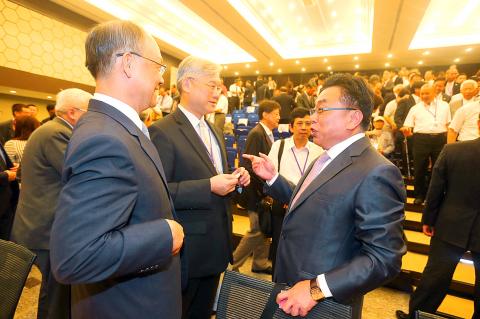
Photo: CNA
The government has committed itself to assisting Taiwanese businesses in investing at home and positioning themselves globally, Deng said, referring to a new online export momentum assessment system.
The government has also been acquiring vacant properties and establishing an industrial land reserve system and an industrial land database, he said.
Department of Investment Services Director Vivian Lien (連玉蘋) said the Ministry of Economic Affairs set its goal for domestic investment by overseas Taiwanese businesspeople this year at NT$53.5 billion (US$1.73 billion), and 76 percent of that amount, or NT$40.4 billion, was reached just at the end of last month.
Not only did that exceed the ministry’s expectations, it surpassed the investment amount reached during the same period last year, she said.
Association of Taiwan Investment Enterprises on the Mainland chairman Kuo Shan-hui (郭山輝) told the gathering that he would support Deputy Legislative Speaker Hung Hsiu-chu’s (洪秀柱) presidential bid on the Chinese Nationalist Party (KMT) ticket, saying Hung has concerned herself with the predicament of Taiwanese businesspeople in China, according to the Chinese-language Apple Daily.
“What concerns Taiwanese businesspeople most is the cross-strait relations, and any party that can consistently involve itself with the investment rights of Taiwanese businesspeople in China is good,” Kuo said.
Taiwanese businesspeople have suffered from the global and Chinese economic slowdown this year, so it is imperative that Taiwanese businesses undergo an industrial transition to survive, Kuo said.
Chinese recently announced “Made in China 2025” plan would spur the automatic production in China and boost Taiwanese industrial upgrades, Kuo said.
The Chinese government is engaged in economic and political reforms, which promise a fairer business environment for Taiwanese, with Chinese President Xi Jinping (習近平) promising to“rule the country in accordance with law” in his New Year speech this year, Kuo said.
However, addressing the increasing competition that Taiwanese businesses are facing from their Chinese counterparts, Taiwan Merchant Association in Shenzhen president Chen Ho-tai (陳合泰) said the “One Belt, One Road” initiative is a turning point for Taiwanese enterprises to launch an industrial transition and avert conflicts with Chinese companies.
Lin echoed Chen’s view, saying that Taiwan’s participation in the Chinese initiative is crucial to creating new market space, as countries included in the “One Belt, One Road” framework are populous and have lower GDPs — prospective “blue oceans” of business opportunities.

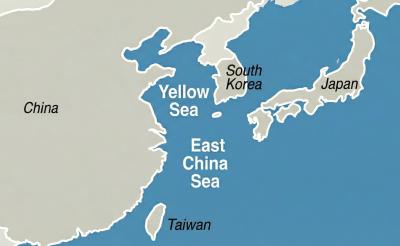
China has reserved offshore airspace in the Yellow Sea and East China Sea from March 27 to May 6, issuing alerts usually used to warn of military exercises, although no such exercises have been announced, the Wall Street Journal (WSJ) reported yesterday. Reserving such a large area for 40 days without explanation is an “unusual step,” as military exercises normally only last a few days, the paper said. These alerts, known as Notice to Air Missions (Notams), “are intended to inform pilots and aviation authorities of temporary airspace hazards or restrictions,” the article said. The airspace reserved in the alert is
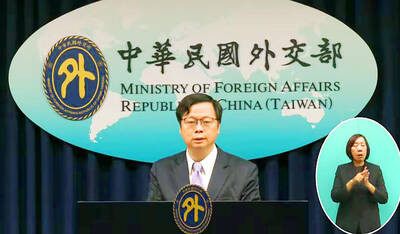
NAMING SPAT: The foreign ministry called on Denmark to propose an acceptable solution to the erroneous nationality used for Taiwanese on residence permits Taiwan has revoked some privileges for Danish diplomatic staff over a Danish permit that lists “Taiwan” as “China,” Eric Huang (黃鈞耀), head of the Ministry of Foreign Affairs’ Department of European Affairs, told a news conference in Taipei yesterday. Reporters asked Huang whether the Danish government had responded to the ministry’s request that it correct the nationality on Danish residence permits of Taiwanese, which has been listed as “China” since 2024. Taiwan’s representative office in Denmark continues to communicate with the Danish government, and the ministry has revoked some privileges previously granted to Danish representatives in Taiwan and would continue to review
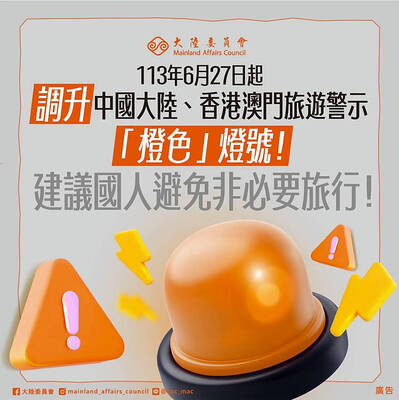
More than 6,000 Taiwanese students have participated in exchange programs in China over the past two years, despite the Mainland Affairs Council’s (MAC) “orange light” travel advisory, government records showed. The MAC’s publicly available registry showed that Taiwanese college and university students who went on exchange programs across the Strait numbered 3,592 and 2,966 people respectively. The National Immigration Agency data revealed that 2,296 and 2,551 Chinese students visited Taiwan for study in the same two years. A review of the Web sites of publicly-run universities and colleges showed that Taiwanese higher education institutions continued to recruit students for Chinese educational programs without
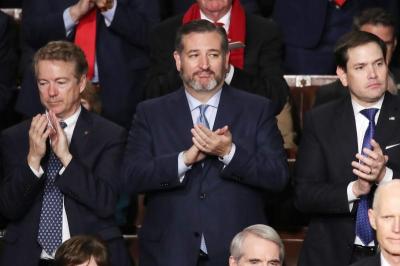
A bipartisan group of US senators has introduced a bill to enhance cooperation with Taiwan on drone development and to reduce reliance on supply chains linked to China. The proposed Blue Skies for Taiwan Act of 2026 was introduced by Republican US senators Ted Cruz and John Curtis, and Democratic US senators Jeff Merkley and Andy Kim. The legislation seeks to ease constraints on Taiwan-US cooperation in uncrewed aerial systems (UAS), including dependence on China-sourced components, limited access to capital and regulatory barriers under US export controls, a news release issued by Cruz on Wednesday said. The bill would establish a "Blue UAS


 RSS
RSS