

Democratic Progressive Party (DPP) Chairperson Tsai Ing-wen (蔡英文) yesterday urged lawmakers to pass proposed constitutional amendments without dispute, while calling on the Chinese Nationalist Party (KMT) to refrain from “kidnapping” reform.
Attending the DPP caucus meeting for the first time in this legislative session, Tsai was greeted by loud cheers as she walked in.
She shook hands with each of the legislators, who responded by saying: “Hello, president.”

Photo: Liu Hsin-de, Taipei Times
Speaking to inaugurate the meeting, Tsai urged the caucus to put as much effort as possible into pushing for the passage of constitutional amendments.
“I hope there is concrete progress in constitutional reform this time, because there is a consensus [between the DPP and the KMT] on lowering the voting age to 18 and adjustments to the threshold for at-large legislative seats,” Tsai said in response to media queries before entering the meeting room. “I hope the DPP and the KMT caucuses can speed up handling the amendments, so that they may be passed before the end of this session [on Tuesday].”
However, Tsai added that she was not fully confident that the amendments would pass, as the KMT caucus is insisting that the amendments be passed as a package, including disputed ones such as absentee voting and legislative consent to the premier’s nomination.
“The DPP believes that different constitutional amendment proposals reflect different political ideologies and values, and therefore should be handled separately,” Tsai said. “Any political party that considers constitutional reform its mission should not kidnap social consensus.”
DPP caucus whip Ker Chien-ming (柯建銘) agreed with Tsai, saying that constitutional reform tops the DPP’s must-do list in this legislative session.
Asked about Deputy Legislative Speaker Hung Hsiu-chu’s (洪秀柱) campaign to represent the KMT in next year’s presidential elections, Tsai said that, as a female politician, she would give Hung her best wishes.
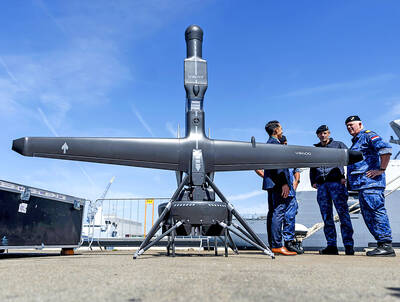
DEFENSE PROCUREMENT: Taiwan could become the largest operator of V-BAT drones outside the US once they are delivered, the Ministry of National Defense said The navy and the coast guard are acquiring 292 units of MQ-35A V-BAT vertical takeoff and landing (VTOL) surveillance drones manufactured by US-based defense technology company Shield AI, making Taiwan one of the largest buyers of the drone. The Coast Guard Administration budgeted NT$1.2 billion (US$37.1 million) to buy 12 drones, which have been delivered, Shield AI said in a report on Oct 13. The navy is planning to spend NT$36 billion under a four-year program code-named Project Yuan Xiao (遠鴞) to acquire 280 V-BAT drones, the Ministry of National Defense’s fiscal 2027 report showed. The combined procurement is expected
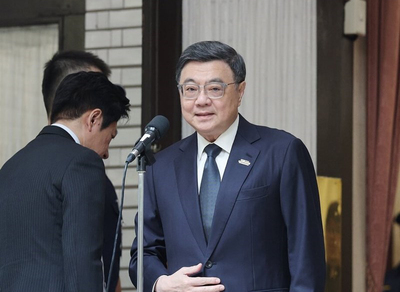
The government would continue monitoring online rumors that a pneumonic plague outbreak has spread from Russia into China and could enhance existing quarantine measures, Premier Cho Jung-tai (卓榮泰) said today. During a legislative meeting, Democratic Progressive Party Legislator Wang Ting-yu (王定宇) said rumors were circulating that the disease had spread across several Chinese provinces. He asked Cho whether the government was prepared to prevent the disease from spreading to Taiwan, given the frequent exchanges between Taiwan and China, and how concerned the government was about the alleged outbreak. The Ministry of Health and Welfare implemented border quarantine measures after briefing the Executive Yuan

MAYORAL RACE: Su Chiao-hui made gains by persuading undecided voters and winning over voters in KMT-leaning districts, a pollster said Legislator Su Chiao-hui (蘇巧慧), the Democratic Progressive Party’s (DPP) candidate for New Taipei City mayor, has a 13.1 percentage point lead over her Chinese Nationalist Party (KMT) rival Lee Shu-chuan (李四川), a poll released yesterday showed. The poll, commissioned by the Taipei Trust in Democracy Association, showed that 43.1 percent of respondents said they would vote for Su, up 7.9 percentage points from a poll conducted in late August, while support for Lee was at 30 percent, down 4.7 percentage points. It showed that 48.6 percent of respondents thought Su would make a suitable mayor, compared with 35.9 percent for Lee. Independent candidate

A Chinese People's Liberation Army (PLA) Navy aircraft carrier group was being monitored after entering the western Pacific, the Ministry of National Defense said today, after Beijing yesterday criticized Taiwan for using a water cannon against a Chinese fishing boat near the Pratas Islands (Dongsha Islands, 東沙群島). A Chinese naval task group led by the aircraft carrier Liaoning (遼寧) yesterday sailed to the western Pacific for training, Chinese state-run Xinhua news agency quoted the PLA Navy as saying. “The drill is part of the annual routine training plan aimed at testing and improving the troops’ combat readiness and enhancing their ability to


 RSS
RSS