


Taipei Rapid Transit Corp (TRTC) should not “equivocate” (睜眼說瞎話) about Chinese investment in advertising on the capital’s MRT system, Taipei Mayor Ko Wen-je (柯文哲) said yesterday.
The management of the corporation — which is 73.75 percent owned by the Taipei City Government — came under fire during cross-examination at the Taipei City Council.
Taipei City Councilor Wang Wei-chung (王威中) of the Democratic Progressive Party (DPP) criticized the corporation for awarding the Taiwan Asia Ray Advertising Company (台灣雅仕維廣告公司) a contract to advertise at Zhongxiao Fuxing (忠孝復興) MRT Station.
He said the firm’s Hong Kong-based parent company, Asiaray Media Group Limited (雅仕維傳媒集團), was clearly affiliated with Beijing, citing public corporate documents listing all board members as Chinese citizens, as well as media reports stating that board chairman Lin Dexing (林德興) served on the People’s Political Consultative Conference of Yunnan Province.
Despite being shown evidence of the corporation’s connections, TRTC failed to even offer an explanation, he said.
TRTC CEO Sun Yi-chun (孫以濬) said that his firm’s contract with Asiaray had been approved by the Ministry of Economic Affairs, which is responsible for monitoring foreign investment.
His remarks drew a sharp response from Ko, who said that Sun should not “equivocate” about the firm’s affiliation. Ko said Sun was responsible for using his own judgement on the affiliation of the firm and should not “pass the buck” to the ministry.
No decision was made about the future of the corporation’s contract with Asiaray.
In related news, funds from the TRTC’s annual NT$11 million (US$352,994) public relations budget came under criticism from DPP Taipei City Councilor Kao Chia-yu (高嘉瑜).
While the firm’s accounts list half of the budget as having been spent on “employee compensation,” there was evidence that at least some of the funds had been redirected toward inappropriate gifts, she said, citing a report by another city councilor who had received NT$6,000 in gift certificates from firm officials at a year-end party.
Ko said the firm should provide detailed accounts for its expenditure, adding that the money should not be spent if employees did not “dare” to give a clear account.

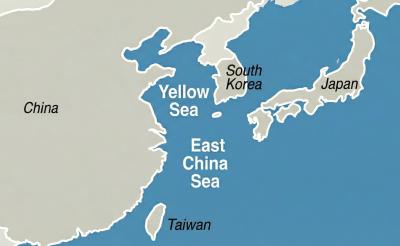
China has reserved offshore airspace in the Yellow Sea and East China Sea from March 27 to May 6, issuing alerts usually used to warn of military exercises, although no such exercises have been announced, the Wall Street Journal (WSJ) reported yesterday. Reserving such a large area for 40 days without explanation is an “unusual step,” as military exercises normally only last a few days, the paper said. These alerts, known as Notice to Air Missions (Notams), “are intended to inform pilots and aviation authorities of temporary airspace hazards or restrictions,” the article said. The airspace reserved in the alert is
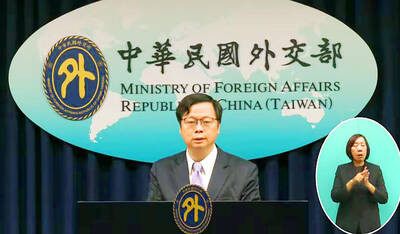
NAMING SPAT: The foreign ministry called on Denmark to propose an acceptable solution to the erroneous nationality used for Taiwanese on residence permits Taiwan has revoked some privileges for Danish diplomatic staff over a Danish permit that lists “Taiwan” as “China,” Eric Huang (黃鈞耀), head of the Ministry of Foreign Affairs’ Department of European Affairs, told a news conference in Taipei yesterday. Reporters asked Huang whether the Danish government had responded to the ministry’s request that it correct the nationality on Danish residence permits of Taiwanese, which has been listed as “China” since 2024. Taiwan’s representative office in Denmark continues to communicate with the Danish government, and the ministry has revoked some privileges previously granted to Danish representatives in Taiwan and would continue to review

More than 6,000 Taiwanese students have participated in exchange programs in China over the past two years, despite the Mainland Affairs Council’s (MAC) “orange light” travel advisory, government records showed. The MAC’s publicly available registry showed that Taiwanese college and university students who went on exchange programs across the Strait numbered 3,592 and 2,966 people respectively. The National Immigration Agency data revealed that 2,296 and 2,551 Chinese students visited Taiwan for study in the same two years. A review of the Web sites of publicly-run universities and colleges showed that Taiwanese higher education institutions continued to recruit students for Chinese educational programs without

A bipartisan group of US senators has introduced a bill to enhance cooperation with Taiwan on drone development and to reduce reliance on supply chains linked to China. The proposed Blue Skies for Taiwan Act of 2026 was introduced by Republican US senators Ted Cruz and John Curtis, and Democratic US senators Jeff Merkley and Andy Kim. The legislation seeks to ease constraints on Taiwan-US cooperation in uncrewed aerial systems (UAS), including dependence on China-sourced components, limited access to capital and regulatory barriers under US export controls, a news release issued by Cruz on Wednesday said. The bill would establish a "Blue UAS


 RSS
RSS