


The Green Party Taiwan (GPT) yesterday unveiled its campaign theme for the legislative elections in January, vowing to push policies that improve public livelihoods, promote Aboriginal rights and ensure optimal land use to serve public interests.
Speaking at a news conference in Taipei, GPT co-convener Lee Ken-cheng (李根政) urged the public to “stand up” for the values they believe is best for Taiwan, to change the nation for the better.
He said society has benefited greatly because of the people who stood up to right the government’s wrongs, such as the residents of New Taipei’s Gongliao District (貢寮), whose strong protests prompted the authorities to halt the construction of the problematic Fourth Nuclear Power Plant.
Accusing the Chinese Nationalist Party (KMT) and the Democratic Progressive Party (DPP) of favoring big businesses, while neglecting the needs of ordinary people, he said this has led to more lenient laws and in turn caused many of today’s social problems.
“Taiwan is where we live and where we die. However, after two changes of government, it is becoming clearer that the KMT’s and the DPP’s professed love for this land is manifested in their connivances with corporations, which has seized our land, destroyed the environment and marginalized the farming sector, giving rise to a host of food safety scandals,” he said.
The government has set low corporate tax rates and cut the budget for social welfare to help businesses cope with global competition, but the fruit of the nation’s economic development has not trickled down to the public, Lee said.
He called on the public to support the party, saying that the GPT has served as a government watchdog for more than a decade and has always stood on the side of social justice.
GPT standing committee member Biho Wilanglawa, an Amis and Dayan Aborigine, said that many bills on protecting Aboriginal rights have languished in the legislature because of political bartering between the KMT and DPP, and the ones that have been passed are mostly empty legislation that does not bring any real benefits to Aborigines.
The party acknowledges the role of Aborigines and will fight for their rights and welfare in the legislature, he said.
GPT Taoyuan-Hsinchu-Miaoli office secretary-general Tang Lin-hsiang (湯琳翔) said that, starting today, the party would visit campuses and other public areas to talk, listen and record public expectations for the nation.

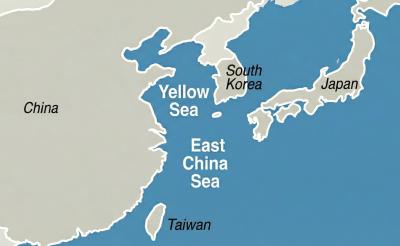
China has reserved offshore airspace in the Yellow Sea and East China Sea from March 27 to May 6, issuing alerts usually used to warn of military exercises, although no such exercises have been announced, the Wall Street Journal (WSJ) reported yesterday. Reserving such a large area for 40 days without explanation is an “unusual step,” as military exercises normally only last a few days, the paper said. These alerts, known as Notice to Air Missions (Notams), “are intended to inform pilots and aviation authorities of temporary airspace hazards or restrictions,” the article said. The airspace reserved in the alert is
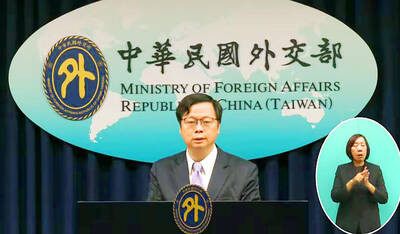
NAMING SPAT: The foreign ministry called on Denmark to propose an acceptable solution to the erroneous nationality used for Taiwanese on residence permits Taiwan has revoked some privileges for Danish diplomatic staff over a Danish permit that lists “Taiwan” as “China,” Eric Huang (黃鈞耀), head of the Ministry of Foreign Affairs’ Department of European Affairs, told a news conference in Taipei yesterday. Reporters asked Huang whether the Danish government had responded to the ministry’s request that it correct the nationality on Danish residence permits of Taiwanese, which has been listed as “China” since 2024. Taiwan’s representative office in Denmark continues to communicate with the Danish government, and the ministry has revoked some privileges previously granted to Danish representatives in Taiwan and would continue to review

More than 6,000 Taiwanese students have participated in exchange programs in China over the past two years, despite the Mainland Affairs Council’s (MAC) “orange light” travel advisory, government records showed. The MAC’s publicly available registry showed that Taiwanese college and university students who went on exchange programs across the Strait numbered 3,592 and 2,966 people respectively. The National Immigration Agency data revealed that 2,296 and 2,551 Chinese students visited Taiwan for study in the same two years. A review of the Web sites of publicly-run universities and colleges showed that Taiwanese higher education institutions continued to recruit students for Chinese educational programs without

A bipartisan group of US senators has introduced a bill to enhance cooperation with Taiwan on drone development and to reduce reliance on supply chains linked to China. The proposed Blue Skies for Taiwan Act of 2026 was introduced by Republican US senators Ted Cruz and John Curtis, and Democratic US senators Jeff Merkley and Andy Kim. The legislation seeks to ease constraints on Taiwan-US cooperation in uncrewed aerial systems (UAS), including dependence on China-sourced components, limited access to capital and regulatory barriers under US export controls, a news release issued by Cruz on Wednesday said. The bill would establish a "Blue UAS


 RSS
RSS