


The Consumer Protection Committee yesterday urged the public to exercise caution when using ceramic cooking pots for Chinese herbal medicines after 90 percent failed tests.
The agency randomly tested 15 electronic herbal medicine cooking pots purchased online, as well as from electric appliance shops, pharmacies and hardware stores in New Taipei, Hsinchu and Hualien cities in October last year.
“Five of the tested products lacked some of the components detailed in their initial test reports,” consumer ombudsman Wang Teh-ming (王德明) told a press conference in Taipei.
He cited as an example the “Yi Shou ceramics Chinese medicine pot” (益壽陶瓷中藥壼), which he said did not have a ground wire attached to its plug, increasing the risk of electric shocks.
Manufacturers of the faulty products have been ordered to make the necessary improvements within a statutory period, and those who fail to comply will have their sales licenses revoked, Wang said.
In addition, eight of the products tested did not conform to labeling requirements, he said, urging consumers to carefully examine the cooking pots before purchase and to unplug them after use.
In related news, the Changhua County Public Health Bureau yesterday released the results of a random testing of fish oil supplements.
Eight out of the 10 tested products were found to contain far lower levels of EPA (eicosapentaenoic acid) and DHA (docosahexaenoic acid) than advertised.
The only two products were that passed the tests were both manufactured in Taiwan, the bureau said.
Singling out Po Chih Chang Fish Oil (柏之暢魚油), which is made of ingredients imported from Germany, the bureau said that the product claimed to contain 180mg of EPA and 120mg of DHA per a 1,000mg capsule, but in reality, the fish oil contained only 30mg each of the two substances.
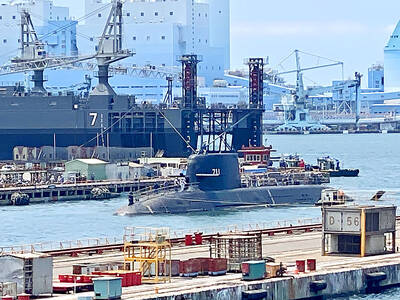
AGING: While Japan has 22 submarines, Taiwan only operates four, two of which were commissioned by the US in 1945 and 1946, and transferred to Taiwan in 1973 Taiwan would need at least 12 submarines to reach modern fleet capabilities, CSBC Corp, Taiwan chairman Chen Cheng-hung (陳政宏) said in an interview broadcast on Friday, citing a US assessment. CSBC is testing the nation’s first indigenous defense submarine, the Hai Kun (海鯤, Narwhal), which is scheduled to be delivered to the navy next month or in July. The Hai Kun has completed torpedo-firing tests and is scheduled to undergo overnight sea trials, Chen said on an SET TV military affairs program. Taiwan would require at least 12 submarines to establish a modern submarine force after assessing the nation’s operational environment and defense
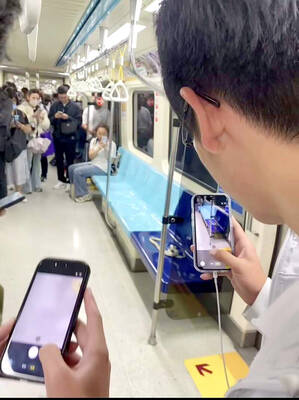
A white king snake that frightened passengers and caused a stir on a Taipei MRT train on Friday evening has been claimed by its owner, who would be fined, Taipei Rapid Transit Corp (TRTC) said yesterday. A person on Threads posted that he thought he was lucky to find an empty row of seats on Friday after boarding a train on the Bannan (Blue) Line, only to spot a white snake with black stripes after sitting down. Startled, he jumped up, he wrote, describing the encounter as “terrifying.” “Taipei’s rat control plan: Release snakes on the metro,” one person wrote in reply, referring
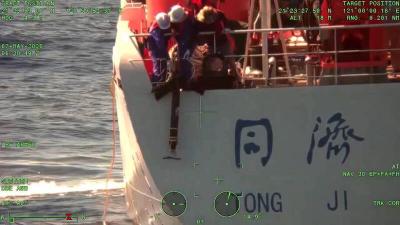
The coast guard today said that it had disrupted "illegal" operations by a Chinese research ship in waters close to the nation and driven it away, part of what Taipei sees a provocative pattern of China's stepped up maritime activities. The coast guard said that it on Thursday last week detected the Chinese ship Tongji (同濟號), which was commissioned only last year, 29 nautical miles (54km) southeast of the southern tip of Taiwan, although just outside restricted waters. The ship was observed lowering ropes into the water, suspected to be the deployment of scientific instruments for "illegal" survey operations, and the coast
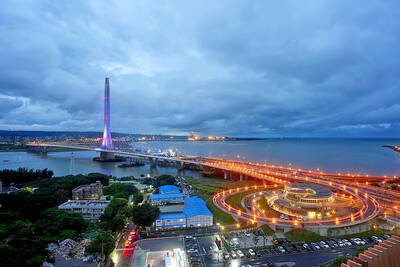
An inauguration ceremony was held yesterday for the Danjiang Bridge, the world’s longest single-mast asymmetric cable-stayed bridge, ahead of its official opening to traffic on Tuesday, marking a major milestone after nearly three decades of planning and construction. At the ceremony in New Taipei City attended by President William Lai (賴清德), Premier Cho Jung-tai (卓榮泰), Minister of Transportation and Communications Chen Shih-kai (陳世凱) and New Taipei City Mayor Hou Yu-ih (侯友宜), the bridge was hailed as both an engineering landmark and a long-awaited regional transport link connecting Tamsui (淡水) and Bali (八里)


 RSS
RSS