


Taiwan slipped one place to 51st out of the world’s 180 countries in this year’s Press Freedom Index, released on Thursday by Reporters Without Borders.
The nation was judged to have the fifth-freest press in the Asia-Pacific region, behind New Zealand, Australia, Samoa and Tonga.
Over the past decade, Taiwan’s freedom of the press appears to have decreased gradually but steadily, according to the organization’s rankings.
In 2007, Taiwan was judged to have the 32nd-freest press globally, while it was 47th in 2013 and 50th last year.
Released in Washington, the report continues to paint “a grim picture of the future of press freedom in Asia,” Radio Free Asia president Libby Liu (劉仚) said.
Reporters Without Borders said that threats to journalists and netizens and censorship issues continued to hurt media environments in Asia.
Liu said the seriousness of the situation was evidenced in areas once considered the few bright spots in the region.
“In Hong Kong, for example, authorities used the ‘Umbrella movement’ demonstrations as an excuse to escalate their efforts to rein in media freedoms, including attacks on and firings of editors and reporters critical of the city’s and mainland China’s leadership,” Liu said.
“Our journalists on the ground in Myanmar and Cambodia continue to experience and witness both countries struggling with free press issues, including the use of civil and criminal courts as a means to intimidate journalists with the threat of prosecution,” Liu added.
The survey ranked North Korea second to last at 179 of the 180 countries, with China at 176, Vietnam at 175 and Laos at 171.
China and Vietnam were cited among the worst press freedom offenders, with both countries arresting bloggers and journalists.
In China, these included famous journalist Gao Yu (高玉), who was forced to make a televised “confession”; cyberdissident Xu Zhiyong (許志永); and leading Uighur blogger and economics professor Ilham Tohti.

Taiwanese can file complaints with the Tourism Administration to report travel agencies if their activities caused termination of a person’s citizenship, Mainland Affairs Council Minister Chiu Chui-cheng (邱垂正) said yesterday, after a podcaster highlighted a case in which a person’s citizenship was canceled for receiving a single-use Chinese passport to enter Russia. The council is aware of incidents in which people who signed up through Chinese travel agencies for tours of Russia were told they could obtain Russian visas and fast-track border clearance, Chiu told reporters on the sidelines of an event in Taipei. However, the travel agencies actually applied

New measures aimed at making Taiwan more attractive to foreign professionals came into effect this month, the National Development Council said yesterday. Among the changes, international students at Taiwanese universities would be able to work in Taiwan without a work permit in the two years after they graduate, explainer materials provided by the council said. In addition, foreign nationals who graduated from one of the world’s top 200 universities within the past five years can also apply for a two-year open work permit. Previously, those graduates would have needed to apply for a work permit using point-based criteria or have a Taiwanese company
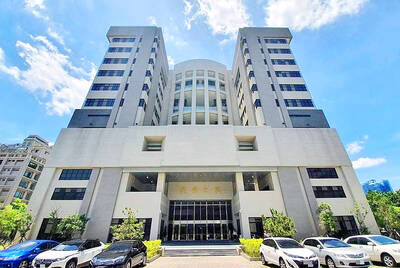
The Shilin District Prosecutors’ Office yesterday indicted two Taiwanese and issued a wanted notice for Pete Liu (劉作虎), founder of Shenzhen-based smartphone manufacturer OnePlus Technology Co (萬普拉斯科技), for allegedly contravening the Act Governing Relations Between the People of the Taiwan Area and the Mainland Area (臺灣地區與大陸地區人民關係條例) by poaching 70 engineers in Taiwan. Liu allegedly traveled to Taiwan at the end of 2014 and met with a Taiwanese man surnamed Lin (林) to discuss establishing a mobile software research and development (R&D) team in Taiwan, prosecutors said. Without approval from the government, Lin, following Liu’s instructions, recruited more than 70 software

Chinese spouse and influencer Guan Guan’s (關關) residency permit has been revoked for repeatedly posting pro-China videos that threaten national security, the National Immigration Agency confirmed today. Guan Guan has said many controversial statements in her videos posted to Douyin (抖音), including “the red flag will soon be painted all over Taiwan” and “Taiwan is an inseparable part of China,” and expressing hope for expedited reunification. The agency last year received multiple reports alleging that Guan Guan had advocated for armed reunification. After verifying the reports, the agency last month issued a notice requiring her to appear and explain her actions. Guan


 RSS
RSS