


While Democratic Progressive Party (DPP) Chairperson Tsai Ing-wen (蔡英文) appears to be the party’s sole potential presidential hopeful after Tainan Mayor William Lai’s (賴清德) recent announcement that he was not interested in running in next year’s election, the Chinese Nationalist Party (KMT) seems to be taking a wait-and-see approach to determining who will be its candidate.
Speaking on condition of anonymity, a KMT legislator said on Saturday that the party has its own candidate selection mechanism and does not need to rush into things.
“The only moment that really matters in an election is when people cast their ballot. The most important task lies ahead of the party is to become more in-sync with public opinion and roll out policies that can bring about ‘sensible differences,’” the lawmaker said. “Otherwise the KMT may not be able to turn the public tide in favor of its presidential candidate before election day.”
KMT headquarters is also remaining mum on its timetable for picking a candidate.
KMT spokesman Charles Chen (陳以信) said the party’s Organizational Development Committee would meet to discuss the matter, but will not say anything to the public until a conclusion is reached.
However, an anonymous source with close ties to the KMT said the committee already has a plan ready, but the party’s higher echelon believes the time is not right to show its cards.
“Since it is still too early to tell who are the likely candidates, the party is expected to release the selection timetable no sooner than the end of the Lunar New Year holiday. It may wait until May or June to finalize its presidential candidate,” the source said.
Party lawmakers are divided over whether New Taipei City Mayor Eric Chu (朱立倫), who succeeded President Ma Ying-jeou (馬英九) as KMT chairman last month, should be the candidate if no suitable alternatives emerge.
KMT Legislator Wang Hui-mei (王惠美) said that even if Chu is selected through the party’s primary mechanism, his integrity could be challenged, referring to Chu’s promise on Wednesday that he will serve out his four-year term as mayor, which will not end until 2018.
KMT Lawmaker Liao Cheng-ching (廖正井) said that the KMT will not just roll over and hand the presidency on a silver platter to the DPP.
“If no one signs up for the primary, we will demand that the chairman take one for the team and run himself,” Liao said.
Chu’s popularity and reputation would undoubtedly help the KMT secure an even chance of winning the election, Liao said.
KMT Legislator Lu Hsueh-chang (呂學樟) said while Tsai might be able to take lead in planning for next year’s presidential election, Saturday’s by-elections results — which saw the KMT hold on to two of the five legislative seats up for grabs and the DPP hold onto its three — showed that the KMT still has many loyal supporters.
“Chu does seem to be the most ideal candidate at the moment and naturally we expect him to step forward to fight the battle,” Lu said.

The military has spotted two Chinese warships operating in waters near Penghu County in the Taiwan Strait and sent its own naval and air forces to monitor the vessels, the Ministry of National Defense (MND) said. Beijing sends warships and warplanes into the waters and skies around Taiwan on an almost daily basis, drawing condemnation from Taipei. While the ministry offers daily updates on the locations of Chinese military aircraft, it only rarely gives details of where Chinese warships are operating, generally only when it detects aircraft carriers, as happened last week. A Chinese destroyer and a frigate entered waters to the southwest
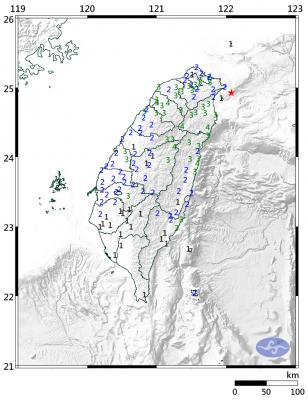
A magnitude 6.1 earthquake struck off the coast of Yilan County at 8:39pm tonight, the Central Weather Administration (CWA) said, with no immediate reports of damage or injuries. The epicenter was 38.7km east-northeast of Yilan County Hall at a focal depth of 98.3km, the CWA’s Seismological Center said. The quake’s maximum intensity, which gauges the actual physical effect of a seismic event, was a level 4 on Taiwan’s 7-tier intensity scale, the center said. That intensity level was recorded in Yilan County’s Nanao Township (南澳), Hsinchu County’s Guansi Township (關西), Nantou County’s Hehuanshan (合歡山) and Hualien County’s Yanliao (鹽寮). An intensity of 3 was

Japanese Prime Minister Sanae Takaichi’s comment last year on Tokyo’s potential reaction to a Taiwan-China conflict has forced Beijing to rewrite its invasion plans, a retired Japanese general said. Takaichi told the Diet on Nov. 7 last year that a Chinese naval blockade or military attack on Taiwan could constitute a “survival-threatening situation” for Japan, potentially allowing Tokyo to exercise its right to collective self-defense. Former Japan Ground Self-Defense Force general Kiyofumi Ogawa said in a recent speech that the remark has been interpreted as meaning Japan could intervene in the early stages of a Taiwan Strait conflict, undermining China’s previous assumptions
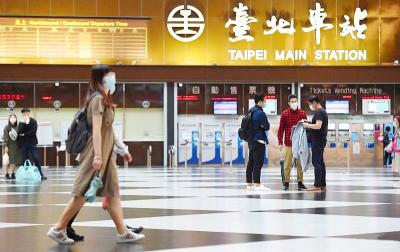
Taiwan Railways Corp (TRC) today announced that Shin Kong Mitsukoshi has been selected as the preferred bidder to operate the Taipei Railway Station shopping mall, replacing the current operator, Breeze Development Co Ltd. Among eight qualified firms that delivered presentations and were evaluated by a review committee, Shin Kong Mitsukoshi was ranked first, while Breeze was named the runner-up, the rail company said in a statement. Contract negotiations are to proceed in accordance with regulations, it said, adding that if negotiations with the top bidder fail, it could invite the second-ranked applicant to enter talks. Breeze in a statement today expressed doubts over


 RSS
RSS