


Anti-nuclear energy activists clashed with their pro-nuclear counterparts on Saturday at an event in Taipei held to gather public opinions in preparation for next month’s energy conference.
The conference is set to focus on identifying alternative energy sources after the construction of the Fourth Nuclear Power Plant in New Taipei City’s Gongliao District (貢寮) was suspended over widespread protests about the safety risks of the facility.
The wide divide among advocates and critics of nuclear energy became clear soon after the northern preliminary meeting began.
Homemakers Union Foundation managing supervisor Chen Man-li (陳曼麗) called on the government to raise its 1 percent energy savings goal, while also asking it to provide detailed statistics to substantiate the 8.1 percent energy reduction rate that the Ministry of Economic Affairs claims the nation’s public sector and schools have already achieved.
Taiwan Energy Protection Alliance cofounder Chang Chung-yi (張中一), who spoke after Chen, expressed the opposite opinion.
Quoting a report by the Bureau of Energy, he said that energy conservation efforts would never eliminate the need for new power plants.
He urged the moderator not to mislead participants with faulty information.
Chang also criticized the government’s method of transferring interruptible power from one area to another to resolve power shortages, calling it inefficient.
“The government should promote nuclear energy and the use of coal-fired power plants to reduce energy costs, and then use the money saved to develop a ‘smart’ power grid,” he said.
The seed for a confrontation was sown when anti-nuclear energy activist Yan Shu-nu (顏淑女) requested a desk so that she could take notes more easily, asking the participants: “Doesn’t everyone here want a desk?”
Unusually for such meetings, the question was met with scoffing and a resounding “no” from some of the crowd.
“Only you need a desk,” one participant told Yan.
“We can take our notes just fine this way,” another said.
Taiwan Water Resources Conservation Union’s Jennifer Nien (粘立玉) and Wu Li-hui (吳麗慧) were furious at the reaction, and engaged in a loud exchange with members of nuclear advocacy group Nuclear Myth Busters that culminated with them telling Nien and Wu: “If you don’t like it, just go.”
“It is the likes of these people — who think that just because they take to the streets and raise their voices, that they can get anything they want — that have caused Taiwan so many problems,” Nuclear Myth Buster member Lin Ming-cheng (林明正) said.
Lin’s remark sparked more angry exchanges, which brought the meeting to a standstill.
Taoyuan Local Union director-general Pan Chung-cheng (潘忠政) said he suspects that the Atomic Energy Council has mobilized many state-sponsored and pro-nuclear academics and members of related groups to attend the meetings because the public generally opposes nuclear energy.
“The government can work with academics and provide all these scientific facts about the benefits of nuclear power, but at the end of the day, the decision as to whether to adopt nuclear energy should be decided by the public,” he said.
“I do not think they really understand how people feel about nuclear energy and their actions are a violation of democratic values,” he said.

Yangmingshan National Park authorities yesterday urged visitors to respect public spaces and obey the law after a couple was caught on a camera livestream having sex at the park’s Qingtiangang (擎天崗) earlier in the day. The Shilin Police Precinct in Taipei said it has identified a suspect and his vehicle registration number, and would summon him for questioning. The case would be handled in accordance with public indecency charges, it added. The couple entered the park at about 11pm on Thursday and began fooling around by 1am yesterday, the police said, adding that the two were unaware of the park’s all-day live

A former soldier and an active-duty army officer were yesterday indicted for allegedly selling classified military training materials to a Chinese intelligence operative for a total of NT$79,440. The Taipei District Prosecutors’ Office indicted Chen Tai-yin (陳泰尹) and Lee Chun-ta (李俊達) for contravening the National Security Act (國家安全法) and the Anti-Corruption Act (貪污治罪條例). Chen left the military in September 2013 after serving alongside then-staff sergeant Lee, now an army lieutenant, at the 21st Artillery Command of the army’s Sixth Corps from 2011 to 2013, according to the indictment. Chen met a Chinese intelligence operative identified as “Wang” (王) through a friend in November

Minister of Digital Affairs Lin Yi-ching (林宜敬) yesterday cited regulatory issues and national security concerns as an expert said that Taiwan is among the few Asian regions without Starlink. Lin made the remarks on Facebook after funP Innovation Group chief executive officer Nathan Chiu (邱繼弘) on Friday said Taiwan and four other countries in Asia — China, North Korea, Afghanistan and Syria — have no access to Starlink. Starlink has become available in 166 countries worldwide, including Ukraine, Malaysia, the Philippines and Vietnam, in the six years since it became commercial, he said. While China and North Korea block Starlink, Syria is not
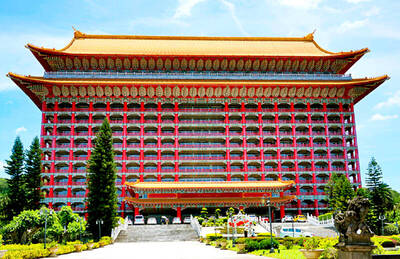
The Grand Hotel Taipei has rejected media reports claiming that the hotel had prevented CBS from broadcasting coverage of the Beijing summit between U.S. President Donald Trump and Chinese President Xi Jinping (習近平) on its premises. Media reports alleging that the hotel owner, dissatisfied with CBS’s coverage, prohibited the network from broadcasting political content on the hotel premises, are not true, the hotel said in a statement issued last night. The reports were “inconsistent with how the hotel actually handled the matter,” it said. The hotel said it received a refund request from a


 RSS
RSS