

Taipei mayor-elect Ko Wen-je (柯文哲) and Yilan County Commissioner Lin Tsung-hsien’s (林聰賢) proposal yesterday to back direct rail service between Taipei and Yilan was yesterday criticized by transport experts, who said that such an important decision should not be made by politicians alone.
Former National Chiao Tung University associate professor Huang Tai-shen (黃台生) said the purpose of Ko and Lin’s meeting was for the two men to show support for the project.
However, the proposal would have to be evaluated by the Environmental Protection Administration’s Environmental Impact Assessment (EIA) Committee, to determine the project’s viability, Huang said.
National Taiwan University professor Jason Chang (張學孔) said that while he applauded Ko’s efforts to collaborate with county commissioners in an attempt to raise the overall standard of the Greater Taipei area’s transportation infrastructure, Ko should consult professionals over potentially problematic issues.
“The Railway Reconstruction Bureau has done a comprehensive study of the proposed project’s impact on the transportation system as well as on the environment,” Chang said, suggesting Ko talk with the Ministry of Transportation and Communications first before he made any specific decisions.
Taiwan Water Conservation Union spokesperson Chen Jiau-hua (陳椒華) called on Ko to understand the geography of the area where the proposed rail line would run, and gain a proper perspective of the implications.
“The proposed route is in a fault zone — a collection of fault lines — and is susceptible to landslides, not to mention that it would pass through Feitsui Reservoir’s (翡翠水庫) catchment area, which is an ecologically sensitive zone,” she said. “There are other municipalities that have a much more urgent need to develop transportation systems than Taipei. Ko should consult his staff and carry out a comprehensive assessment before making decisions.”
Citizen of the Earth, Taiwan member Tsai Chung-Yueh (蔡中岳) said it is almost impossible that the route proposed by Lin would pass an EIA, given its potential destructive impact on Greater Taipei’s water resources.
“Ko’s ‘fast, furious, and effective’ way of working while connecting patients to the extra-corporeal membrane oxygenation system will not work in this case, not with how an EIA works,” he said. “Ko should gain an understanding of the plan, not just listen to Lin’s side of the story.”
Railway Reconstruction Bureau Deputy Director-General Tang Jih-horng (唐繼宏) said that the bureau had previously proposed two different routes to be considered for the project, adding that in an April meeting representatives from the Taipei City Government opposed the proposed route cutting through the reservoir.
“We have chosen the route that would bypass the reservoir and have already conducted assessments on the project’s impact on the environment, with the final report scheduled to be submitted at the beginning of next year,” Tang said.
Deputy Minister of Transportation and Communications Frank Fan (范植谷) said the ministry respects the local governments’ opinions on the project, adding that there is room for further discussion as the project is still at the planning stage.
The route endorsed by Ko and Lin was the bureau’s first proposed option — to run from NanKang RailwaymStation to South of Toucheng Township (頭城) in Yilan County.
The second option would connect Taipei’s Nangang (南港) District and Toucheng, which is about 53km away. However, it would be constructed by going through Shuansi District (雙溪) in New Taipei City and Dasi(大溪) in Yilan County.
Construction costs for the two projects are estimated at NT$45.8 billion and NT$49.1 billion respectively (US$1.47 billion and US$1.58 billion).
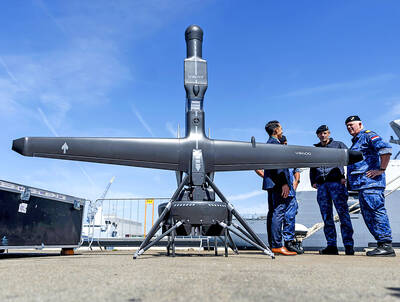
DEFENSE PROCUREMENT: Taiwan could become the largest operator of V-BAT drones outside the US once they are delivered, the Ministry of National Defense said The navy and the coast guard are acquiring 292 units of MQ-35A V-BAT vertical takeoff and landing (VTOL) surveillance drones manufactured by US-based defense technology company Shield AI, making Taiwan one of the largest buyers of the drone. The Coast Guard Administration budgeted NT$1.2 billion (US$37.1 million) to buy 12 drones, which have been delivered, Shield AI said in a report on Oct 13. The navy is planning to spend NT$36 billion under a four-year program code-named Project Yuan Xiao (遠鴞) to acquire 280 V-BAT drones, the Ministry of National Defense’s fiscal 2027 report showed. The combined procurement is expected
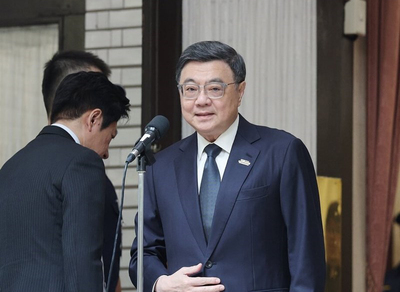
The government would continue monitoring online rumors that a pneumonic plague outbreak has spread from Russia into China and could enhance existing quarantine measures, Premier Cho Jung-tai (卓榮泰) said today. During a legislative meeting, Democratic Progressive Party Legislator Wang Ting-yu (王定宇) said rumors were circulating that the disease had spread across several Chinese provinces. He asked Cho whether the government was prepared to prevent the disease from spreading to Taiwan, given the frequent exchanges between Taiwan and China, and how concerned the government was about the alleged outbreak. The Ministry of Health and Welfare implemented border quarantine measures after briefing the Executive Yuan

MAYORAL RACE: Su Chiao-hui made gains by persuading undecided voters and winning over voters in KMT-leaning districts, a pollster said Legislator Su Chiao-hui (蘇巧慧), the Democratic Progressive Party’s (DPP) candidate for New Taipei City mayor, has a 13.1 percentage point lead over her Chinese Nationalist Party (KMT) rival Lee Shu-chuan (李四川), a poll released yesterday showed. The poll, commissioned by the Taipei Trust in Democracy Association, showed that 43.1 percent of respondents said they would vote for Su, up 7.9 percentage points from a poll conducted in late August, while support for Lee was at 30 percent, down 4.7 percentage points. It showed that 48.6 percent of respondents thought Su would make a suitable mayor, compared with 35.9 percent for Lee. Independent candidate
A Chinese People's Liberation Army (PLA) Navy aircraft carrier group was being monitored after entering the western Pacific, the Ministry of National Defense said today, after Beijing yesterday criticized Taiwan for using a water cannon against a Chinese fishing boat near the Pratas Islands (Dongsha Islands, 東沙群島). A Chinese naval task group led by the aircraft carrier Liaoning (遼寧) yesterday sailed to the western Pacific for training, Chinese state-run Xinhua news agency quoted the PLA Navy as saying. “The drill is part of the annual routine training plan aimed at testing and improving the troops’ combat readiness and enhancing their ability to


 RSS
RSS