


Major political parties may be feeling the crunch in the run-up to the 2016 presidential election as participants in the Sunflower movement announced earlier this week the start of a new movement to promote constitutional reform via the will of the people in hopes of circumventing the restrictions imposed by the Referendum Act (公民投票法).
When the Sunflower movement protesters left the Legislative Yuan on April 10, having occupied it since March 18 in protest against the government’s handling of a proposed cross-strait service trade agreement, student demonstrators said at the time that they were “not done,” and hoped to unify “grassroots power” to spur political reforms without abolishing the standing political framework.
The Civic Constitutional Government Promotion Alliance, founded on Monday and comprising more than 20 civic groups — including Taiwan Democracy Watch, Green Citizens’ Action Alliance and the Taiwan Association for Human Rights — said it is planning more than 60 events across the nation starting in June next year.
The alliance said the plan is to invite the citizenry to stand with them and participate in reforming the constitutional government system.
The alliance added that it had already started the first stage of the movement in September by gathering public opinions about the government and would compile, analyze and summarize them into key points highlighting different areas of government, such as the election system and cross-strait relations.
Pending the situation in the run-up to the 2016 presidential election, the alliance plans to hold a citizens’ congress to put pressure on the political parties to heed their demands.
One of the Sunflower movement leaders, Lin Fei-fan (林飛帆), said the citizens’ congress was one of the original demands of the movement, but it was shot down by the government.
The Referendum Act is perhaps the only one in the world with such restrictive standards, and the alliance hopes to circumvent these and force the issue with public support, Lin said.
“There is no better time than now to amend the Constitution,” Lin said, adding he was certain Taiwanese now have enough of a voice since the Sunflower movement to make themselves heard.
Taiwan Association of University Professors president Lu Chung-chin (呂忠津) said that recent events had shown the limitations of the Constitution.
The nation still adheres to an illusory ideal of national identification, Lu said.
“We must recognize that China and Mongolia are sovereign countries in their own right; it is not something that Taiwan’s Constitution could violate,” Lu said.
Any nation wishing to advance must have a clear view of what sovereignty is, Lu said.
Economic Democracy Union convener Lai Chung-chiang (賴中強) criticized President Ma Ying-jeou (馬英九) for rejecting the Sunflower movement’s call for a citizen’s congress, adding that the government must come to terms with the problems inherent in the Constitution.
Millet Foundation director-general Huang Chih-hui (黃智慧) described it as an “outdated constitution of a colonial power” ratified in Nanjing, China, in 1947 and then brought over to Taiwan.
It is not the Chinese people who should represent Taiwanese when Taiwan elects its president, Huang said.
The Constitution is lacking in that it does not identify with Taiwanese ethnic groups, she said.
“We must move away from the framework of colonialism and recognize that the Aboriginal tribes play an important role in Taiwan,” she added.

Taiwanese can file complaints with the Tourism Administration to report travel agencies if their activities caused termination of a person’s citizenship, Mainland Affairs Council Minister Chiu Chui-cheng (邱垂正) said yesterday, after a podcaster highlighted a case in which a person’s citizenship was canceled for receiving a single-use Chinese passport to enter Russia. The council is aware of incidents in which people who signed up through Chinese travel agencies for tours of Russia were told they could obtain Russian visas and fast-track border clearance, Chiu told reporters on the sidelines of an event in Taipei. However, the travel agencies actually applied

New measures aimed at making Taiwan more attractive to foreign professionals came into effect this month, the National Development Council said yesterday. Among the changes, international students at Taiwanese universities would be able to work in Taiwan without a work permit in the two years after they graduate, explainer materials provided by the council said. In addition, foreign nationals who graduated from one of the world’s top 200 universities within the past five years can also apply for a two-year open work permit. Previously, those graduates would have needed to apply for a work permit using point-based criteria or have a Taiwanese company
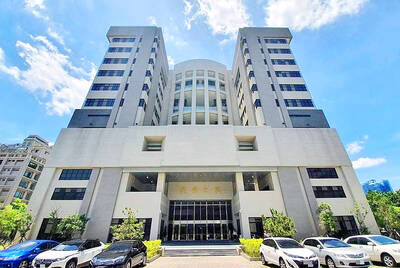
The Shilin District Prosecutors’ Office yesterday indicted two Taiwanese and issued a wanted notice for Pete Liu (劉作虎), founder of Shenzhen-based smartphone manufacturer OnePlus Technology Co (萬普拉斯科技), for allegedly contravening the Act Governing Relations Between the People of the Taiwan Area and the Mainland Area (臺灣地區與大陸地區人民關係條例) by poaching 70 engineers in Taiwan. Liu allegedly traveled to Taiwan at the end of 2014 and met with a Taiwanese man surnamed Lin (林) to discuss establishing a mobile software research and development (R&D) team in Taiwan, prosecutors said. Without approval from the government, Lin, following Liu’s instructions, recruited more than 70 software

Taiwanese singer Jay Chou (周杰倫) plans to take to the courts of the Australian Open for the first time as a competitor in the high-stakes 1 Point Slam. The Australian Open yesterday afternoon announced the news on its official Instagram account, welcoming Chou — who celebrates his 47th birthday on Sunday — to the star-studded lineup of the tournament’s signature warm-up event. “From being the King of Mandarin Pop filling stadiums with his music to being Kato from The Green Hornet and now shifting focus to being a dedicated tennis player — welcome @jaychou to the 1 Point Slam and #AusOpen,” the


 RSS
RSS