


Academics on Saturday voiced worries that if Taiwanese do not express their aspirations to protect the nation’s sovereignty through their ballots, the country could eventually be unified with China via democratic elections.
“There are many nations and peoples who strongly express their aspirations for independence, and when they do so, the international community cannot overlook or oppress their will,” retired National Taiwan University history professor Lee Yeng-chyh (李永熾) told a conference on the impacts of the Treaty of Shimonoseki, in which China ceded sovereignty over Taiwan to Japan.
“But if the public does not have such aspirations, I’d doubt the effectiveness of a referendum on independence,” Lee said.
He said that while Taiwanese often complain about President Ma Ying-jeou’s (馬英九) China-leaning policies, “aren’t we all guilty of electing a president who denies the nation’s sovereignty and independence, and seeks to place Taiwan back into China?”
“This is an era of democracy, what else can we say when we negated ourselves by electing Ma president?” Lee added.
Former representative to Japan Lo Fu-chuan (羅福全) said Taiwanese are at the core of the question of whether Taiwan should become an independent country.
While pro-independence figures debate if Taiwanese independence should be achieved through a revolution outside of the system, or via changes within it, academics and activists at the conference said that, given the prevailing social conditions, making changes within the system may be the better option right now.
“In the past, exiled Taiwanese independence activists living overseas advocated a revolution, however, it’s because they didn’t have a choice back then, they couldn’t accomplish what they wanted through voting,” said Hsueh Hua-yuan (薛化元), head of the Graduate Institute of Taiwan History at National Chengchi University said. “But now it’s different, we have been given a choice and therefore the question now is what do we want as our choice?”
Citing India’s first prime minister after its independence, Jawaharlal Nehru, Hsueh said that Nehru was fighting for Indian independence while participating in colonial politics when India was under British rule.
He gave Brazil as another example, saying it was a Portuguese colony, but made itself a sovereign state through internal changes, saying that “we [Taiwanese] should learn from this.”
Another former representative to Japan, Koh Se-kai (許世楷), who spent many years in exile for advocating independence, agreed.
“We need to get someone from the outside elected president of the Republic of China, and have them make changes from within,” Koh said. “If we don’t, it’s going to be hard, almost impossible.”
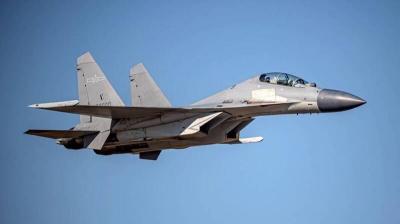
Eight Chinese naval vessels and 24 military aircraft were detected crossing the median line of the Taiwan Strait between 6am yesterday and 6am today, the Ministry of National Defense said this morning. The aircraft entered Taiwan’s northern, central, southwestern and eastern air defense identification zones, the ministry said. The armed forces responded with mission aircraft, naval vessels and shore-based missile systems to closely monitor the situation, it added. Eight naval vessels, one official ship and 36 aircraft sorties were spotted in total, the ministry said.
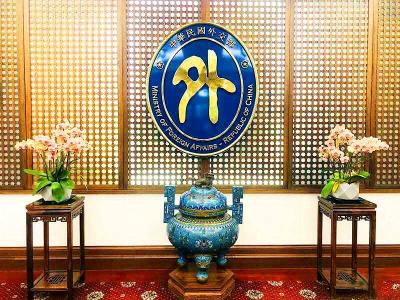
The Ministry of Foreign Affairs (MOFA) today said that if South Korea does not reply appropriately to its request to correct Taiwan’s name on its e-Arrival card system before March 31, it would take corresponding measures to alter how South Korea is labeled on the online Taiwan Arrival Card system. South Korea’s e-Arrival card system lists Taiwan as “China (Taiwan)” in the “point of departure” and “next destination” fields. The ministry said that it changed the nationality for South Koreans on Taiwan’s Alien Resident Certificates from “Korea” to “South Korea” on March 1, in a gesture of goodwill and based on the
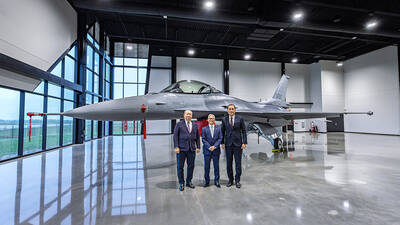
Taiwanese officials were shown the first of 66 F-16V fighter jets purchased by Taiwan from the United States, the Ministry of National Defense said yesterday, adding the aircraft has completed an initial flight test and is expected to be delivered later this year. A delegation led by Deputy Minister of National Defense Hsu Szu-chien (徐斯儉) visited Lockheed Martin’s F-16 C/D Block 70 (also known as F-16V) assembly line in South Carolina on March 16 to view the aircraft. The jet will undergo a final acceptance flight in the US before being delivered to Taiwan, the
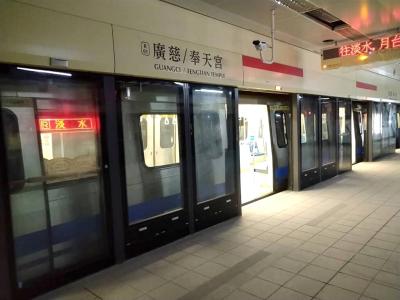
The New Taipei Metro's Sanyin Line and the eastern extension of the Taipei Metro's Tamsui-Xinyi Line (Red Line) are scheduled to begin operations in June, the National Development Council said today. The Red Line, which terminates at Xiangshan Station, would be connected by the 1.4km extension to a new eastern terminal, Guangci/Fengtian Temple Station, while the Sanyin Line would link New Taipei City's Tucheng and Yingge stations via Sanxia District (三峽). The council gave the updates at a council meeting reviewing progress on public construction projects for this year. Taiwan's annual public infrastructure budget would remain at NT$800 billion (US$25.08 billion), with NT$97.3


 RSS
RSS