


Chang Guann Co chairman Yeh Wen-hsiang (葉文祥), one of the main suspects in the tainted oil scandal, was released yesterday on bail of NT$9.5 million (US$311,444).
Yen, who was detained on Sept. 12 after a court hearing, was ordered to report daily to the local police station near his home.
Chang Guann deputy general manager Tai Chi-chuan (戴啟川) was released on bail of NT$200,000 last week.
Tai and Yeh were charged with fraud and violating the Act Governing Food Safety and Sanitation (食品安全衛生管理法).
Another principal figure in the scandal, Kuo Lieh-cheng (郭烈成), remained in custody at the Pingtung Detention Center.
Kuo is the owner of an unlicensed cooking oil recycling operation in Jhutian District (竹田), Pingtung County. He is alleged to be the main supplier of tainted oil to Chang Guann, where it was converted into lard cooking oil, which was then sold to downstream edible oil and food processing companies.
During the hearing, authorities said Kuo admitted that the company used animal hide and carcasses from abattoirs and leather factories for extracting oil, as well as recycled frying oil from restaurants and eateries that had not been inspected by health and sanitation authorities.
“Yeh and Tai knew Kuo was supplying substandard oil that would not have passed any food safety examination. Yet they continued to buy from Kuo at a low price and sold it at a higher price. They made a profit of at least NT$38 million just from transactions from March to September,” Pingtung District Chief Prosecutor Yang Wan-li (楊婉莉) said.
Yeh and Tai were quoted by Yang as insisting throughout the investigation that they did not know the origin of the recycled oil from Kuo.
However, Yang said that evidence pointed to the contrary, and prosecutors had asked for the maximum sentence for them.
Also facing charges are the three principal owners of Ching Wei Co (進威公司) in Pingtung County, on allegations that they knowingly purchased substandard oil from Kuo for processing into animal feed and thus going into many consumer food products.

AGING: While Japan has 22 submarines, Taiwan only operates four, two of which were commissioned by the US in 1945 and 1946, and transferred to Taiwan in 1973 Taiwan would need at least 12 submarines to reach modern fleet capabilities, CSBC Corp, Taiwan chairman Chen Cheng-hung (陳政宏) said in an interview broadcast on Friday, citing a US assessment. CSBC is testing the nation’s first indigenous defense submarine, the Hai Kun (海鯤, Narwhal), which is scheduled to be delivered to the navy next month or in July. The Hai Kun has completed torpedo-firing tests and is scheduled to undergo overnight sea trials, Chen said on an SET TV military affairs program. Taiwan would require at least 12 submarines to establish a modern submarine force after assessing the nation’s operational environment and defense

A white king snake that frightened passengers and caused a stir on a Taipei MRT train on Friday evening has been claimed by its owner, who would be fined, Taipei Rapid Transit Corp (TRTC) said yesterday. A person on Threads posted that he thought he was lucky to find an empty row of seats on Friday after boarding a train on the Bannan (Blue) Line, only to spot a white snake with black stripes after sitting down. Startled, he jumped up, he wrote, describing the encounter as “terrifying.” “Taipei’s rat control plan: Release snakes on the metro,” one person wrote in reply, referring

The coast guard today said that it had disrupted "illegal" operations by a Chinese research ship in waters close to the nation and driven it away, part of what Taipei sees a provocative pattern of China's stepped up maritime activities. The coast guard said that it on Thursday last week detected the Chinese ship Tongji (同濟號), which was commissioned only last year, 29 nautical miles (54km) southeast of the southern tip of Taiwan, although just outside restricted waters. The ship was observed lowering ropes into the water, suspected to be the deployment of scientific instruments for "illegal" survey operations, and the coast
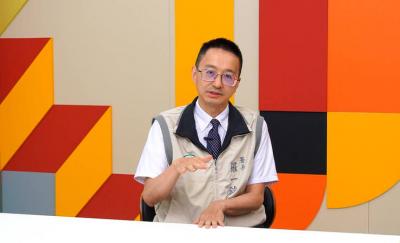
Taiwan’s two cases of hantavirus so far this year are on par with previous years’ case numbers, and the government is coordinating rat extermination work, so there should not be any outbreaks, Centers for Disease Control (CDC) Director-General Philip Lo (羅一鈞) said today in an interview with the Liberty Times (the Taipei Times’ sister newspaper). An increase in rat sightings in Taipei and New Taipei City has raised concerns about the spread of hantavirus, as rats can carry the disease. In January, a man in his 70s who lived in Taipei’s Daan District (大安) tested positive posthumously for hantavirus, Taiwan’s


 RSS
RSS