


The Japanese group arranging a visit next month by former president Lee Teng-hui (李登輝) on Tuesday dismissed speculation that Lee would be able to meet Japanese Prime Minister Shinzo Abe.
Reporters raised the question at a press conference in Tokyo held by Shiro Odamura, head of the Friends of Lee Teng-hui Association, and Masataka Yuhra, another of the group’s officials, who said they had not heard of any proposals for such a meeting.
The 91-year-old Lee wants to pay respects to his brother, who died fighting for Japan in World War II when Taiwan was a Japanese colony, and was enshrined at Tokyo’s Yasukuni Shrine, they said.
Lee paid a visit to the shrine, which honors Japanese war dead, including some convicted war criminals, during a trip to Tokyo in 2007, prompting complaints from China.
Outlining, Lee’s itinerary, Odamura and Yuhra said he is to hold a press conference after arriving at Kansai International Airport in Osaka on Sept. 19.
He is scheduled to deliver a speech in Osaka on Sept. 20 and then head to Tokyo the following day for another speech and a tour of renewable energy facilities, they said, adding that he will travel to Hokkaido on Sept. 23, where he is to visit livestock breeding and dairy businesses before returning home on Sept. 25.
Lee will be accompanied by his wife, Tseng Wen-hui (曾文惠), their two daughters, his doctor and assistants from the Lee Teng-hui Foundation, they said.
As for the content of Lee’s speeches, Odamura said they will focus on a call for Tokyo to set up a Japanese version of the US’ Taiwan Relations Act (TRA), which defines non-diplomatic relations between the US and the “people on Taiwan.”
Yuhra said that in an article for the Japanese monthly Voice 6, Lee urged the Abe government to pay attention to three issues: the implementation of a Taiwan-Japan fisheries agreement, the transfer of state-of-the-art cancer treatment technologies to Taiwan and the formation of a Japanese version of TRA.
Lee last visited Japan in September 2009.
Next month’s trip will be his sixth to Japan since he stepped down as president in May 2000.

Taiwanese can file complaints with the Tourism Administration to report travel agencies if their activities caused termination of a person’s citizenship, Mainland Affairs Council Minister Chiu Chui-cheng (邱垂正) said yesterday, after a podcaster highlighted a case in which a person’s citizenship was canceled for receiving a single-use Chinese passport to enter Russia. The council is aware of incidents in which people who signed up through Chinese travel agencies for tours of Russia were told they could obtain Russian visas and fast-track border clearance, Chiu told reporters on the sidelines of an event in Taipei. However, the travel agencies actually applied

New measures aimed at making Taiwan more attractive to foreign professionals came into effect this month, the National Development Council said yesterday. Among the changes, international students at Taiwanese universities would be able to work in Taiwan without a work permit in the two years after they graduate, explainer materials provided by the council said. In addition, foreign nationals who graduated from one of the world’s top 200 universities within the past five years can also apply for a two-year open work permit. Previously, those graduates would have needed to apply for a work permit using point-based criteria or have a Taiwanese company
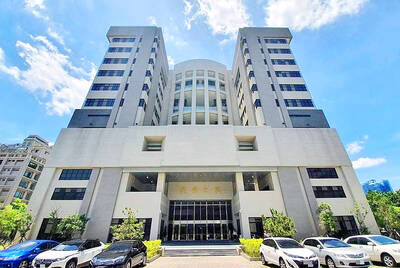
The Shilin District Prosecutors’ Office yesterday indicted two Taiwanese and issued a wanted notice for Pete Liu (劉作虎), founder of Shenzhen-based smartphone manufacturer OnePlus Technology Co (萬普拉斯科技), for allegedly contravening the Act Governing Relations Between the People of the Taiwan Area and the Mainland Area (臺灣地區與大陸地區人民關係條例) by poaching 70 engineers in Taiwan. Liu allegedly traveled to Taiwan at the end of 2014 and met with a Taiwanese man surnamed Lin (林) to discuss establishing a mobile software research and development (R&D) team in Taiwan, prosecutors said. Without approval from the government, Lin, following Liu’s instructions, recruited more than 70 software

Chinese spouse and influencer Guan Guan’s (關關) residency permit has been revoked for repeatedly posting pro-China videos that threaten national security, the National Immigration Agency confirmed today. Guan Guan has said many controversial statements in her videos posted to Douyin (抖音), including “the red flag will soon be painted all over Taiwan” and “Taiwan is an inseparable part of China,” and expressing hope for expedited reunification. The agency last year received multiple reports alleging that Guan Guan had advocated for armed reunification. After verifying the reports, the agency last month issued a notice requiring her to appear and explain her actions. Guan


 RSS
RSS