


A Wall Street Journal (WSJ) editorial last week suggesting that Taiwan may suffer economically if it does not further lift trade barriers to China by ratifying the cross-strait service trade agreement has triggered a debate among political analysts that is being played out in media, including this newspaper.
The WSJ editorial, titled “Taiwan Leaves Itself Behind,” said that if ratification of the service trade pact signed last year with China continues to be delayed, Taiwan may lose its competitiveness in the Chinese market, especially after South Korea finalizes a free-trade agreement with Beijing later this year. It also warned that China might boycott Taiwan’s participation in regional economic blocs, leaving Taiwan further isolated.
President Ma Ying-jeou (馬英九) drew renewed attention to the editorial when he referred to it during a press conference on Monday as he called for ratification of the agreement.
In a letter to the editor published by the WSJ on Tuesday, Taiwan Brain Trust chairman Wu Rong-i (吳榮義) said the WSJ editorial overlooked a key fact: China is a country with hostile intent toward Taiwan.
“Not only does it threaten Taiwan with 2,000 missiles, it also blocks Taiwan’s participation in the international community and asserts that it would not hesitate to use force to annex it,” Wu wrote.
Taiwan has concentrated 80 percent of its foreign investment and 40 percent of its exports in the Chinese market, and the great majority of Taiwanese are concerned that this high level of dependence on China could trigger a national security crisis, he wrote.
Wu said that 500,000 people protested in Taipei during the Sunflower movement’s occupation of the Legislative Yuan’s main chamber in March and April because Ma has substantially eased restrictions on trade with China and signed the Economic Cooperation Framework Agreement (ECFA) with Beijing.
Taiwan and China are both members of the WTO, yet not only is China unwilling to treat Taiwan as an equal member of that organization, it also obstructs the signing of regional trade agreements between Taiwan and other member states, Wu said.
Unless China promises post-ECFA not to block Taiwan’s free-trade agreements with its major trading partners, Taiwan signing the service trade agreement will only deepen its dependence on trade with China and risk plunging Taiwan into an abyss, he added.
Wu rebutted the arguments made in the WSJ editorial that Taiwan has refused to open up its economy.
“Taiwan is a highly open economy and ranks 17th in the world in terms of trade volume. According to the WTO, Taiwan’s trade-weighted average tariff rate in 2011 was a mere 1.8%, compared with Japan’s 2.2%, the United States’ 2.1%, the European Union’s 2.7%, China’s 4.1% and South Korea’s 6.8%,” he wrote.
Meanwhile, an article published yesterday in the online current affairs magazine The Diplomat, titled “Don’t Let Taiwan Fall Behind, but At What Cost” by J. Michael Cole, editor-in chief of the Thinking Taiwan Web site (and former deputy news editor of the Taipei Times), pointed out a problem with the WSJ editorial was that “it treats relations between Taiwan and China as if those were between two equals that recognize each other’s existence.”
The service trade agreement and other cross-strait agreements have been stalled not because of opposition to free trade, “but rather because of the political ramifications of deals agreed upon between asymmetrical powers, the larger of which does not recognize the existence of Taiwan and is keen to use all the tools at its disposal to undermine a political system that it regards as anathema to the Chinese paradigm,” Cole said.
Gerrit van der Wees, editor of Washington-based Taiwan Communique, in an opinion piece in this newspaper on Monday, said that the WSJ editorial overlooks the fact that China “sees the pact as a step in the direction of ‘unification,’” and warned that “the pact would pull the nation closer into an unwelcome embrace with China, as well as restrict the country’s international space even further” (“China is only holding Taiwan back,” page 8).
Van der Wees’ article prompted a letter to the editor from Executive Yuan spokesperson Sun Lih-chyun (孫立群) that was published yesterday, in which he wrote that the “steady development of cross-strait trade relations is the key to preserving — rather than undermining — Taiwan’s economic and political autonomy” (Letter, page 8).
The service trade agreement is only part of Taiwan’s strategy in regional integration, Sun said.
Additional reporting by staff writer

UNREASONABLE SURVEILLANCE: A camera targeted on an road by a neighbor captured a man’s habitual unsignaled turn into home, netting him dozens of tickets The Taichung High Administrative Court has canceled all 45 tickets given to a man for failing to use a turn signal while driving, as it considered long-term surveillance of his privacy more problematic than the traffic violations. The man, surnamed Tseng (曾), lives in Changhua County and was reported 45 times within a month for failing to signal while driving when he turned into the alley where his residence is. The reports were filed by his neighbor, who set up security cameras that constantly monitored not only the alley but also the door and yard of Tseng’s house. The surveillance occurred from July
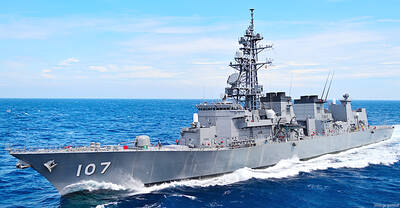
A Japan Self-Defense Forces vessel entered the Taiwan Strait yesterday, Japanese media reported. After passing through the Taiwan Strait, the Ikazuchi was to proceed to the South China Sea to take part in a joint military exercise with the US and the Philippines, the reports said. Japan Self-Defense Force vessels were first reported to have passed through the strait in September, 2024, with two further transits taking place in February and June last year, the Asahi Shimbun reported. Yesterday’s transit also marked the first time since Japanese Prime Minister Sanae Takaichi took office that a Japanese warship has been sent through the Taiwan
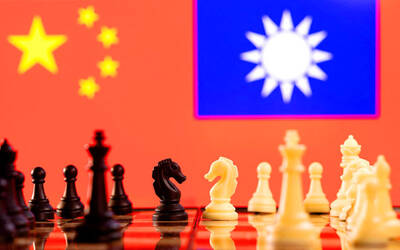
‘SAME OLD TRICK’: Even if Beijing resumes individual travel to Taiwan, it would only benefit Chinese tourism companies, the Economic Democracy Union convener said China’s 10 new “incentives” are “sugar-coated poison,” an official said yesterday, adding that Taiwanese businesses see them clearly for what they are, but that Beijing would inevitably find some local collaborators to try to drums up support. The official, speaking on condition of anonymity, made the remark ahead of a news conference the General Chamber of Commerce is to hold today. The event, titled “Industry Perspectives on China’s Recent Pro-Taiwan Policies,” is expected to include representatives from industry associations — such as those in travel, hotels, food and agriculture — to request the government cooperate with China’s new measures, people familiar with

SECURITY: Starlink owner Elon Musk has taken pro-Beijing positions, and allowing pro-China companies to control Taiwan’s critical infrastructure is risky, a legislator said Starlink was reluctant to offer services in Taiwan because of the nation’s extremely high penetration rates in 4G and 5G services, the Ministry of Digital Affairs said yesterday. The ministry made the comments at a meeting of the legislature’s Transportation Committee, which reviewed amendments to Article 36 of the Telecommunications Management Act (電信管理法). Article 36 bans foreigners from holding more than 49 percent of shares in public telecommunications networks, while shares foreigners directly and indirectly hold are also capped at 60 percent of the total, unless specified otherwise by law. The amendments, sponsored by Chinese Nationalist Party (KMT) Legislator Ko


 RSS
RSS