


The Chinese Nationalist Party (KMT) caucus is considering calling a third extraordinary session to review two controversial bills, a measure the Democratic Progressive Party (DPP) caucus said would only “end up in failure,” just like the two most recent in the slew of extra sessions held so far during President Ma Ying-jeou’s (馬英九) tenure.
With bills on the establishment of a cross-strait agreement oversight mechanism and of free economic pilot zones remaining stalled in the legislature after the most recent extra session ended on Friday, the KMT is mulling calling another session on Monday next week.
If the move transpires, it would be the 13th extraordinary legislative session called since Ma took office in May 2008.
The president is trying to “cut corners” to push through controversial bills by submitting the draft legislation to an extra session, even though past experience shows that proposals which lack public support still get nowhere, the DPP caucus said, adding that the DPP can guarantee the KMT will again “accomplish nothing” if the third extra session is held.
“Twelve extraordinary sessions have been called while the legislature was in recess over the past six years under Ma — the highest number of extra sessions ever held under one president in the nation’s history,” DPP caucus whip Tsai Chi-chang (蔡其昌) said.
According to Article 6 of the Organic Act of the Legislative Yuan (立法院組織法), the legislature can call an extra session when it needs to deal with matters of urgent importance that come up while it is in recess if more than one-quarter of all lawmakers back the initiative.
Given its legislative majority, the KMT has been laboring under the “illusion” that it can “get its own way in extra sessions” because it can decide at its discretion which items to put on the agenda, Tsai said.
Looking back over the past two years — during which five extra legislative sessions have been held — Tsai said that all the sessions had been “ridiculous farces.”
Under Ma’s orders, the outgoing KMT lawmakers of the seventh legislature in January 2012 called an extra session, after new lawmakers were elected to the eighth legislature, but had not yet been inaugurated.
Tsai said that although the KMT claimed at the time that it called the session to clear amendments related to a government restructuring proposal, its real motive was to “smuggle” an amendment onto the agenda aimed at helping the leaders of local party factions access irrigation and water conservation associations, which critics say the party has long used to consolidate factions’ support at local-level elections.
Tsai went on to say that amid strong public opposition to the amendment to the Organic Regulations for Irrigation and Water Conservancy Associations (農田水利會組織通則) — which sought to relax rules prohibiting people involved in litigation from running for executive positions in local irrigation and water conservancy associations — only a few non-polemic bills were passed in the January session.
The DPP whip added that it is ironic that some of the bills on government restructuring that the KMT prioritized are still stalled in the legislature today.
In July 2012, the Ma administration called another extra session to discuss two government proposals: One to ease the zero-tolerance policy imposed at the time on beef imports with traces of leanness-enhancing feed additive ractopamine and the other to impose a capital gains tax on share transactions.
Although beef import regulations were relaxed at the session, Tsai said Ma still failed to honor his earlier promise that the principles the policy was based on — “allowing beef imports containing safe levels of ractopamine residue, keeping the permits for importing beef and pork separate, clearly labeling beef imports and continuing to exclude the import of internal organs” — would be written into the Act Governing Food Sanitation (食品衛生管理法).
Meanwhile, the tax proposal passed only after it went through an overhaul to win support from more KMT lawmakers, Tsai added.
Less than a year later, at another extra session called last July, the KMT pushed through an amendment to overrule a stipulation requiring individual investors to pay a capital gains tax of between 0.02 and 0.06 percent on stock trades if the TAIEX hit 8,500 points or higher the following year and in 2015, he added.
In July and August last year, the KMT called two extra sessions to review the proposal to hold a national referendum to determine the future of the Fourth Nuclear Power Plant in New Taipei City’s Gongliao District (貢寮), discuss a proposal to reform the civil servants pension system and review a bill regarding establishment of reciprocal cross-strait representative offices.
Then, in April, the Executive Yuan abruptly announced a halt to construction of parts of the nuclear power plant and has never brought up pension reform again, which Tsai said was an apparent bid to avoid upsetting voters in the runup to the nine-in-one elections on Nov. 29.
Tsai said the extra session held last August managed to pass amendments to the Code of Court-Martial Procedure (軍事審判法) to allow criminal cases in the military to be reviewed in civil courts in peacetime rather than by court-martial, in response to public outcry over the death of army corporal Hung Chung-chiu (洪仲丘), who allegedly died from abuse while serving in the military in July last year.
The KMT in January called yet another extra session in response to the Executive Yuan’s request that a recently passed amendment to the Land Administration Agent Act (地政士法) be reversed.
The amendment was aimed at easing land administration agents’ responsibility for registering real-estate sales prices by giving them a second chance to revise registrations.
“That was nothing but an attempt by Premier Jiang Yi-huah (江宜樺) to attack then-minister of the interior Lee Hong-yuan (李鴻源),” Tsai said.
At the latest two extraordinary sessions the DPP whip said Ma forced KMT lawmakers to vote in favor of confirming all of his 29 Control Yuan nominees, but more than one-third of the candidates were rejected.
“Greater Kaohsiung has been ruptured by a series of gas pipeline explosions, yet KMT lawmakers devote their energy to insisting on reviewing the free economic pilot zones and planning to call a third extra session,” Tsai said. “Is the KMT still human?”

Actor Darren Wang (王大陸) was sentenced to six months in prison, commutable to a fine, by the New Taipei District Court today for contravening the Personal Data Protection Act (個人資料保護法) in a case linked to an alleged draft-dodging scheme. Wang allegedly paid NT$3.6 million (US$114,380) to an illegal group to help him evade mandatory military service through falsified medical documents, prosecutors said. He transferred the funds to Chen Chih-ming (陳志明), the alleged mastermind of a draft-evasion ring, although he lost contact with him as he was already in detention on fraud charges, they said. Chen is accused of helping a

UNREASONABLE SURVEILLANCE: A camera targeted on an road by a neighbor captured a man’s habitual unsignaled turn into home, netting him dozens of tickets The Taichung High Administrative Court has canceled all 45 tickets given to a man for failing to use a turn signal while driving, as it considered long-term surveillance of his privacy more problematic than the traffic violations. The man, surnamed Tseng (曾), lives in Changhua County and was reported 45 times within a month for failing to signal while driving when he turned into the alley where his residence is. The reports were filed by his neighbor, who set up security cameras that constantly monitored not only the alley but also the door and yard of Tseng’s house. The surveillance occurred from July

SECURITY: Starlink owner Elon Musk has taken pro-Beijing positions, and allowing pro-China companies to control Taiwan’s critical infrastructure is risky, a legislator said Starlink was reluctant to offer services in Taiwan because of the nation’s extremely high penetration rates in 4G and 5G services, the Ministry of Digital Affairs said yesterday. The ministry made the comments at a meeting of the legislature’s Transportation Committee, which reviewed amendments to Article 36 of the Telecommunications Management Act (電信管理法). Article 36 bans foreigners from holding more than 49 percent of shares in public telecommunications networks, while shares foreigners directly and indirectly hold are also capped at 60 percent of the total, unless specified otherwise by law. The amendments, sponsored by Chinese Nationalist Party (KMT) Legislator Ko
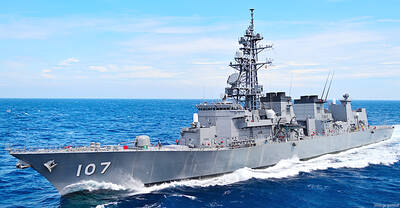
A Japan Self-Defense Forces vessel entered the Taiwan Strait yesterday, Japanese media reported. After passing through the Taiwan Strait, the Ikazuchi was to proceed to the South China Sea to take part in a joint military exercise with the US and the Philippines, the reports said. Japan Self-Defense Force vessels were first reported to have passed through the strait in September, 2024, with two further transits taking place in February and June last year, the Asahi Shimbun reported. Yesterday’s transit also marked the first time since Japanese Prime Minister Sanae Takaichi took office that a Japanese warship has been sent through the Taiwan


 RSS
RSS