

A photography exhibition documenting the rehabilitation process of areas devastated by Typhoon Morakot in 2009 opened in Taipei’s Chiang Kai-shek Memorial Hall yesterday.
Typhoon Morakot struck Taiwan almost five years ago on Aug. 8, killing about 700 people, wiping out Siaolin Village (小林) in Greater Kaohsiung and destroying many houses, roads and bridges across several counties.
Morakot Post-Disaster Reconstruction Council chief executive Chern Jenn-chuan (陳振川) said the council published 42 books, made 21 documentaries and compiled 200,000 photographs and 2,000 news stories in the wake of the typhoon — all of which will be passed on to future generations.
The exhibition has a “permanent housing” motif to reflect the sustainable housing constructed for people displaced by the typhoon. It is focused on the restoration of Aboriginal areas, which includes the building of housing, bridges and churches in the wake of the typhoon.
The council said all rehabilitation work is to be completed on Aug. 8, when the council is to be officially disbanded. The exhibition is to run until Aug. 17, before moving to Greater Kaoshiung’s National Science and Technology Museum from Aug. 22 to Dec. 28.
Vice premier Mao Chi-kuo (毛治國) said the show was set to coincide with the end of restoration efforts to symbolize the nation’s full recovery from the disaster.
Mao touted the rescue missions and restoration work carried out by governmental agencies, but credited non-governmental organizations as the main facilitators of the rehabilitation drive.
Taiwan’s experience in rehabilitating areas affected by typhoons has earned it international acclaim and will be passed on to countries around the world as a valuable reference, he said.
The exhibition is to run until Aug. 17, before it moves to Greater Kaoshiung’s National Science and Technology Museum from Aug. 22 to Dec. 28.
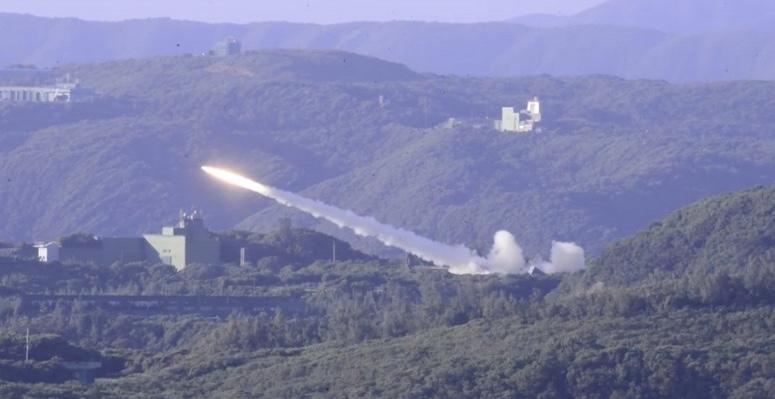
A Chinese military drone was spotted conducting reconnaissance off Taitung County as President William Lai (賴清德) visited Pingtung County this morning to inspect a drill of the armed forces’ precision-strike capabilities, prompting the military to closely monitor its actions. Today was the final day of a three-day military exercise at Jioupeng Base (九鵬基地) to test the joint combat capabilities of the armed forces and coast guard. The exercise began on Wednesday simulating air defense interception and yesterday tested long-range strike capabilities and new air defense weapons. This morning, the military conducted a final exercise involving air defense, anti-ship and drone operations. Military sources said

OCT. 31: The antiviral drugs Tamiflu and Eraflu have been distributed to about 4,000 medical facilities nationwide for people in seven groups who develop flu-like symptoms As the domestic influenza epidemic enters its peak season and continues to escalate, the Centers for Disease Control (CDC) yesterday announced that publicly funded influenza antiviral drugs for seven eligible groups have been extended to Oct. 31, allowing those who develop flu-like symptoms to receive the medication without undergoing a rapid influenza test. The CDC has extended the expanded use of flu antiviral drugs to seven groups: healthcare and influenza-prevention personnel; residents and staff at nursing homes, long-term care facilities and similar institutions; kindergarten and daycare workers and home-based caregivers; students from kindergarten through high school, vocational high school and the
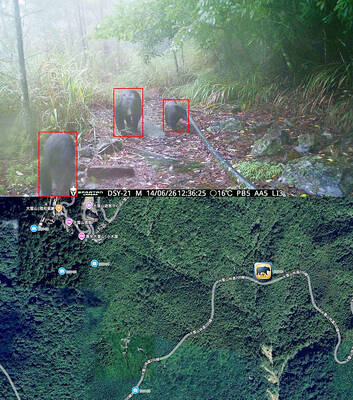
RARE PEEK: The footage released showed one of the bears staying in a cave for as long as 70 days, providing the first record of Formosan black bear’s overwintering The Forestry and Nature Conservation Agency yesterday released tracking records of released Formosan black bears for the first time, showing that they get much closer to human settlements than previously thought. The agency said it had captured two bears, Da Qu-ali (達古阿里) and Aziman (阿里曼), in indigenous villages in Hualien County and began to track them with a camera-mounted satellite collar after releasing them back into the wild. The results confirmed that the bears have moved from deep mountain areas into lowland hills closer to human communities, leading to an increase in human-bear conflicts, it said. The agency has introduced artificial intelligence-assisted early

DIPLOMATIC TOUR: Chinese President Xi Jinping began a series of overseas visits last month to Kyrgyzstan, Egypt and India, aimed at securing leverage, an official said Recent Chinese diplomatic and military moves are aimed at creating pressure ahead of a planned meeting between Chinese President Xi Jinping (習近平) and US President Donald Trump, National Security Council adviser Huang Chung-yen (黃重諺) said. Trump when visiting China in May extended an invitation to Xi to visit Washington on Sept. 24. China is yet to officially announce plans for Xi’s visit to the US. In an interview with the Liberty Times (sister paper of the Taipei Times) on Thursday, Huang said Xi’s overseas visits, China’s “gray zone” activities along the First Island Chain and efforts to expand its trade surplus with the


 RSS
RSS