


A Taiwanese academic scheduled to attend an international seminar in Hong Kong commemorating the 25th anniversary of the Tiananmen Square Massacre was turned away by Hong Kong customs officials early on Friday, with the customs official claiming to have been informed by Beijing that the academic’s entry permit had been annulled.
Tseng Chien-yuan (曾建元), an associate professor of public administration at Chung Hua University and a board member of the New School for Democracy, said he boarded a late-night plane bound for Hong Kong on Thursday, planning to attend a seminar held by the Hong Kong Alliance in Support of Patriotic Democratic Movements in China.
“At customs [in Hong Kong], they said they needed to examine my files and later told me that there are problems with my entry permit. At about 3:30am it was confirmed that I could not enter the city,” Tseng said.
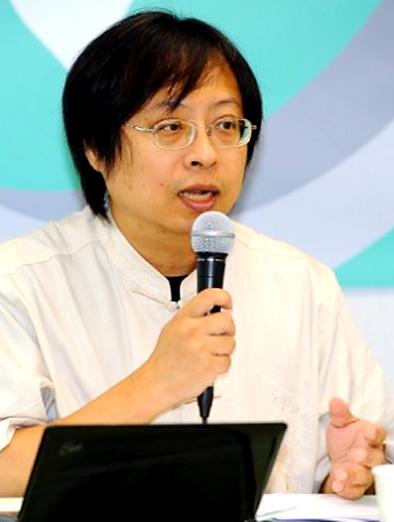
Photo: Taipei Times
Emphasizing that his entry permit, the Mainland Travel Permit for Taiwan Residents, will not expire until the end of this year and that he did not plan to go to the mainland, Tseng said he asked the customs officers for the reason he was denied entry, but received ambiguous answers.
“Customs said they did not know the reason, but only knew that the notification of my permit being revoked was from Beijing,” Tseng said.
“It was curious to hear from the Hong Kong official, when I asked whether I was blocked because of the sensitive timing of the visit [with June 4, the anniversary of the Tiananmen Square Massacre, approaching], that the denial of entry was not necessarily associated with June 4, as, he told me, many people are also turned away in non-sensitive times [without justified reasons],” he said.
Tseng understood the remarks to imply that the Chinese government has started to tighten its grip on border control in Hong Kong, a city claimed by Beijing to be self-governing under the “one country, two systems” model.
Despite the Hong Kong official’s denial that the refusal of entry had anything to do with the bloody crushing of the 1989 student-led movement centered on Beijing’s Tiananmen Square, Tseng said that his permit was not recalled physically nor stamped. He said he has no idea whether he has been blacklisted for good or denied entry only this time.
Tseng said he believes this incident has done great harm to the city’s image of operating under rule of law and democratically.
“The spirit of the so-called ‘one country, two systems’ principle has vanished completely,” he said.
The New School for Democracy, an NGO that hosts courses and forums on freedom and democracy, in a statement yesterday denounced the incident and urged the Hong Kong authorities to provide a reasonable justification and take compensating measures, “otherwise the city’s status as an international free port and a global financial center could be tarnished.”
“Beijing has long been violating international law by restricting blacklisted democracy advocates’ visits to Hong Kong, but [Tseng] might be the first Taiwanese citizen, with legal and effective traveling documents, to be denied entry,” the statement said.
It called on the Taiwanese government to protest the violation of its national’s civil rights and request an explanation from Hong Kong immediately, lest the case open the floodgates for future political intervention by Beijing in the civil interaction between Taiwan and Hong Kong.
Two students who participated in the Sunflower movement and who traveled with Tseng successfully crossed the border. They were invited to share their experiences at the student movement, Tseng said.
Hong Kong Secretary of Security Lai Tung-kwok (黎棟國) on Friday said he could not comment on individual cases, but that officers had to turn away those who did not meet “relevant requirements.”
Meanwhile, pro-democracy Hong Kong Legislator Lee Cheuk-yan (李卓人) said that Tseng’s rejection was a worrying extension of the bans already placed on former student leaders of the Tiananmen Square protests, such as Wang Dan (王丹) and Wuer Kaixi.
“But this time it’s more outrageous. Even a Taiwanese academic is not allowed in. It’s affecting Hong Kong’s international image,” Lee said.
Additional reporting by AP
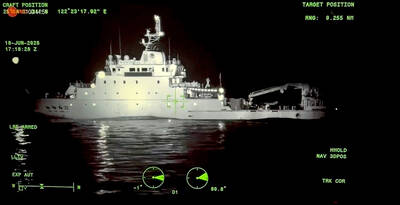
EXCUSES: Beijing is using government and research vessels as a pretext to harass the nation and enter its EEZ, and engage in ‘hegemonic expansion,’ the coast guard said The Coast Guard Administration yesterday said it drove away Chinese oceanographic research vessel Xiang Yang Hong 22 (向陽紅33) from restricted waters after warning it that it was in Taiwan’s exclusive economic zone (EEZ). The Chinese vessel entered restricted waters off the coast of Yilan County’s Suao (蘇澳) at 11:35pm on Thursday, the coast guard said, adding that it dispatched the Lanyu patrol vessel and the boat PP-10077 to shadow the Chinese ship and issue radio warnings ordering it to leave. China has no sovereignty over waters off Taiwan’s east coast, Lanyu’s crew told Xiang Yang Hong 22 over the radio, and demanded
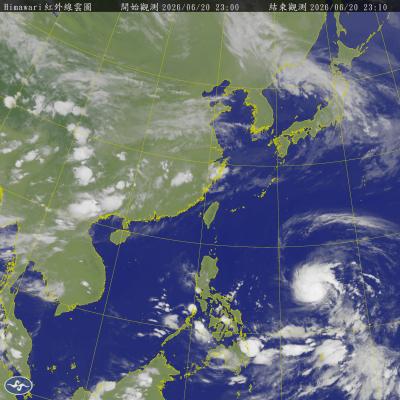
Tropical Storm Mekkhala is forecast to strengthen into a typhoon tomorrow and could come close enough to Taiwan later in the week to prompt a sea warning, the Central Weather Administration (CWA) said yesterday. As of 2 pm, the storm was located 1,870 kilometers southeast of Taiwan's southern tip and moving west- northwest at 23 km per hour. CWA forecaster Cheng Chieh-jen (鄭傑仁) said Mekkhala is expected to continue moving west-northwest through Tuesday under the influence of the Pacific high- pressure system before gradually turning north toward waters east of Taiwan or south of the Ryukyu Islands. The timing and angle of the
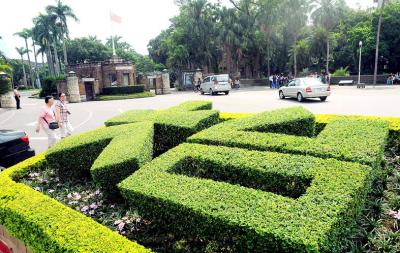
Four Taiwanese universities have been ranked among the world's top 200 institutions in the Quacquarelli Symonds (QS) World University Rankings for next year, the highest Taiwan has ever placed in the category, with National Taiwan University (NTU) achieving its best performance at 54th globally and 17th in Asia. The four Taiwanese institutions in the global top 200 are NTU (54th), National Tsing Hua University (142nd), National Yang Ming Chiao Tung University (177th) and National Cheng Kung University (191st), the rankings showed. All four universities achieved their highest-ever global rankings this year, QS data showed. National Cheng Kung University entered the top 200 for

RISING POPULARITY: Enhanced flight connectivity and a visa waiver trial program are among the motivations that have boosted travel to Taiwan by Filipinos, the agency said The Tourism Administration said yesterday that it is stepping up efforts to attract tourists from the Philippines following strong growth during the first quarter. The agency’s data showed the nation welcomed 210,000 Filipino visitors from January to March, marking a 43 percent increase compared with the same period last year. The Philippines is Taiwan’s top source of inbound tourists among the Southeast Asian nations, data showed. With a population of 116 million and national median age of 26, the Philippines boasts a young demographic with strong travel potential, the Tourism Administration said. Outbound travel demand in the Philippines continues to rise amid robust


 RSS
RSS