

Health experts urged the public to maintain a healthy balance between “good” and “bad” bacteria in their bodies after a study showed that Taiwanese have more bad bacteria in their digestive system than people in other Asian countries.
The study, released on Thursday by the Association for Lactic Acid Bacteria (TALAB), found that Taiwanese schoolchildren have up to 30 times more Escherichia coli and 15 times more Clostridium perfringens — two of the “bad” bacteria — than kids of the same age in Japan.
The report said that E coli and C perfringens are two common microbes that can directly or indirectly cause gastroenteritis and a slew of other digestive tract infections.
On the other hand, Taiwanese schoolchildren only have between one-third and one-fifth of the “good” bacteria Lactobacillus and Bifidobacterium compared with their peers in Japan, the study showed.
Association officials said that since the bacterial composition of adults is likely to be similar to that of children, the public should take steps to ensure a healthy balance of microorganisms in their bodies.
The study was conducted among children aged eight to 10, in 10 cities in five Asian countries, said Tsai Ying-chieh (蔡英傑), a professor of microbiology and honorary chairman of the association.
Research teams collected stool samples and used DNA testing to screen for microorganism species, Tsai said.
“We found that Taiwanese children have all the major aggregate problems of populations in other Asian cities. In comparison with Japan, we found that Taiwanese children have much lower good bacteria, as well as a wider variety of microbe species, than Japanese children,” he said.
Besides E coli and C perfringens, more than 50 percent of Taiwanese have Helicobacter pylori, the bacteria responsible for stomach and duodenal ulcers, Tsai said.
More than 1.42 million people in Taiwan were treated for these two conditions last year, Tsai added.
Daily eating habits and physical activity are critical to maintaining a healthy balance of good and bad bacteria, he said.
“A large number of Taiwanese eat out. People here also tend to have ‘predator eating habits’ — oil-fried, barbecued or roasted food, dishes high in fat content, and lots of meat, but few vegetables and fruit,” Tsai said.
“This is compounded by stress from daily life and work. Many people ignore the importance of normal bowel movement. Once the bad bacteria outnumber the good ones, people’s intestinal microbial ecology becomes imbalanced and they become more susceptible to gastroenteritis, digestive diseases or even colorectal cancer,” he added.
Formosa Cancer Foundation joined the association in raising public awareness about the importance of taking good care of one’s body.
Foundation chief executive Lai Chi-ming (賴基銘) said stomach and colorectal cancers have affected an increasing number of Taiwanese over the past 10 years, and the trend is still rising.
Lai urged people to eat at least five types of vegetables and fruit each day, cut down on meat consumption and exercise more.
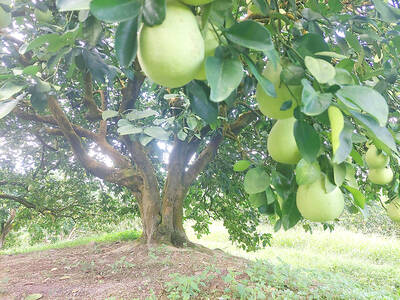
A Hualien pomelo farmer refused to sell to China after the country announced it would permit more Taiwanese pomelo imports, prompting widespread support from Taiwanese consumers, who rallied to buy his fruit. China’s Taiwan Affairs Office last month said that China’s General Administration of Customs registered an additional 79 Taiwanese pomelo orchards and packing facilities in Hualien County, allowing more Taiwanese producers to export pomelos to China. “I am a Hualien fruit farmer and I refuse to sell to China,” Liu Tzu-hao (劉子豪) from Ruisui Township (瑞穗) said in an online post. Liu is a well-known farmer in the community and has served
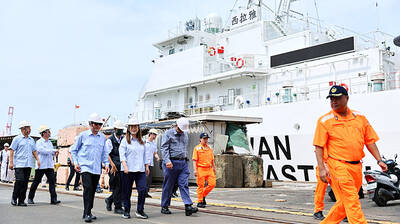
Ocean Affairs Council (OAC) Minister Kuan Bi-ling (管碧玲) on Wednesday said decommissioned coast guard vessels were given to the Philippines to enhance regional rescue capacity and would not affect Taiwanese fishers’ rights and benefits. Kuan made the remarks after confirmation on Tuesday that a 500-tonne Coast Guard Administration (CGA) patrol and rescue vessel would be given to the Philippine Coast Guard. The donation ceremony was reportedly done in Manila, but whether the vessel — previously numbered “CG123” and named Kinmen (金門) — has been handed over has yet to be confirmed. China’s Taiwan Affairs Office (TAO) on Wednesday criticized the donation for “taking
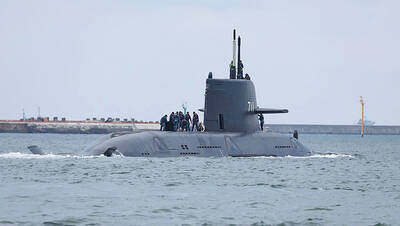
UPDATE: The submarine would need to undergo combined systems testing and crew training for navy personnel before it is ready for mission, an expert said Taiwan’s first domestically built submarine, the Hai Kun (Narwhal, 海鯤), could be delivered to the navy as early as next month, military expert and Taiwan Association for Security and Development chairman Chi Tung-yun (紀東昀) said yesterday. The submarine was yesterday morning observed departing for its 21st sea trial and its 15th submerged test. The vessel missed the initial delivery deadline of November last year due to “testing delays,” its primary contractor, shipbuilder CSBC Corp, Taiwan, said in June. The contractor also cited “political pressure from China” in procuring critical equipment. All testing operations are in the final stages, with the
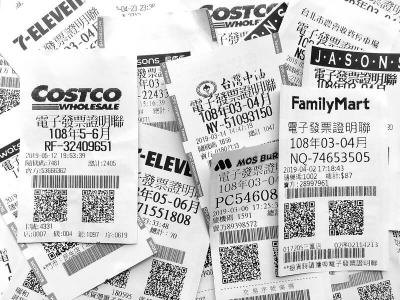
Six NT$10 million (US$315,527) special prizes and seven NT$2 million grand prizes in Taiwan's May-June uniform invoice lottery remained unclaimed as of today, including one NT$10 million winner who spent only NT$10 on an Uber Eats delivery order, the Ministry of Finance said. The ministry said the 13 winners need to claim their prizes by Nov. 5. The eight-digit serial number that won the NT$10 million special prize for May-June was 38548029, with 18 winning receipts in total. The NT$2 million grand prize number was 10138845, of which there were 22 winning receipts, the ministry said. In addition to the receipt issued for an


 RSS
RSS