


Sixteen of 27 children’s clothing samples obtained from eight global fashion brands has been found to contain at least one type of hazardous chemical residue, Greenpeace Taiwan said yesterday.
As part of its worldwide detox campaign, the environmental NGO Greenpeace has in recent years published several reports on the toxicity test results of clothing, hoping to pressure global fashion brands to take the lead in cutting out the use of toxic substances in their manufacturing process, as well as to take responsibility for their wastewater discharges.
Greenpeace Taiwan yesterday released its latest test results on 27 children clothing produced by fashion brands Dior, Dolce & Gabbana, Giorgio Armani, Louis Vuitton (LV), Hermes, Marc Jacobs, Trussardi and Versace.
It said 16 clothing samples were found to contain at least one type of toxic chemical substance — such as nonylphenol ethoxylates (NPE), phthalates, perfluorinated compounds (PFCs) or antimony.
The items included a Dior children’s shirt, bought in Taiwan and made in Morocco, which was found to contain a NPE level of 460 milligrams per kilogram (mg/kg).
A pair of ballet shoes from LV, bought in Switzerland and made in Italy, was found to have an NPE level as high as 760mg/kg.
Seven of the 12 samples found with NPE were produced in Italy, it said, adding that among the tested samples from the eight brands, Trussardi — with three samples — was the only brand which was not found to have toxic chemical residue in its products.
Since it launched its detox campaign, 19 brands and one supplier have promised to make efforts to stop the use of toxic chemicals in their clothing production process, the organization said.
Greenpeace added that it urges other big brands to be socially and environmentally responsible.

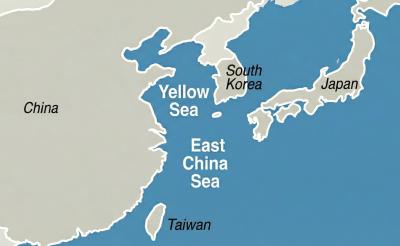
China has reserved offshore airspace in the Yellow Sea and East China Sea from March 27 to May 6, issuing alerts usually used to warn of military exercises, although no such exercises have been announced, the Wall Street Journal (WSJ) reported yesterday. Reserving such a large area for 40 days without explanation is an “unusual step,” as military exercises normally only last a few days, the paper said. These alerts, known as Notice to Air Missions (Notams), “are intended to inform pilots and aviation authorities of temporary airspace hazards or restrictions,” the article said. The airspace reserved in the alert is

South Korea is planning to revise its controversial electronic arrival card, a step Taiwanese officials said prompted them to hold off on planned retaliatory measures, a South Korean media report said yesterday. A Yonhap News Agency report said that the South Korean Ministry of Foreign Affairs is planning to remove the “previous departure place” and “next destination” fields from its e-arrival card system. The plan, reached after interagency consultations, is under review and aims to simplify entry procedures and align the electronic form with the paper version, a South Korean ministry official said. The fields — which appeared only on the electronic form
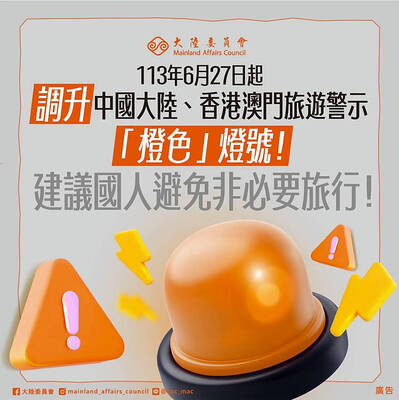
More than 6,000 Taiwanese students have participated in exchange programs in China over the past two years, despite the Mainland Affairs Council’s (MAC) “orange light” travel advisory, government records showed. The MAC’s publicly available registry showed that Taiwanese college and university students who went on exchange programs across the Strait numbered 3,592 and 2,966 people respectively. The National Immigration Agency data revealed that 2,296 and 2,551 Chinese students visited Taiwan for study in the same two years. A review of the Web sites of publicly-run universities and colleges showed that Taiwanese higher education institutions continued to recruit students for Chinese educational programs without
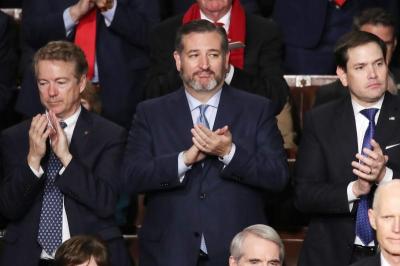
A bipartisan group of US senators has introduced a bill to enhance cooperation with Taiwan on drone development and to reduce reliance on supply chains linked to China. The proposed Blue Skies for Taiwan Act of 2026 was introduced by Republican US senators Ted Cruz and John Curtis, and Democratic US senators Jeff Merkley and Andy Kim. The legislation seeks to ease constraints on Taiwan-US cooperation in uncrewed aerial systems (UAS), including dependence on China-sourced components, limited access to capital and regulatory barriers under US export controls, a news release issued by Cruz on Wednesday said. The bill would establish a "Blue UAS


 RSS
RSS