


The nation should update the design of its nuclear power plants to better cope with natural disasters, the EU said in its peer review of a stress tests report on local facilities, despite the Atomic Energy Council (AEC) not finding any issues necessitating an immediate shutdown.
The report on stress tests performed by the plants’ operator, Taiwan Power Co (Taipower), was drafted by the council before being reviewed by the European Nuclear Safety Regulators Group (ENSREG) in Taiwan between Sept. 23 and Sunday last week.
The EU team concluded that the tests essentially followed the specifications of European stress tests.
“The EU peer review acknowledges that — building on the results of the European stress tests and on insights from post-Fukushima actions being taken in other regions of the world, particularly in the USA, Europe and Japan — the AEC has developed a comprehensive approach to safety review and identification of actions for further safety enhancements in order to better prepare all nuclear power plants in Taiwan against extreme external events and severe accidents,” the report said.
“Assuming the proper implementation of these actions and based on the review against the set of Fukushima-type hazards considered within the scope of the stress tests, the EU peer review takes note that AEC has not identified any safety-related weaknesses in Taiwanese nuclear power plants which would require their immediate shutdown,” it said.
The report said the safety standards applied to Taiwanese plants seemed to be generally high and conformed to international practice.
However, the group still made several recommendations to improve the design of the plants, keep the facilities operational during severe accidents and implementing a mechanism to ensure the transparency of a plant’s safety status.
It identified the main priority as designing the power plants to enable them to deal with all natural disasters, particularly earthquakes and tsunamis.
“As the exposure of Taiwan to natural hazards, such as earthquakes, tsunamis, flooding and typhoons, is generally quite high, the reliable assessment of the severity of these hazrds and the implementation of suitable measures to protect against them is of crucial importance,” the report said.
The group suggested the government use the most advanced technology to update plant design and identify earthquake-related risks.
The council has uploaded the English version of the report and its summary on its Web site. The Chinese translation of the report will be available within a month.
The council added that it will list all the recommendations mentioned in the report so Taipower can use them to improve its operations.
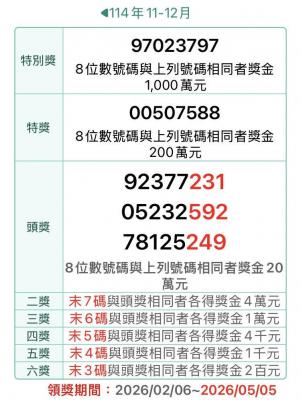
Seven of the 17 NT$10 million (US$311,604) winning receipts from the November-December uniform invoice lottery remain unclaimed as of today, the Ministry of Finance said, urging winners to redeem their prizes by May 5. The reminder comes ahead of the release of the winning numbers for the January-February lottery tomorrow. Among the unclaimed receipts was one for a NT$173 phone bill in Keelung, while others were for a NT$5,913 purchase at Costco in Taipei's Neihu District (內湖), a NT$49 purchase at a FamilyMart in New Taipei City's Tamsui District (淡水), and a NT$500 purchase at a tea shop in New Taipei City's
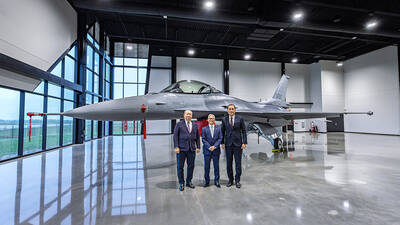
Taiwanese officials were shown the first of 66 F-16V fighter jets purchased by Taiwan from the United States, the Ministry of National Defense said yesterday, adding the aircraft has completed an initial flight test and is expected to be delivered later this year. A delegation led by Deputy Minister of National Defense Hsu Szu-chien (徐斯儉) visited Lockheed Martin’s F-16 C/D Block 70 (also known as F-16V) assembly line in South Carolina on March 16 to view the aircraft. The jet will undergo a final acceptance flight in the US before being delivered to Taiwan, the
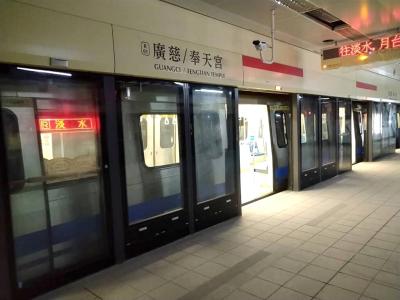
The New Taipei Metro's Sanyin Line and the eastern extension of the Taipei Metro's Tamsui-Xinyi Line (Red Line) are scheduled to begin operations in June, the National Development Council said today. The Red Line, which terminates at Xiangshan Station, would be connected by the 1.4km extension to a new eastern terminal, Guangci/Fengtian Temple Station, while the Sanyin Line would link New Taipei City's Tucheng and Yingge stations via Sanxia District (三峽). The council gave the updates at a council meeting reviewing progress on public construction projects for this year. Taiwan's annual public infrastructure budget would remain at NT$800 billion (US$25.08 billion), with NT$97.3
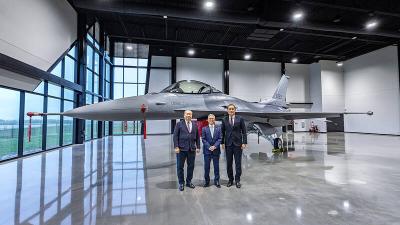
Deliveries of delayed F-16V jets are expected to begin in September, Minister of National Defense Wellington Koo (顧立雄) said today, after senior defense officials visited the US last week. The US in 2019 approved a US$8 billion sale of Lockheed Martin F-16 jets to Taiwan, a deal that would take the nation’s F-16 fleet to more than 200 jets, but the project has been hit by issues including software problems. Koo appeared today before a meeting of the legislature’s Foreign Affairs and National Defense Committee, which is discussing different versions of the special defense budget this week. The committee is questioning officials today,


 RSS
RSS