


Taiwan and the Philippines yesterday inked a legal assistance pact after nearly two years of coordination and consultations.
The agreement on legal assistance in criminal matters was signed by Representative to the Philippines Raymond Wang (王樂生) and Philippine Representative to Taiwan Antonio Basilio at the Ministry of Justice in Taipei.
Deputy Minister of Justice Wu Chen-huan (吳陳鐶) and Ricardo Paras III, chief state counsel of the Philippine Department of Justice, witnessed the signing ceremony.
It is the first legal assistance pact signed between the two nations.
Under the agreement, the two sides will help identify, search, detain and repatriate suspects, obtain testimony and evidence, identify criminal gains and tools, and provide mutual assistance related to judicial procedure, such as testimony via video conference.
The Taiwan Economic and Cultural Office in the Philippines and its counterpart, the Manila Economic and Cultural Office in Taiwan, said the agreement would protect the safety and judicial interests of Taiwanese in the Philippines and nearly 100,000 Filipino workers in Taiwan.
Taiwan and the Philippines started to negotiate the agreement after an incident in February 2011 in which 14 Taiwanese involved in a fraud scheme in the Philippines were deported to China rather than Taiwan.
In an effort to mend fences after the incident, both sides agreed on the need to establish a legal assistance mechanism and step up economic cooperation.
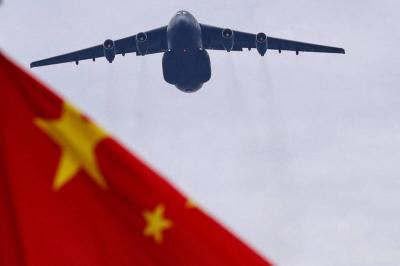
Beijing could eventually see a full amphibious invasion of Taiwan as the only "prudent" way to bring about unification, the US Department of Defense said in a newly released annual report to Congress. The Pentagon's "Annual Report to Congress: Military and Security Developments Involving the People's Republic of China 2025," was in many ways similar to last year’s report but reorganized the analysis of the options China has to take over Taiwan. Generally, according to the report, Chinese leaders view the People's Liberation Army's (PLA) capabilities for a Taiwan campaign as improving, but they remain uncertain about its readiness to successfully seize

Taiwan is getting a day off on Christmas for the first time in 25 years. The change comes after opposition parties passed a law earlier this year to add or restore five public holidays, including Constitution Day, which falls on today, Dec. 25. The day marks the 1947 adoption of the constitution of the Republic of China, as the government in Taipei is formally known. Back then the Chinese Nationalist Party (KMT) governed China from Nanjing. When the KMT, now an opposition party in Taiwan, passed the legislation on holidays, it said that they would help “commemorate the history of national development.” That

Taiwan has overtaken South Korea this year in per capita income for the first time in 23 years, IMF data showed. Per capita income is a nation’s GDP divided by the total population, used to compare average wealth levels across countries. Taiwan also beat Japan this year on per capita income, after surpassing it for the first time last year, US magazine Newsweek reported yesterday. Across Asia, Taiwan ranked fourth for per capita income at US$37,827 this year due to sustained economic growth, the report said. In the top three spots were Singapore, Macau and Hong Kong, it said. South

Snow fell on Yushan (Jade Mountain, 玉山) yesterday morning as a continental cold air mass sent temperatures below freezing on Taiwan’s tallest peak, the Central Weather Administration (CWA) said. Snowflakes were seen on Yushan’s north peak from 6:28am to 6:38am, but they did not fully cover the ground and no accumulation was recorded, the CWA said. As of 7:42am, the lowest temperature recorded across Taiwan was minus-5.5°C at Yushan’s Fengkou observatory and minus-4.7°C at the Yushan observatory, CWA data showed. On Hehuanshan (合歡山) in Nantou County, a low of 1.3°C was recorded at 6:39pm, when ice pellets fell at Songsyue Lodge (松雪樓), a


 RSS
RSS