


The Democratic Progressive Party (DPP) should adjust its China policy and ensure that it is accepted by a majority of Taiwanese, as well as by Washington and Beijing if it is serious about getting back in power, former premier Frank Hsieh (謝長廷) said on Sunday in Washington.
“If the DPP fails to make adjustments [to its China policy], the party will be marginalized due to a lack of international support,” Hsieh told the Taiwanese-American community during a speech titled “Taiwan restoration and its future” that he delivered at the Taiwanese Church of Greater Washington.
Hsieh, a moderate DPP figure on China affairs, laid out three goals for the DPP’s cross-strait policy, which is seen by many as crucial to the party’s bid to return to power.
First, the DPP must convince Taiwanese that it capable of managing risk in cross-strait affairs, and second, it must reassure the international community that it is able to maintain regional peace and stability if it returns to power, Hsieh said. Finally, the DPP should make people in Taiwan, China and in the wider international community understand that it seeks to safeguard the nation’s democratic system and encourage political reconciliation, he added.
The former DPP presidential candidate said his ideas may not be perfect, but that the DPP would have to try to ensure the majority of Taiwanese, as well as Washington, approved of its China policy and for Beijing to at least deem its policy “tolerable.”
Hsieh has been under fire for comments he made last week in which he described the party’s previous China policy as a “failure.” Hsieh’s own initiative of “constitutions with different interpretations (憲法各表),” aimed at easing tensions between the DPP and Beijing, has been heavily criticized by some party members and supporters of Taiwanese independence.
However, Hsieh said he was not concerned about backlash, saying that “the DPP is a boisterous party with diverse opinions, but it has always managed to come together once a presidential candidate has been chosen.”
Hsieh lamented what he called the DPP’s neglect of his initiative to seek reconciliation with the Chinese Nationalist Party (KMT), which he said is necessary because as both parties enjoy a stable support rate of about 40 percent, neither is able to throw a knockout punch against each other.
Most of the problems that the nation is facing today, including government finances, nuclear energy, pension reform and cross-strait relations, cannot be resolved by one political party, he added.
The “super stable” structure of the Constitution and a new world order which highlights cooperation to resolve conflicts, rather than the “choosing sides” seen during the Cold War also explains why consensus-seeking and reconciliation are increasingly important, he said.
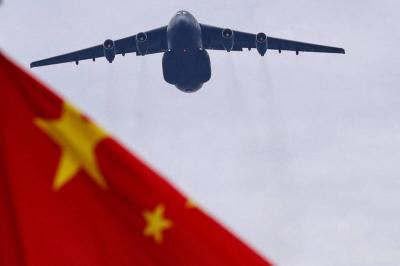
Beijing could eventually see a full amphibious invasion of Taiwan as the only "prudent" way to bring about unification, the US Department of Defense said in a newly released annual report to Congress. The Pentagon's "Annual Report to Congress: Military and Security Developments Involving the People's Republic of China 2025," was in many ways similar to last year’s report but reorganized the analysis of the options China has to take over Taiwan. Generally, according to the report, Chinese leaders view the People's Liberation Army's (PLA) capabilities for a Taiwan campaign as improving, but they remain uncertain about its readiness to successfully seize

Taiwan is getting a day off on Christmas for the first time in 25 years. The change comes after opposition parties passed a law earlier this year to add or restore five public holidays, including Constitution Day, which falls on today, Dec. 25. The day marks the 1947 adoption of the constitution of the Republic of China, as the government in Taipei is formally known. Back then the Chinese Nationalist Party (KMT) governed China from Nanjing. When the KMT, now an opposition party in Taiwan, passed the legislation on holidays, it said that they would help “commemorate the history of national development.” That

Taiwan has overtaken South Korea this year in per capita income for the first time in 23 years, IMF data showed. Per capita income is a nation’s GDP divided by the total population, used to compare average wealth levels across countries. Taiwan also beat Japan this year on per capita income, after surpassing it for the first time last year, US magazine Newsweek reported yesterday. Across Asia, Taiwan ranked fourth for per capita income at US$37,827 this year due to sustained economic growth, the report said. In the top three spots were Singapore, Macau and Hong Kong, it said. South

Snow fell on Yushan (Jade Mountain, 玉山) yesterday morning as a continental cold air mass sent temperatures below freezing on Taiwan’s tallest peak, the Central Weather Administration (CWA) said. Snowflakes were seen on Yushan’s north peak from 6:28am to 6:38am, but they did not fully cover the ground and no accumulation was recorded, the CWA said. As of 7:42am, the lowest temperature recorded across Taiwan was minus-5.5°C at Yushan’s Fengkou observatory and minus-4.7°C at the Yushan observatory, CWA data showed. On Hehuanshan (合歡山) in Nantou County, a low of 1.3°C was recorded at 6:39pm, when ice pellets fell at Songsyue Lodge (松雪樓), a


 RSS
RSS