


Taiwan should play a more “positive and constructive” role in the Diaoyutai Islands (釣魚台) dispute, a former US State Department official said on Friday.
“At a minimum Taiwan should not be a problem or an obstacle to constructive resolution,” Project 2049 president Randy Schriver said.
Schriver, a former US deputy assistant secretary of state for East Asian Affairs, said that Taiwan’s good communications with all of the participants could be a “huge asset.” He added that President Ma Ying-jeou’s (馬英九) East China Sea peace plan needed to be taken more seriously.
“Taiwan is the only one that has a plan on the table and we should look at it,” he said in a speech at a Heritage Foundation conference on “Shoring Up the US-Taiwan Partnership.”
“We have a problem in the Senkakus [Japan’s name for the islands] area and if the assessment of Washington is that Taiwan has contributed unfavorably to that problem, it will hurt US-Taiwan relations,” he said.
Schriver said Taiwan should go to “great lengths” to avoid the appearance of any collusion with China on the issue. He said that while the US did not have a position on the sovereignty of the islands, Washington was not neutral.
“Our treaty obligations and our long-term strategic interests do not make us desirous of seeing the islands falling under the sovereignty of the PRC [People’s Republic of China],” he said.
Speaking with great emphasis, Schriver said: “Taiwan should avoid the appearance of collusion because I believe that would be viewed unfavorably.”
“Taiwan should be working positively with Tokyo and trying to improve that relationship [so as] not [to] cause any damage or any rifts,” he said. “Taiwan is stuck between its most important economic partner, China, and its most important security partner, the US-Japan alliance.”
He said the US could not fulfill its defense obligations under the Taiwan Relations Act (TRA) without the US-Japan alliance.
“Japan is arguably Taiwan’s second-most important security partner,” he said. “If Taiwan undertakes activities that cause problems with Tokyo, that will cause problems with the United States and that should be avoided.”
He said Taiwan needed to avoid any activities that created “further uncertainty and chaos in an operating environment that is already uncertain and chaotic.”
Chinese and Japanese military and coast guard “assets” were now operating in close proximity to one another with no rules of the road, no crisis communication and no crisis management capability, he said.
“If Taiwan enters into that fray, it can only be a downside,” he said.
“We do not need a war and as much as you can say we would never fight over a pile of rocks, we have fought over stranger things in the past,” Schriver said.
“The trend lines right now are very dangerous. When the PRC decided to add air activity to this mix, they shortened the time line of decisionmaking to seconds. That’s hard for civilian leadership to maintain positive command and control,” he said.
Schriver said again that the US would “look very unfavorably” on any activity that added to the existing “chaotic operating environment.”
Taiwan should be a “constructive participant,” should avoid risks and do more to help solve the situation.

Actor Darren Wang (王大陸) was sentenced to six months in prison, commutable to a fine, by the New Taipei District Court today for contravening the Personal Data Protection Act (個人資料保護法) in a case linked to an alleged draft-dodging scheme. Wang allegedly paid NT$3.6 million (US$114,380) to an illegal group to help him evade mandatory military service through falsified medical documents, prosecutors said. He transferred the funds to Chen Chih-ming (陳志明), the alleged mastermind of a draft-evasion ring, although he lost contact with him as he was already in detention on fraud charges, they said. Chen is accused of helping a

SECURITY: Starlink owner Elon Musk has taken pro-Beijing positions, and allowing pro-China companies to control Taiwan’s critical infrastructure is risky, a legislator said Starlink was reluctant to offer services in Taiwan because of the nation’s extremely high penetration rates in 4G and 5G services, the Ministry of Digital Affairs said yesterday. The ministry made the comments at a meeting of the legislature’s Transportation Committee, which reviewed amendments to Article 36 of the Telecommunications Management Act (電信管理法). Article 36 bans foreigners from holding more than 49 percent of shares in public telecommunications networks, while shares foreigners directly and indirectly hold are also capped at 60 percent of the total, unless specified otherwise by law. The amendments, sponsored by Chinese Nationalist Party (KMT) Legislator Ko

UNREASONABLE SURVEILLANCE: A camera targeted on an road by a neighbor captured a man’s habitual unsignaled turn into home, netting him dozens of tickets The Taichung High Administrative Court has canceled all 45 tickets given to a man for failing to use a turn signal while driving, as it considered long-term surveillance of his privacy more problematic than the traffic violations. The man, surnamed Tseng (曾), lives in Changhua County and was reported 45 times within a month for failing to signal while driving when he turned into the alley where his residence is. The reports were filed by his neighbor, who set up security cameras that constantly monitored not only the alley but also the door and yard of Tseng’s house. The surveillance occurred from July
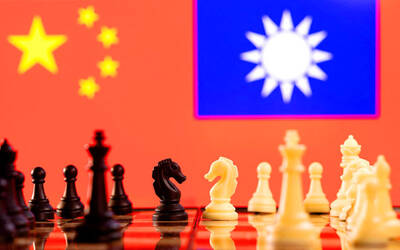
‘SAME OLD TRICK’: Even if Beijing resumes individual travel to Taiwan, it would only benefit Chinese tourism companies, the Economic Democracy Union convener said China’s 10 new “incentives” are “sugar-coated poison,” an official said yesterday, adding that Taiwanese businesses see them clearly for what they are, but that Beijing would inevitably find some local collaborators to try to drums up support. The official, speaking on condition of anonymity, made the remark ahead of a news conference the General Chamber of Commerce is to hold today. The event, titled “Industry Perspectives on China’s Recent Pro-Taiwan Policies,” is expected to include representatives from industry associations — such as those in travel, hotels, food and agriculture — to request the government cooperate with China’s new measures, people familiar with


 RSS
RSS